INSIDE LINE

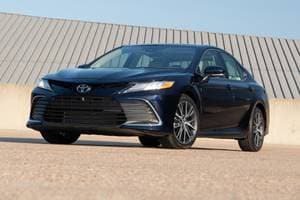
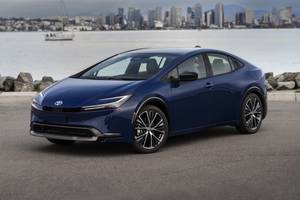
Comparison Test: 2008 Toyota Prius vs. 2008 Toyota Camry Hybrid

Media Player

  • 2008 Toyota Prius vs. 2008 Toyota Camry Hybrid Comparison Test Video

    Watch the 2008 Toyota Prius vs. 2008 Toyota Camry Hybrid Comparison Test Video on Edmunds' Inside Line | September 23, 2009

1 Video , 23 Photos | See more photos in this gallery »

Comparison

Comparison Test: 2008 Toyota Prius vs. 2008 Toyota Camry Hybrid

A Tale of Two Hybrids

    0 Ratings
    Guy walks into a Toyota dealer — sounds like a joke so far, right? Not quite.

    Guy walks into a Toyota dealer looking for a 2008 Toyota Prius. He's heard about hybrids for awhile now, and the Prius is one he knows by name. He vaguely recalls some celebrity bragging about taking one to the Academy Awards instead of a limo, and then there was that South Park episode, "Smug Alert" a couple of years back. And didn't Al Gore's own son make headlines for getting busted doing 100 mph in his Prius?

    Something like that. Beyond the hype, Guy's never really given hybrid cars much thought, much less gone looking for one. And even though he can afford a decent-size car or SUV, the price of gasoline has him looking for fuel economy in a serious way.

    And there on the showroom floor, Guy sees a 2008 Toyota Camry Hybrid for almost the same amount of money as a Prius. Now what?

    Better Late Than Never
    A lot of late-adopters like this guy are jumping into the hybrid market, and they're finding that there's more to choose from than just several different colors of Prius. So what's the difference between the dedicated hybrid like the Prius and a more conventional car like the Camry that just happens to be a hybrid? What do you get? And what do you give up?

    We know what you're thinking, so let's clear this up. We've decided to pit the 2008 Toyota Camry Hybrid and the 2008 Toyota Prius against each other because each has won one of our comparison tests in its own right. The Camry Hybrid beat the Nissan Altima Hybrid and the Saturn Aura Green Line in our 2007 Hybrid Sedan Comparison Test, while the Toyota Prius bested the Honda Civic Hybrid in a 2006 shoot-out.

    This shouldn't be a surprise, as Toyota takes this hybrid thing very seriously and is doing its best to own the concept in the mind of consumers. Toyota has made a formal commitment to spread hybrid technology throughout its entire lineup. Its Hybrid Synergy Drive is also a full hybrid system that has sufficient electric motor and battery capacity for extended engine-off running, which enhances both fuel savings and your impression of its magical properties.

    The EPA classifies both the Prius and the Camry Hybrid as midsize cars, and the prices aren't that far apart either. This 2008 Toyota Prius is kitted out with the $4,550 No. 6 option package plus floor mats and totals $28,224. This 2008 Toyota Camry Hybrid has no options but floor mats and a security system and comes in at $26,418. Sure, the Camry costs almost $2,000 less, but it doesn't have the leather seats, navigation system, Bluetooth and six-CD changer found in the well-equipped Prius.

    Hyper Mileage
    If we restrict our analysis to EPA fuel economy figures alone, the Prius triumphs before we ever start. Its 48 mpg city and 45 highway fuel economy (46 mpg combined) is the best you can buy from anyone right now.

    The Camry Hybrid, on the other hand, is rated at 33 mpg in the city and 34 mpg on the highway. While this doesn't look impressive next to a Prius, the Camry Hybrid's 34 mpg combined rating is higher than any popular compact — higher than a 2008 Honda Civic (29 mpg), a 2009 Toyota Corolla (30 mpg) and even a 2008 Toyota Yaris (31 mpg).

    But we didn't just take the EPA's word for the fuel economy of the Prius and Camry Hybrid. In two weeks of mixed driving, we rang up an average of 43.8 mpg in the Prius and 32.7 mpg in the Camry Hybrid. At that rate, driving 15,000 miles per year, the Prius uses 9.7 fewer gallons per month — a savings of $40 per month at today's pump prices.

    Since hybrids make their best fuel economy in the city, where regenerative braking and low-speed conditions conducive to electric-only operation provide the big benefits, we took these cars on our own loop through the city and suburbs — a two-lap, 190-mile tour of Orange County, California. Our two drivers traded off at the halfway point to cancel out any driving style effects.

    Our nominal speeds ranged from 30-55 mph, but a plethora of traffic signals kept the average down to 28 mph. The result: 51.9 mpg for the Prius and an impressive 41.8 mpg for the Camry Hybrid. And we weren't even using "hypermiler" techniques.

    Low-Intensity Workout
    With fuel-efficiency like this, you'd figure that performance would suffer. And you'd be mostly right.

    Neither the Prius nor the Camry Hybrid feels like a slug in town, as the stout nature of torque from an electric motor at low rpm gets each up to 30 mph in about 3.5 seconds. But getting to 60 mph and beyond involves the gas engine, and here the 76-horsepower 1.5-liter inline-4 of the Prius compromises its acceleration. Once you factor in the 33 hp output of the battery pack (which determines the total power available — not the theoretical output of the electric motor), you have 109 hp, so getting to 60 mph eats up 10.4 seconds and makes short-ramp freeway merges more entertaining than you might prefer.

    The Camry's Atkinson-cycle engine is also tuned for efficiency, but it makes 147 hp from its 2.4-liter inline-4. Additional boost from the electric motor brings the net total to 187 horses, so the Camry Hybrid trots to 60 mph in 8.3 seconds, which feels normal instead of slow.

    But you must (or should) also remember that a hybrid powertrain also affects performance in other ways. Driving with the engine off requires electric power steering, so neither the Prius nor the Camry Hybrid has great steering feel, nor communicates very much about the car's dynamics to the driver.

    Meanwhile, both cars needed about 6 feet more than their non-hybrid counterparts to stop from 60 mph, as the Prius used 128 feet and the Camry Hybrid required 134 feet. (We're not sure if heavier weight or low-rolling-resistance tires is the true culprit.) Low-intensity stops around town in both cars were accompanied by a distinctive whine from the regenerative braking system, and the transition from regen braking to mechanical braking also was noticeable, especially in the Prius.

    Both these cars have stability control (it comes standard on the Camry Hybrid but is optional on the Prius), and though the threshold of intervention is relatively low for the Camry, it still manages a respectable 0.75g of lateral grip. The intervention of the stability control in the Prius seems erratic — perhaps because the system is modulating through rear drum brakes instead of the Camry's standard rear discs — and the Prius chalks up just 0.71g around the skid pad.

    In the real world, neither the Prius nor the Camry Hybrid is very inspiring to drive, but both feel competent and secure in daily use. The Camry Hybrid's ride is definitely the quieter and softer of the two, although perhaps a little too soft and buoyant in the estimation of some of us because of insufficient damping.

    Not Really the Same Size Class
    Toyota is fond of pointing out that the EPA classifies the 2008 Prius as a midsize car, just like the Camry. But the Prius is much closer in size to a 2008 Toyota Corolla compact than a midsize Camry. Oh sure, the Prius' 106.3-inch wheelbase technically helps maximize interior volume, and its odd peaked roof gives it a slight advantage in front headroom of 0.3 inch over the Camry. But the plain fact is the Prius is 3-4 inches narrower than the Camry, inside and out, and we can feel it the moment we sit in the cars.

    Compounding the cramped feel of the Prius is a driving position that's sized for shorter drivers. The steering wheel is set low and far away, and the seat is positioned a little bit high and there's no height adjustment. The net result is a steering wheel that's too far away and too close to the knees of anyone of above-average height.

    Meanwhile, the Camry Hybrid comes with a steering wheel with telescopic adjustment plus a four-way power-adjustable driver seat with height adjustment, so we can move things around just how we like and get comfy. We could sit here all day.

    Now Featuring...
    Besides the standard stability control, telescopic steering wheel and the adjustable driver seat, the Camry Hybrid has other features going for it. It also comes with dual-zone automatic climate control (with easy-to-use adjustment knobs in plain sight) and dedicated vents for the rear-seat passengers. Not so in the Prius. An auxiliary jack for an MP3 player is standard on the Camry but optional on the Prius. And the Camry Hybrid is your only choice if you want an optional sunroof.

    And while the Prius is also known for bringing high-tech features like Bluetooth and a smart key to the smaller car world, these items are package options — package options you can get in the Camry Hybrid, too. Still, the Prius is the only small car that offers options such as a back-up camera (not that it needs it) and HID headlights.

    Make Your Choice
    Here we have two very different choices, despite their apparent similarities. The Prius is a dedicated hybrid, built to sacrifice some comfort and utility for the pure performance of great mpg. Moreover, it looks unique both outside and in, which enhances the thrill of extreme fuel-efficiency. It's the purist's choice when it comes to hybrids. The trouble is, you have to sacrifice some comfort and convenience, just like you would in a sports car.

    Meanwhile, the Camry Hybrid is clearly superior as a car, and it offers a kind of high-performance comfort and convenience. The trouble is, its hybrid technology is almost irrelevant to the car's character, and it looks and behaves almost like any other Camry. So what you've got is pure Camry, and that's a little bit boring.

    Sure, it is possible to outfit a 2008 Toyota Camry Hybrid so it costs more than a loaded 2008 Toyota Prius, or you can leave options off the Prius and undercut the base Camry Hybrid price. And the Prius' better fuel economy might tip the scales in the favor of the 2008 Toyota Prius for many people.

    But not for us. At the end of the day, the 2008 Toyota Prius might deliver stellar fuel economy, but like a lot of highly focused cars, it imposes compromises we're unwilling to make.

    We'll take the 2008 Toyota Camry Hybrid, and we're not joking. The extra $40 monthly fuel savings the Prius provides isn't enough to lure us away from a more spacious, well-equipped true midsize sedan with normal styling and a familiar interior layout.

    The manufacturer provided Edmunds these vehicles for the purposes of evaluation.

    Close

    Share on Facebook Share on Facebook
    Share on Twitter Share on Twitter

    Advertisement

    Tags

    Specs & Performance

    Vehicle
    MakeToyota
    ModelCamry Hybrid
    Model year2008
    StyleHybrid 4dr Sedan (2.4L 4cyl gas/electric hybrid CVT)
    Base MSRP$25,860
    As-tested MSRP$26,418
    Options on test vehicleCarpet Floor/Trunk Mat Set, VIP RS3200 Plus Security System
    Drive typeFront-wheel drive
    Transmission typeElectronically controlled continuously variable
    Transmission and axle ratios (x:1)N/A
    Engine typeInline-4, Atkinson cycle
    Displacement (cc/cu-in)2,362cc (144 cu-in)
    Block/head materialAluminum
    Valvetrain16 valves, double overhead camshafts, variable intake valve timing
    Compression ratio (x:1)12.5:1
    Horsepower (hp @ rpm)147 @ 6,000 (gasoline engine); 187 maximum when blended with the electric motor
    Torque (lb-ft @ rpm)138 @ 4,400 (gasoline engine); 199 @ 0-1,500 (electric motor)
    Brakes, frontVentilated disc with single-piston sliding caliper
    Brakes, rearSolid disc with single-piston sliding caliper
    Steering typeElectric power steering
    Steering ratio (x:1)15.6:1
    Suspension, frontIndependent, MacPherson struts, coil springs and stabilizer bar
    Suspension, rearIndependent, MacPherson struts, coil springs and stabilizer bar
    Tire size, frontP215/60R16 94V
    Tire size, rearP215/60R16 94V
    Tire brandMichelin
    Tire modelEnergy MXM4 S8
    Tire typeAll season
    Wheel size16-by-6.5 front and rear
    Wheel materialSteel
    Curb weight, mfr. claim (lbs.)3,680
    Curb weight, as-tested (lbs.)3,586
    Weight distribution, F/R (%)58 / 42
    Fuel typeRegular unleaded
    Fuel tank capacity (gal)17.2
    EPA fuel economy (mpg)33 city/34 highway
    Edmunds observed (mpg)32.7 overall, 41.8 in a 190-mile suburban city test loop
    Conditions for Testing
    Temperature (°F)64.9
    Elevation (ft.)1,121
    Wind (mph, direction)4.5
    Performance
    0 - 30 (sec.)3.4
    0 - 45 (sec.)5.5
    0 - 60 (sec.)8.3
    0 - 75 (sec.)12
    1/4 mile (sec. @ mph)16.1 @ 87.9
    0-60 with 1-ft rollout (sec.)7.9
    30 - 0 (ft.)34
    60 - 0 (ft.)134
    Braking ratingPoor
    Slalom, 6 x 100 ft (mph)61.6
    Skid pad, 200 ft diameter (lateral g)0.75
    Handling ratingPoor
    Sound level @ idle (db)46.8 (engine on); 42.4 (engine off)
    Sound level @ full throttle (db)73.1
    Sound level @ 70 mph cruise (db)66.7
    Acceleration commentsFaster than a Prius, but still not quick. The Camry Hybrid is hard to love if anything but fuel economy matters.
    Braking commentsDisturbing bushing wind-up at full-ABS application makes the chassis jerk and causes steering to pull over anything but pool-table smooth surfaces. Irregular stopping distance.
    Handling commentsSkid pad: Average grip (better than Prius), but lots of body roll and little steering feedback make it awkward here. Slalom: Very little damping makes Camry susceptible to ANY road irregularity at speed or during transistions. (Note: Non-defeat stability control is always on.)
    Specifications
    Length (in.)189.2
    Width (in.)71.7
    Height (in.)57.5
    Wheelbase (in.)109.3
    Front Track (in.)62
    Rear Track (in.)61.6
    Turning circle (ft)36.1
    Legroom, front (in.)41.6
    Legroom, rear (in.)38.3
    Headroom, front (in.)38.8
    Headroom, rear (in.)37.8
    Shoulder room, front (in.)57.8
    Shoulder room, rear (in.)56.7
    Seating capacity5
    Cargo volume (cu-ft)10.6
    Max. cargo volume, seats folded (cu-ft)N/A
    Warranty Information
    Bumper-to-bumper3 years/36,000 miles
    Powertrain5 years/60,000 miles
    Corrosion5 years / Unlimited miles
    Roadside assistanceNot available
    Scheduled maintenanceNot available
    Safety Information
    Front airbagsStandard
    Side airbagsStandard dual front
    Head airbagsStandard front and rear
    Knee airbagsDriver only
    Antilock brakes4-wheel ABS
    Electronic brake enhancementsBrake assist, electronic brakeforce distribution
    Traction controlStandard
    Stability controlStandard
    Rollover protectionNot available
    Tire-pressure monitoring systemDirect tire-pressure monitoring
    Emergency assistance systemNot available
    NHTSA crash test, driver5 stars
    NHTSA crash test, passenger5 stars
    NHTSA crash test, side front5 stars
    NHTSA crash test, side rear5 stars
    NHTSA rollover resistance4 stars
    CollapseSpecs and Performance Expand Collapse

    Specs & Performance

    Vehicle
    MakeToyota
    ModelPrius
    Model year2008
    Style4dr Hatchback (1.5L 4cyl gas/electric hybrid CVT)
    Base MSRP$23,535
    As-tested MSRP$28,284
    Options on test vehicleCarpet Floor/Cargo Mats, Package #6
    Drive typeFront-wheel drive
    Transmission typeElectronically controlled continuously variable
    Engine typeInline-4, Atkinson cycle
    Displacement (cc/cu-in)1,497cc (91 cu-in)
    Block/head materialAluminum
    Valvetrain16 valves, double overhead camshafts, variable intake valve timing
    Compression ratio (x:1)13
    Horsepower (hp @ rpm)75 @ 5,000 (gasoline engine); 109 maximum when blended with the electric motor
    Torque (lb-ft @ rpm)82 @ 4,200 (gasoline); 295 @ 0-1,200 (electric motor)
    Brakes, frontVentilated disc with single-piston sliding caliper
    Brakes, rearSolid disc with single-piston sliding caliper
    Steering typeElectric power steering
    Steering ratio (x:1)15.6:1
    Suspension, frontIndependent, MacPherson struts, coil springs and stabilizer bar
    Suspension, rearIndependent, MacPherson struts, coil springs and stabilizer bar
    Tire size, frontP215/60R16 94V
    Tire size, rearP215/60R16 94V
    Tire brandMichelin
    Tire modelEnergy MXM4 S8
    Tire typeAll season
    Wheel size16-by-6.5 front and rear
    Wheel materialSteel
    Curb weight, mfr. claim (lbs.)3,680
    Curb weight, as-tested (lbs.)3,586
    Weight distribution, F/R (%)58 / 42
    Fuel typeRegular unleaded
    Fuel tank capacity (gal)17.2
    EPA fuel economy (mpg)33 city/34 highway
    Edmunds observed (mpg)32.7 overall, 41.8 in a 190-mile suburban city test loop
    Conditions for Testing
    Temperature (°F)64.9
    Elevation (ft.)1,121
    Wind (mph, direction)4.5
    Performance
    0 - 30 (sec.)3.4
    0 - 45 (sec.)5.5
    0 - 60 (sec.)8.3
    0 - 75 (sec.)12
    1/4 mile (sec. @ mph)16.1 @ 87.9
    0-60 with 1-ft rollout (sec.)7.9
    30 - 0 (ft.)34
    60 - 0 (ft.)134
    Braking ratingPoor
    Slalom, 6 x 100 ft (mph)61.6
    Skid pad, 200 ft diameter (lateral g)0.75
    Handling ratingPoor
    Sound level @ idle (db)46.8 (engine on); 42.4 (engine off)
    Sound level @ full throttle (db)73.1
    Sound level @ 70 mph cruise (db)66.7
    Acceleration commentsFaster than a Prius, but still not quick. The Camry Hybrid is hard to love if anything but fuel economy matters.
    Braking commentsDisturbing bushing wind-up at full-ABS application makes the chassis jerk and causes steering to pull over anything but pool-table smooth surfaces. Irregular stopping distance.
    Handling commentsSkid pad: Average grip (better than Prius), but lots of body roll and little steering feedback make it awkward here. Slalom: Very little damping makes Camry susceptible to ANY road irregularity at speed or during transistions. (Note: Non-defeat stability control is always on.)
    Specifications
    Length (in.)189.2
    Width (in.)71.7
    Height (in.)57.5
    Wheelbase (in.)109.3
    Front Track (in.)62
    Rear Track (in.)61.6
    Turning circle (ft)36.1
    Legroom, front (in.)41.6
    Legroom, rear (in.)38.3
    Headroom, front (in.)38.8
    Headroom, rear (in.)37.8
    Shoulder room, front (in.)57.8
    Shoulder room, rear (in.)56.7
    Seating capacity5
    Cargo volume (cu-ft)10.6
    Max. cargo volume, seats folded (cu-ft)N/A
    Warranty Information
    Bumper-to-bumper3 years/36,000 miles
    Powertrain5 years/60,000 miles
    Corrosion5 years / Unlimited miles
    Roadside assistanceNot available
    Scheduled maintenanceNot available
    Safety Information
    Front airbagsStandard
    Side airbagsStandard dual front
    Head airbagsStandard front and rear
    Knee airbagsDriver only
    Antilock brakes4-wheel ABS
    Electronic brake enhancementsBrake assist, electronic brakeforce distribution
    Traction controlStandard
    Stability controlStandard
    Rollover protectionNot available
    Tire-pressure monitoring systemDirect tire-pressure monitoring
    Emergency assistance systemNot available
    NHTSA crash test, driver5 stars
    NHTSA crash test, passenger5 stars
    NHTSA crash test, side front5 stars
    NHTSA crash test, side rear5 stars
    NHTSA rollover resistance4 stars
    CollapseSpecs and Performance Expand Collapse

    Advertisement