INSIDE LINE

First Drive: Rolls-Royce 102EX

Media Player

  • Rolls-Royce 102EX Picture

    Rolls-Royce 102EX Picture

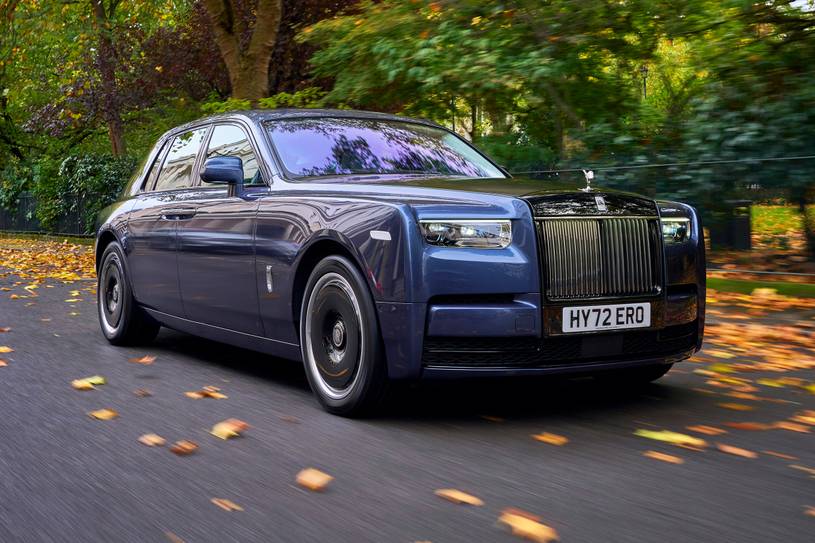
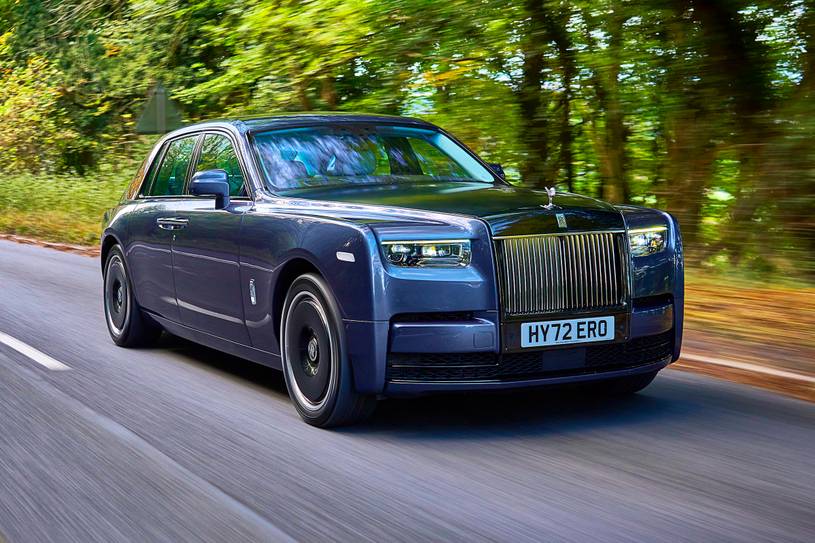
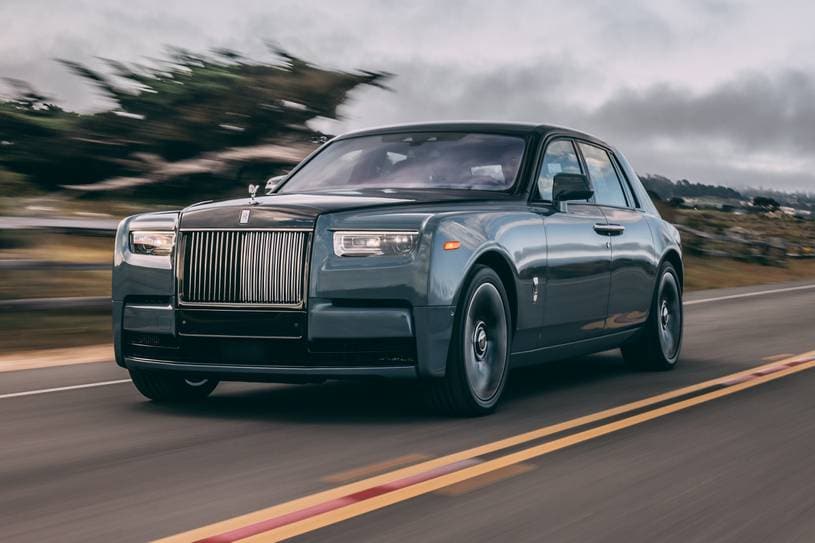
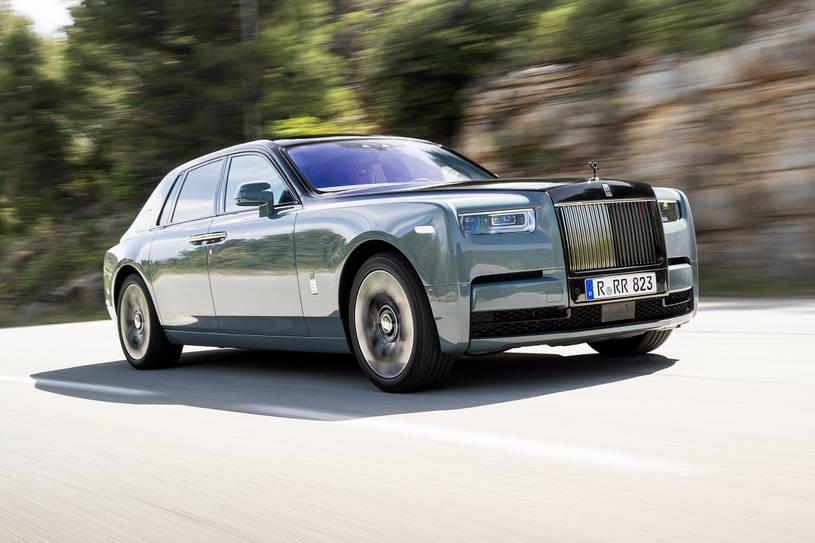
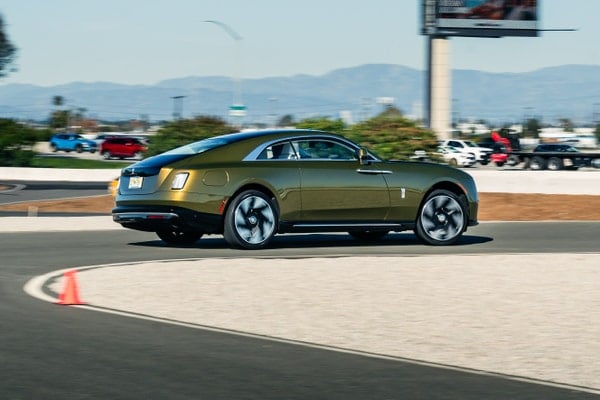
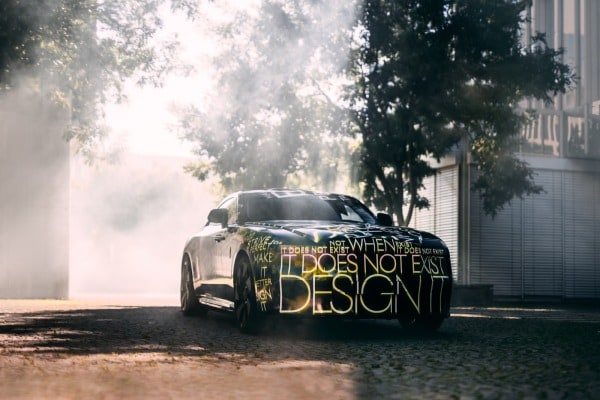
    This is a rare picture of the 102EX actually moving. Like most concept cars, it was built for projecting an idea more so than actually demonstrating it. | March 30, 2011

Road Test

First Drive: Rolls-Royce 102EX

Electricity as Luxury

    20 Ratings

    Rolls-Royce has been using the wrong kind of power plants for the last 105 years. After one drive in the electric Rolls-Royce Phantom, code-named 102EX, we realize what a lousy source of power the internal-combustion engine is for such a car.

    A piston engine is a collection of hot metal components all turning, pumping, pounding and grinding around and against each other. It creates a lot of heat and even more noise. And yet despite all that, it's still so limited in its design that it has to run through a box of gears simply to extract an acceptable performance envelope from its narrow power band.

    This provides progress that is both noisy and subject to continual interruption by the need to change gear. What could be less suited to a Rolls-Royce?

    A Taste of Rolls-Royce's Future
    The 102EX (or Phantom Experimental Electric, as Rolls prefers to call it) sweeps up to its factory next to the Goodwood racetrack amid the gently rolling hills of southeast England.

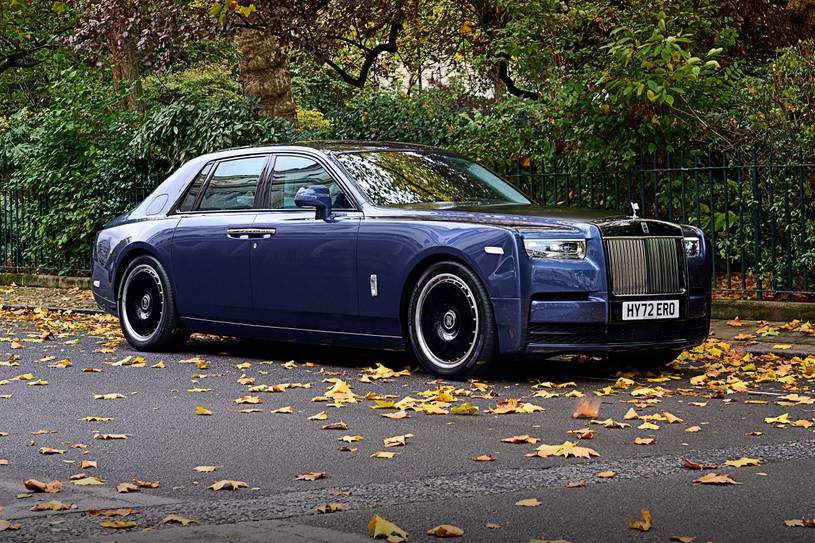
    On the outside, the translucent hood ornament and transparent cover over the charging socket are the only clues that this Rolls is unlike any other. Inside there's even less to spot: The unique power reserve meter now reads past 100 percent, to denote when the electric motors actually return power to the battery during deceleration. Otherwise, the only visual clue is a big red button in the center console.

    This is a prototype, and only the fourth time it has ever moved under its own propulsion. We're told that should something go wrong, we're to stop the car, hit the red button and run. Well, they do call it the "experimental" electric after all.

    No V12, Just 1,500 Pounds of Batteries
    Before heading off, we sneak a look under the hood. A maze of wiring sits atop the largest battery pack ever made for a car. It takes up every ounce of space once occupied by its former resident, the mighty 6.75-liter V12, and it weighs 1,500 pounds alone.

    Its energy is sent rearward to feed two electric motors sitting over the rear axle. Together they generate 389 horsepower, a significant drop from the 453 hp in the normal Phantom. The deficiency is more than made up for with an abundance of torque. In this case there's 589 pound-feet on tap compared to the 531 lb-ft of the piston-powered car. Oh, and the electric motors deliver it the moment you touch the gas.

    Rolls knows it cannot sell V12 gas-powered cars forever.

    Hitting that pedal elicits an odd reaction, to say the least. It doesn't rev, snarl, growl or even hum. It doesn't do anything, in fact, other than pitch you down the road unaccompanied by any sensation other than the accrual of speed. Cocooned away from the outside world in the vast cockpit, it's not even like a Tesla or Leaf, where you can at least rely on increasing wind noise to provide some other impression of performance gain. The sensation here is of sitting still while watching the countryside come to meet you.

    In any other car it would be an unnerving experience, but in the Rolls it's not even slightly disconcerting. On the contrary it feels not only right for such a machine, but also makes you see that everything else that's powered luxury cars until now has been wrong. Smoothness and silence combine into a refinement beyond anything ever sold to the public.

    Purely a Concept
    But here comes the bit where we must inject a cold, hard dose of reality into this warm and cozy scene. Rolls-Royce admits it's not likely to build an all-electric Phantom like this. We only need a couple of hours behind its wheel to know why, as that's all it takes to run the giant lithium-ion battery completely dry. And then unless you have access to a very special power source, you're going to have to park for at least 24 hours if you want to fully recharge the battery. Hard to see too many owners happy with that arrangement.

    It is also subject to the law of unintended consequences. Remove the sound of the engine and you start to hear all kinds of things you never noticed before: the sound of tires on tarmac, your hands moving around the controls, the sniffs and breaths of your passengers. We suspect some might regard these as a poor substitute for a 6.75-liter V12.

    Still, the electric Phantom feels good. The extra 400 pounds it has to carry around doesn't make much of a difference given the car's already substantial weight. And the fact that its top speed is limited to just 100 mph hardly seems to matter. If ever there was a car in which it's not how fast you go, but how you go fast that matters, this is it.

    The absence of a gearbox coupled to what was already one of the best-riding chassis of any car on sale means the Phantom glides like no other car ever built. Turning around in a golf course parking lot I noticed a gardener, head down, busily tending his plants. The front fender must have passed less than 6 inches from his rear, yet he never looked up. If I'd wanted I could have bumped him into his flower bed without him having ever heard the approach of his 3-ton assailant.

    And the Point Is?
    Why did Rolls spend an undisclosed but substantial sum creating a one-off prototype it knows will never make it into production? Simply put, it wanted to start conversations among its customers about potential future power sources. And let's face it: When you're Rolls-Royce you don't just e-mail a questionnaire to your customers and expect a response.

    The fact is, Rolls knows it cannot sell V12 gas-powered cars forever. At some stage it believes legislation will make such engines illegal if not merely impractical. With that in mind, the company needs to find the right solution in time to develop, test and sell it to a suspicious public. The electric Phantom is the first part of that process.

    How should it end? Rolls-Royce asked that very question of us.

    Well, how about taking the next-generation Phantom, fitting it with this electric powertrain and then supplementing it with a suitable onboard generator to supply electricity? In other words, make it just like the Chevrolet Volt, only twice as large, twice as heavy and 10 times more expensive.

    A tough sell, maybe, but once customers feel how quiet and refined an electric Rolls-Royce can be, it won't sound quite so ridiculous.

    Edmunds attended a manufacturer-sponsored event, to which selected members of the press were invited, to facilitate this report.

    Sort By:

    nasahrsandi9 says:

    12:37 PM, 04/04/2011

    This is incredible! they should make it a range extended though just like the volt.

    ralphhightower says:

    02:06 PM, 04/02/2011

    I like that blue!

    My wife wants a blue car so I was overruled when I wanted a red Chevy HHR on the lot. I like the Ice Blue that Chevy offers on the Cruze.

    bmw__m5 says:

    08:25 PM, 03/31/2011

    I live in the second wealthiest town in the tri- state area and have seen one Rolls Phantom in the 11 years I've lived hear. Bentleys? I can't count them with my hands AND my toes. When the Conti came out it was like the iPad here; everyone had to have one.

    noobnox says:

    07:29 PM, 03/31/2011

    Ditch the massive V-12 for a relatively small V-8 and electric motor and this land yacht would make a good hybrid for obscenely wealthy people outside of the middle east. Just think of the regenerative power generated from the brakes trying to reign in this freight train!

    clerk1892 says:

    05:59 PM, 03/31/2011

    Wealth doesn't necessarily buy class. Damned thing looks like a Beluga whale.

    bmw__m5 says:

    05:15 PM, 03/31/2011

    Since all Rolls- Royces end up in the Middle East anyway who would buy an electric one? All the British politicians drive Bentleys.

    greenpony says:

    09:31 AM, 03/31/2011

    "that's all it takes to run the giant lithium-ion battery completely dry"

    "Battery type Nickel cobalt manganese"

    It's the question everbody's been thinking, but nobody has asked.

    delraylocal says:

    09:24 AM, 03/31/2011

    Some things should not go green, and a Rolls is one of them.

    mercedesfan says:

    08:57 AM, 03/31/2011

    I'm surprised at the people who don't like this. If there is another car better suited to a silent, electric powertrain than a Rolls-Royce, I don't know it. These beasts already weigh as much as a small house and have expansive space to put a battery pack, so it really makes sense. Range is still an issue, of course, but battery technology is improving so quickly by the time RR gets around to making a full fledged electric car it will probably be feasible.

    @motorstreet,

    Hydrogen fuel cell vehicles ARE electric cars. The fuel cell simply replaces the big, heavy lithium ion battery pack, but the power is still delivered via electric motors. And the main issue with hydrogen right now (aside from the fact that fuel cells generally have a much lower capacity than lithium ion batteries) is that we have absolutely zero infrastructure to support it. At least many companies have electric vehicle charging stations.  

    motorstreet says:

    08:39 AM, 03/31/2011

    Rolls-Royce cars are designed to do thousands of miles in complete comfort, they're long-distance cars. I think it would be extremely annoying to have a 8-20 hour stop every 120 miles. This will not work. BMW should go back to working on Hydrogen technology and quit wasting their time with 6000 pound electric cars. A Rolls-Royce Hybrid would be good, how about a V12 or V8 with a 200hp electric motor and a electric only range of 10-20 miles

    Sort By:

    Close

    Share on Facebook Share on Facebook
    Share on Twitter Share on Twitter

    Advertisement

    Speed Read

    Vehicle Tested:

    Rolls-Royce 102EX

    Base Price:

    N/A

    Engine:

    Dual 145 kW electric motors

    Gearbox:

    Single speed

    Power:

    389 hp

    EPA Rating:

    N/A

    On Sale:

    N/A

    Tags

    Specs & Performance

    Vehicle
    Year Make ModelRolls-Royce Phantom Electric 4dr Sedan
    Vehicle TypeRWD 4dr 5-passenger Sedan
    Drivetrain
    ConfigurationRear motors, rear-wheel drive
    Horsepower (hp @ rpm)389
    Torque (lb-ft @ rpm)589
    Electric motor rating (kW)2 x 145 (290)
    Battery typeNickel cobalt manganese
    Battery capacity, rated (kW-hr)71
    Plug-in type (110v/220v)Both
    Charge time (hours @ 110v/220v)20 hours single-phase/8 hours three-phase
    Plug-in driving range, mfr. claim (mi.)120 miles
    Transmission typeSingle speed with integral differential
    Transmission ratios (x:1)6.5
    Final-drive ratio (x:1)6.5
    Chassis
    Suspension, frontDouble wishbone
    Suspension, rearMultilink
    Steering typeElectrohydraulic speed-proportional power steering
    Turning circle (ft.)45.3
    Tire make and modelGoodyear EMT
    Tire typePerformance front - performance rear
    Tire size, frontP255/50R21 106W
    Tire size, rearP285/45R21 109W
    Wheel size, front21-by-8 inches
    Wheel size, rear21-by-9.5 inches
    Wheel materialAlloy
    Brakes, front14.7-inch ventilated disc
    Brakes, rear14.6-inch ventilated disc
    Track Test Results
    0-60 mph, mfr. claim (sec.)Sub 8.0 seconds
    Dimensions & Capacities
    Curb weight, mfr. claim (lbs.)5,996
    Length (in.)229.9
    Width (in.)78.3
    Height (in.)64.5
    Wheelbase (in.)140.6
    Track, front (in.)66.4
    Track, rear (in.)65.8
    Legroom, front (in.)40.5
    Legroom, rear (in.)43.7
    Headroom, front (in.)41.4
    Headroom, rear (in.)38.5
    Shoulder room, front (in.)59.4
    Shoulder room, rear (in.)56.3
    Seating capacity5
    GVWR (lbs.)6,680
    CollapseSpecs and Performance Expand Collapse

    Advertisement