INSIDE LINE

$4.50-Per-Gallon Gas Is Sweet Spot for EV Acceptance, Says Harvard Study

Media Player

  • "Will Electric Cars Transform the U.S. Vehicle Market?" Picture

    "Will Electric Cars Transform the U.S. Vehicle Market?" Picture

    The cost of gas will need to rise above $4.50 a gallon before Americans flock to EVs, says a new Harvard study. | July 28, 2011

News

$4.50-Per-Gallon Gas Is Sweet Spot for EV Acceptance, Says Harvard Study

    5 Ratings
    Just the Facts:
    • Electric vehicles won't be accepted by the American public until gasoline hits $4.50 a gallon, according to a new Harvard study.
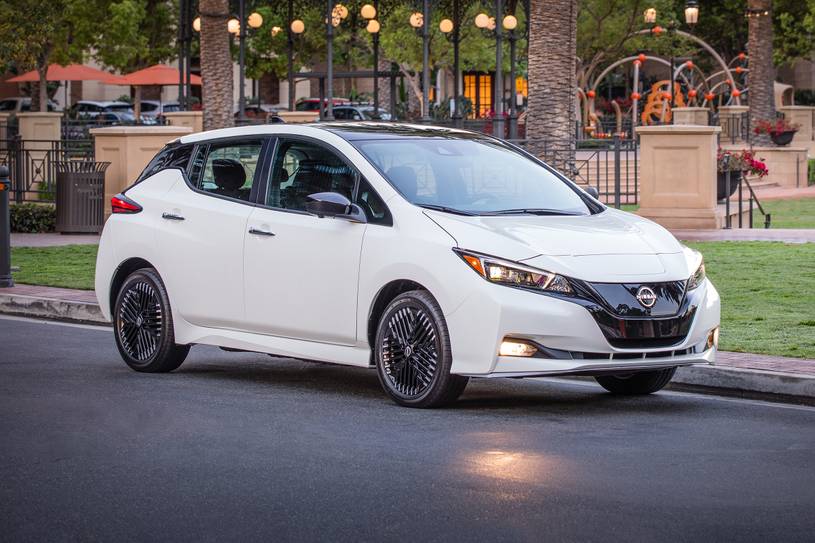
    • The study also finds that, over the life of the car, plug-in hybrids like the Chevrolet Volt are $5,377 more expensive than gas-powered cars, while battery-electric vehicles like the Nissan Leaf are $4,819 more expensive.
    • The study comes as President Obama is set to roll out dramatically higher fuel economy standards on Friday.

    CAMBRIDGE, Massachusetts — Electric vehicles won't be accepted by the American public until gasoline hits $4.50 a gallon, according to a new Harvard study.

    The study also finds that, over the life of the car, plug-in hybrids such as the Chevrolet Volt are $5,377 more expensive than gas-powered cars, while battery-electric vehicles such as the Nissan Leaf are $4,819 more expensive.

    "Plug-in hybrids stay more expensive than purely battery-powered cars in every scenario," said the study "Will Electric Cars Transform the U.S. Vehicle Market?" by researchers at the Harvard Kennedy School.

    It added: "If consumers are to buy the millions of battery-powered cars required to cut emissions and gasoline consumption significantly, the cost of gasoline will need to rise above $4.50 a gallon, and battery technology will need to improve to increase range and reduce cost."

    The study said its aim was to determine if Americans will buy electric cars. Researchers said the answer is "yes — but only if the electric vehicles are competitive with conventional cars on cost, range and fueling convenience."

    The U.S. Energy Information Administration predicts $4.50-a-gallon gasoline is not a likelihood in the near future. On Thursday, however, per-gallon gasoline prices in San Francisco topped $4, while in Detroit they hovered just below $4.

    The EIA's July forecast predicts that the annual average regular-grade gasoline retail price will increase from $2.78 per gallon in 2010 to $3.56 per gallon in 2011 and to $3.65 per gallon in 2012, both slight reductions from its outlook in June. The hike is attributed to the "higher average cost of crude oil compared to previous years and an increase in U.S. refining margins on gasoline."

    The Harvard study comes just before President Obama is set to roll out dramatically higher fuel economy standards on Friday. The new standards are expected to ultimately reach 54.5 mpg by 2025. The next round of fuel economy standards is part of a national program to improve fuel efficiency for cars and light-duty trucks for model years 2017-'25.

    The Obama administration previously had set a goal — which now seems unrealistic — of getting 1 million electric cars on the road by 2015 to cut air pollution and reduce dependence on foreign oil.

    "This program, which builds on the historic agreement achieved by this administration for model years 2012-'16, will result in significant cost savings for consumers at the pump, dramatically reduce oil consumption, cut pollution and create jobs," said White House spokesman Jay Carney, according to a statement posted on the White House Web site.

    The major automakers have yet to weigh in on the White House plan.

    Inside Line says: What's your tipping point for making the switch from a conventional ride to an EV?

    Sort By:

    nissan_rocks says:

    07:14 AM, 10/21/2011

    Was in the uk a few years back, it was like $7 a gallon!!!  But hey we can afford it in the US we all have credit cards...lol

    eki79 says:

    05:33 AM, 08/01/2011

    $4.50 per gallon is still cheap, compared to prices in Finland. :-|
    At the moment, we're paying about $5.98 per gallon!

    tdiluv says:

    04:20 PM, 07/29/2011

    I think the sweet spot for EV's  is $15k  per car not $4.50 per gallon gas !

    dirtycarl says:

    04:06 PM, 07/29/2011

    First of all, public transportation is NOT the answer. It makes sense in a very few urban cities in this country, but for 95% of Americans public transportation is a 100-year step backwards.

    Second, the gasoline price point at which I'd switch to an EV is at least 6 or 7 dollars per gallon. At $4.50/gallon will I re-think my vehicle choice? Absolutely, but to a Hyundai Elantra or Ford Fiesta, not to a range-limited, hours-long-charging EV.

    The price of gas is not what's keeping people from adopting EV's, it's that the technology is not yet ready to give the consumer the convenience they're looking for.

    murrayt says:

    03:48 PM, 07/29/2011

    Reality always seems to mess up statistics.  Humans always seem to do what is in there own self interest.  Statistics don't ever seem to be able to allow for human deviation.

    I will probably receive my Nissan LEAF next month after waiting about two years on their "Priority List".  With a calculated 2.5 cents per mile it will take awhile to make up the $5,000 premium we are paying to enjoy filling up at home and saving about $200 per month in gas at today's prices.

    I'll pay thousands to loosen the noose the Oil Companies have around my neck.  Marketing 101 teaches that consumers will find substitute products if entrenched brands raise prices too much.  For too long consumers have had no choice but to buy gas for Petroleum fueled vehicles.  Now consumers can "Vote" with their wallets.  I'd rather give my money to Nissan, Chevy, or Ford for an EV instead of the Oil Companies.  I bet millions will buy EV's as fast as they become available.

    I predict that the "Statistical Experts" have again underestimated humans need to fight back or get revenge when they feel they have been abused.  Electric vehicles give consumers more control of their energy expenses.  Look at your home electric bill.  Does KW costs go up and down like the gas pump?  No.  Because it is government regulated to keep prices in check.  Gas prices are controlled by greed, not logic.  Oil Companies will not be able to abuse EV consumers at the pump.  I am going to smile every time I pass a gas pump driving my EV.  Sweet revenge.

    compressor says:

    01:18 PM, 07/29/2011

    Raising the gas tax to pay for public trans infrastructure and roadway maintenance is one thing (that I agree on).
    Raising the gas tax to encourage the purchase of EV is a completely separate issue.  Don't mix the two.

    As for EV's themselves - they do solve some problems.  THe majority of people use their cars in stop and go traffic.  EV's in that scenario are vastly more efficient that ICE.  Power does need to come from somewhere - but that will be the case regardless of the type of transportation.  Centralized power is far easier to regulate than millions of individuals power devices (ICE's) that people must maintain.

    BTW - we have a solution to this problem now without massive expenditure.  Its called a bike.  A 10 mile commute on a bike is not difficult and in most cases, very similar in duration to a car commute especially if you live in a high traffic area.

    The government should provide tax breaks to companies that offer bike parks and showers for their employees.  State and Fed can put in bike lanes.

    erik25 says:

    10:56 AM, 07/29/2011

    Make public transportation cheaper and more available,so going to a big city you don't stand in morning traffic and ofcourse in the evening.......People who work at the same spot don't need to sit in traffic every day but you have to give an alternative that is cheaper and lesser time consuming.
    Americans have to change there habbits and the easiest way to do that is to raise the gas price.
    I would have to pay more at the pump to,but that is the price i have to pay for driving now and secure driving in the future.Still,driving an electric car for everybody without the "old" resources will take a while.But who can pay for an EV has to think also about producing there own electric,maybe some solar panel on the roof? Can cut your electric bill to,because electric power will go up in price to
    in the near future............i believe it's happening already........

    touringtest says:

    09:27 AM, 07/29/2011

    compressor:

    Gas tax is how highway infrastructure is paid for. And it's running out of money.

    I'll gladly pay more at the pump to not have bridges falling down on me (that is, when CalTrans isn't deliberately destroying them).

    Electric cars don't solve anything since they still use coal or nuclear energy, and still cause the same congestion. We need better urban planning and public transportation, and the car becomes a hobby like equestrianism. It's a long-term project that private enterprise can't take the lead on. It's a textbook case for federal and state government stimulus spending.

    compressor says:

    09:13 AM, 07/29/2011

    morey000,
    If your statement is in support of raising the Fed gas tax, I'd like to know why?  Though this will help EV sales, there are other, much more effective means of getting people into more fuel efficient cars and EV's without hurting those that don't have the money to purchase a new EV or more fuel efficient used car.

    Secondly, higher fuel prices hurt everyone due to their effect on the price of goods (i.e. food, clothing, appliances, raw goods, lumber, steel, etc.).  As we have recently seen, this severely limits economic growth.  Over the long term, I think it is in the USA's best interest to subsidize EV's and the required  infrastructure until they become a more accepted vehicle for general commuting.  Though this alone is a tax drain (as opposed to a revenue increase via gas tax) the overall effect on the economy will be positive, ensuring gross gov. revenue stays where it needs to be.  THe short term financial outlay is much more beneficial than a long lull in economic growth, all while achieving the end goal of lowering fuel use in personal transportation.

    morey000 says:

    08:55 AM, 07/29/2011

    the federal gas tax, at 18.4 cents/gallon, hasn't been raised since 1993.  Just sayin'.

    Sort By:

    Close

    Share on Facebook Share on Facebook
    Share on Twitter Share on Twitter

    Advertisement

    Tags

    Advertisement