INSIDE LINE

Long-Term Test: 2009 Nissan GT-R

Media Player

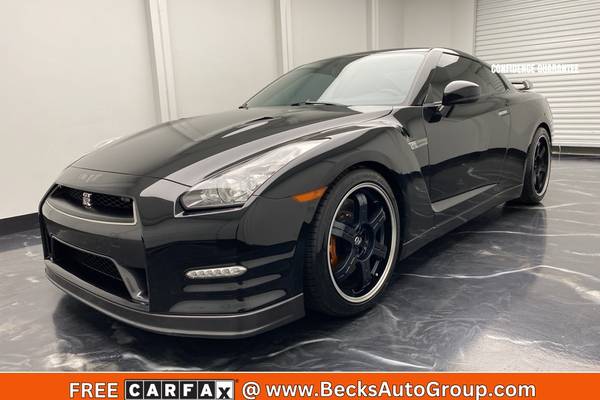
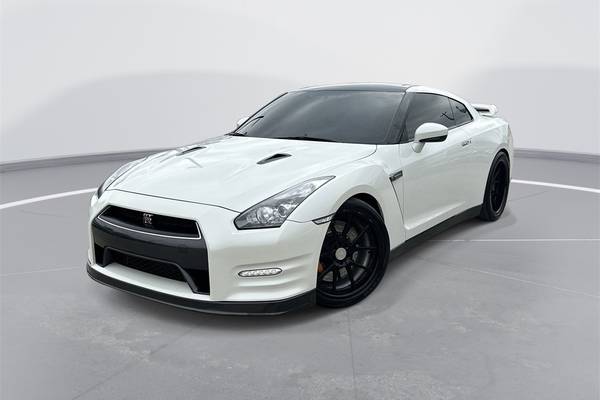
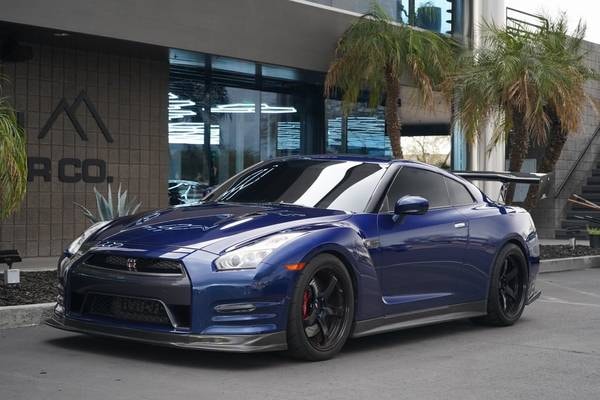
  • 2009 Nissan GT-R Picture

    2009 Nissan GT-R Picture

    An everyday supercar means everyday duties. | December 07, 2009

Road Test

Long-Term Test: 2009 Nissan GT-R

Wrap-Up

    74 Ratings

    So Mike Schmidt, vehicle testing manager, is driving along in our Chevy Silverado long-term test truck somewhere in Sonoma, California. It's February 14, 2007. He turns away from the rolling hills and vineyards, tilts down his wire-rim sunglasses, and says, "Happy Valentine's Day." His passenger, a photographer, laughs and rolls down the window to spit out some sunflower seeds, his main food source these past few days.

    Just a couple of spies out to shoot secret test sessions of what will become the 2009 Nissan GT-R.

    Yes, we've been on the GT-R's case for some time. Before massive repair costs. Before voided warranties and midyear price hikes. Before the launch control controversy. Before we flew to Tennessee to buy a 2009 Nissan GT-R as a long-term test car. Before we flew to Japan to test a J-spec Nissan GT-R. Before Nürburgring lap times. Before we knew it was going to be a Nissan and not a top-trim Infiniti. Before we even knew for certain that the U.S.-bound Nissan supercar was going to drop the Skyline moniker. Before any of this, we sent two dudes to patrol the American Southwest and Northern California in search of Godzilla. For four weeks and 7,500 miles we hunted the elusive monster.

    From the first, the Nissan GT-R was big news. And we knew it.

    Why We Bought It
    The release of the 2009 Nissan GT-R in the U.S. could go down as the most significant moment in this country's history of sports car introductions. Well, maybe we're young and have a short memory. Nevertheless, new BMWs, Corvettes, Ferraris and Mustangs come along every few years, but this was different.

    The Nissan Skyline GT-R had been terrorizing the streets of Japan for decades. Later models like the R33 and R34 GT-Rs taunted Americans, gaining fame in video games (Gran Turismo), anime (Initial D), and movies (The Fast and the Furious). An all-wheel-drive, hyper-tech Nissan that could run with a Porsche 911 Turbo? And we didn't get one in America? It hardly seemed fair. Americans couldn't have it, so Americans wanted it bad.

    As it turned out, the purchase of this GT-R from Alexander Nissan of Cool Springs in Franklin, Tennessee, was one of the easiest capital expenditures we've ever had to justify. We would have a 2009 Nissan GT-R, the hottest car of the times, on hand not only for real-world impressions and service reports (not to mention daily driving), but also we'd have the mighty 480-horsepower Nissan to test against whatever the automotive world might throw at us.

    Durability
    "I want Comf, you stupid car." — Scott Oldham, Editor in Chief

    Comfort was a common theme in our conversations throughout the year we had our 2009 Nissan GT-R. Some (well, most) people complained that the GT-R, even in its selectable comfort mode, was too harsh. "Plenty of R, not much GT," said Automotive Editor John DiPietro. Plenty of road noise came through into the cabin, while the transmission made sounds like the factory it was made in. Complaints were frequent, but at the same time no fewer than five people took the GT-R on road trips to Vegas. Deputy Managing Editor Caroline Pardilla even admitted that the Nissan was her "dream road trip car."

    Our transmission never failed. It was replaced at Nissan's request for inspection. We never had a problem.

    This could explain why at 16,389 miles, we spent $853.90 on new front tires. Such is life with a wheel alignment meant for peak performance on the track and high-performance Bridgestone RE070R tires. We repeated this act at 27,780 miles, but the price of rubber had increased, so we paid Stokes Tire Pros $877.96 for the 285/35R20 RE070Rs plus another $30 for a patch on the worn-but-still-good rears.

    Once Senior Editor Erin Riches had driven the GT-R back from its purchase at Nissan of Cool Springs, its odometer said 3,903 miles, so we took it to its first service appointment at Nissan of Santa Monica. We were taken with the professionalism and attention the GT-R-trained service manager gave our car. It was, and still is, the best service we've ever received, and this includes what we got from the high-end, small-volume Ferrari shop that worked on our 1984 Ferrari 308 GTSi Quattrovalvole. This 2009 Nissan GT-R was the first example the dealership had ever serviced, and in fact it didn't even have a pricing schedule for the GT-R. The dealership pulled a couple numbers out of the air and charged us $179.58 for a change of engine oil. This was to be the least we ever paid for a basic service on our GT-R.

    We had the car serviced at 5,979 and then 12,072 miles, and while both bills were expensive, they were within reason. At 18,913 miles, however, things got crazy, as in $2,009.67 crazy. As in so crazy that we paid $114 per quart of transmission fluid. Two more services followed, at 24,900 and 31,067 miles.

    But these were the expected services, the ones that are in the maintenance book. What we didn't count on were the surprise services. At 5,400 miles we had to replace the vent control valve, which is responsible for releasing excess pressure from the fuel tanks. Without this, the car wouldn't accept fuel and gave us a warning light. In the end, Nissan replaced the fuel tank, the filler tube and the valve under warranty. Nissan also noticed a spot of moisture on one of the seals for the transmission case, and since this was about the time that launch control issues were popping up (more on that later), Nissan asked if it could take a look at our car's transaxle. We agreed and a new one was sent to Santa Monica in its stead.

    Let's repeat that: Our transmission never failed. It was replaced after Nissan asked to inspect it. We never had a problem. We did, however, have another problem with the vent control valve at 27,170 miles. By this time, Nissan had a new fix that was guaranteed to last.

    We also got rear-ended by a wide-eyed onlooker. No one was hurt, and 3,500 of the other guy's insurance dollars and just about 30 days later we were back in business.

    Tires, transmissions, oil changes, a windshield, two vent control valve issues, a transmission reprogram and a steering lock assembly all conspired to keep our 2009 Nissan GT-R out of service for a staggering 67 days. If we subtract the time idly spent waiting for an insurance check and a new bumper, the number drops to 37 days out of service, which is 12 days more than our 1984 Ferrari 308 spent idle because of service issues. Although, in all fairness to the GT-R, it did cover nearly double the mileage than the Ferrari did during its long-term test.

    Total Body Repair Costs: $3,500 (paid by at-fault driver's insurance)
    Total Routine Maintenance Costs (over 15 months): $3,953.58
    Additional Maintenance Costs: $4,334.56
    Warranty Repairs: 6
    Non-Warranty Repairs: 5 — windshield, three sets of tires, body damage
    Scheduled Dealer Visits: 6
    Unscheduled Dealer Visits: 10
    Days Out of Service: 67 (37 + 30 for body damage estimate/repair)
    Breakdowns Stranding Driver: 0

    Performance and Fuel Economy
    The first time we tested our 2009 Nissan GT-R, we lined it up, flicked all of the calibration levers on the center stack into the down position, as in suspension (Race mode), transmission (Race mode) and stability control (off). We stood on the brake, stood on the throttle and then, when we were ready, let off the brake and held on for the ride. The rear tires spun, the front tires spun and the engine stayed in the sweet spot of its power band. The GT-R got to 60 mph from a standstill in 3.8 seconds (3.5 seconds with 1 foot of rollout like on a drag strip) on its way to a quarter-mile pass in 11.8 seconds at 118.6 mph. It was easy, fun, fast and really, really fun.

    But we don't test on a drag strip. A drag strip has jacked-up pavement covered in traction goo and leftover rubber transferred from the tires of those who have gone before. This means if you can hook it up without blowing up, a drag strip is a fast place to launch. Hooking up, however, has some drawbacks, such as massive driveline stress. Driveshafts snap, diffs blow and every so often a transmission will grenade itself. Rocketing a 3,858-pound car to 60 mph in under 4 seconds takes a lot of power and if all doesn't go smoothly, well, it's going to get expensive. And if a carmaker happens to have a built-in launch-control system that enables the car to do such things, well, it's going to get really expensive.

    After a few GT-Rs blew their transmissions while being launched with heedless abuse by amateur goons (we launched like professional goons), Nissan backtracked, cited a technicality in the owner's manual that says all events while traction control is off are not covered by the warranty, and turned the supercar into an Internet meme of lolcat proportions.

    Nissan offered a fix, though. A reprogramming of the launch control logic that it said wouldn't require any fiddling with a new driving protocol or the traction control. You would just get in, hit the gas and wait until you're tired of accelerating. We had the service done a few days before it was widely available and the results were surprising. The 60-mph mark came up faster, just 3.6 seconds (3.4 seconds with 1 foot of rollout like on a drag strip) and the quarter-mile passed at 11.7 seconds at 118.5 mph. Monkey as we might, we couldn't beat the time the launch control put down with our own seat-of-the-pants efforts. This time could've been done by a trained ape — mash the gas and hold on. That guy in the cubicle next to you, you know, the one with the runny nose and dry skin, yeah, he can do 11s run after run. It's almost too easy.

    Fuel economy was what you'd expect from an all-wheel-drive car with 480 hp that weighs 3,858 pounds, an average of 16.4 mpg with a best tank of 21.8 mpg. The low mark of 11.5 mpg wasn't the only entry in the mid-11s, so it was no fluke.

    Best Fuel Economy: 21.8 mpg
    Worst Fuel Economy: 11.5 mpg
    Average Fuel Economy: 16.4 mpg

    Retained Value
    The Nissan GT-R's vital statistics might be well known, yet they remain highly impressive. It's priced some $50,000 less than its chief rival, the Porsche 911 Turbo. It's got an iPod hookup ($360), an excellent navigation system, pearl-white paint and needlessly expensive floor mats ($280). It also goes stupid fast and has more computers than Alabama.

    At the same time, there was no data going into our test about the way an $80,000 Nissan would depreciate. We were, once again, breaking new ground. Its value might hold up due to high demand. It could increase in value due to extremely high demand. Or it could, as we found out, plummet in value due to 30,000 miles on the odometer, a decimated economy, reliability concerns and, probably, the Nissan badge.

    When we put up our 2009 Nissan GT-R for sale, informal betting pools sprung up all over the office. "Someone will steal it for $66K," said one. "No way. $70K. This car's a monster!" But others had been following, via eBay and the North American GT-R Owners Club, the sale prices of GT-Rs across the country, and so Vehicle Testing Assistant Mike Magrath (your obedient servant) said, "It'll be $55K max. And then only if someone really needs a white one." No one else thought it would be so low.

    We headed to CarMax, our default pricing agent and backup sale spot. After a thorough walkaround and some finagling with his computer system, the CarMax agent came back with an offer of $50,000. Convinced we could do better, we passed and headed for the Internet. We tried Mota, which sells across a number of Internet outlets. Finally we just went to eBay.

    The reserve was set to $53,000, and then reduced to $52,000. Bidding was steady if not frenzied. The final two bidders had solid histories and were making smart moves. If the reserve line was crossed, this looked promising.

    On the last day of bidding, the price barely moved. As the clock clicked to zero, the winning bid stood at $52,600. The bidder sent us a deposit and flew in just days later. We picked him up at the airport, finished the paperwork and watched him drive away, en route to his home in Atlanta, in our — no, his — 2009 Nissan GT-R. Everyone was happy with the way things turned out. Except Magrath, of course, as he lost his $1 bet.

    Combine the depreciation and the $8,288.14 we spent in repairs, then divide by the 15 months we had the car and it turns out we spent $1,683.54 per month, excluding insurance and fuel, on this car.

    True Market Value at service end: $62,828
    What it sold for: $52,600
    Depreciation: $16,965 or 23% of original paid price
    Final Odometer Reading: 31,067

    What It all Means
    Last year the 2009 Nissan GT-R made our list to purchase for the long-term fleet and your list as an Inside Line Readers' Most Wanted. Now, thousands of dollars later, our camp is split about the whole experience. Half are screaming mad at the cost, reliability issues and now the low resale value. The other half are still impressed with how much car this is for under $80 grand. Even including our repairs, this exercise still cost $40,000 less than the purchase of a 2010 911 Turbo, which carries an MSRP of $133,775.

    While it was certainly a test of metal, this was also a test of perception and patience. The combination of mechanical failures and a high level of required attention is not a good one, especially from a nameplate like Nissan, from which U.S. consumers expect trouble-free performance in a way that they don't demand of an exotic nameplate like Porsche. But at the end of the day, you get what you pay for. As long as you don't expect the GT-R to be as reliable or cheap as your Altima just because it wears a Nissan badge, the GT-R is a solid buy. Daily driver? Probably not. 4/7? Absolutely.

    Edmunds purchased this vehicle for the purposes of evaluation.

    Road Test

    Introduction

    There's no rest for the weary.

    First an Audi R8 stormed its way into our long-term garage. Its all-wheel-drive system, single-clutch automated manual transmission and futuristic looks made it an instant favorite. But before we'd had a chance to fully savor the German-Italian hybrid, a Mitsubishi Lancer Evolution X MR showed up with a more advanced transmission, a more sophisticated all-wheel-drive system and a higher fun-to-cost ratio. More substance than style, it appeals more to our rational love for speed than the prurient desires conjured by the Audi.

    And now, only a few weeks into that test, we've bought something that makes the Evo look sluggish, simplistic and, well, attractive in comparison: a 2009 Nissan GT-R. Sure, we're a bit tired from the wave of adrenaline we've been riding, but for our dedicated readers we'll suck it up and spend the next 12 months putting 20,000 miles on Japan's 480-horsepower, all-wheel-drive sensation known colloquially as Godzilla.

    What We Bought
    Skyline. GT-R. Godzilla. It doesn't really matter what you call it. Nissan's high-tech hot rod has made a bigger splash on U.S. soil than Rodan being dropped into Lake Mead. And why shouldn't it? It's faster than the Corvette Z06, faster than the Porsche 911 Turbo, faster even than our long-term Ford GT. With a 0-60 time of 3.5 seconds, the 2009 Nissan GT-R is the quickest production car we've ever tested. Traditionally, this type of organ-displacing acceleration doesn't come easy; a trained driver, a safe location and a few passes are required to get every last drop of performance out of a vehicle. But with the GT-R, not so much. It's easy.

    Of course, it all starts with the motor. An all-aluminum 3.8-liter V6 is matched with twin IHI turbochargers and tuned to deliver 480 hp. Attached to the new engine via a driveshaft built from carbon-fiber composite is a six-speed dual-clutch transaxle developed with behind-the-scenes assistance from Ricardo, which engineered the dual-clutch unit for the 1,001-hp Bugatti Veyron.

    In Race mode (one of three user-selectable transmission settings), the shift action is almost imperceptibly swift. Then the turbocharged power swells and rockets the Nissan forward in a way previously only known to big-wave surfers and human cannonballs. Downshifts arrive with the quickness and predictability required to keep the car balanced in even the trickiest torque-transfer scenarios. The other two modes are normal, which Nissan calls Sport and Snow. We've yet to experience snow in the GT-R, but, man does it sound like fun. (Of course, we'd probably still set the transmission to R.)

    In every transmission mode, the all-wheel-drive system can send as much as 100 percent of engine torque to the rear wheels but no more than 50 percent to the front wheels. When you combine this with the transmission options (including launch control) and 480 hp, Joe Everyman can replicate that 3.5-second blast to 60 in his driveway. Just be wary of the neighbor's house across the way.

    Acceleration isn't the only area of performance in which the 2009 Nissan GT-R holds a testing record with us. Despite a curb weight of some 3,800 pounds, it nearly ripped up the asphalt in a stop from 60 mph of just 98 feet. Brembo makes the stoppers that help accomplish this feat, and full floating 15-inch vented cross-drilled rotors are grabbed by six-piston monobloc calipers in front and four-pot monobloc units in the rear. Specially constructed, nitrogen-filled Bridgestone RE070R tires (high-performance summer run-flats) do the dirty work on the pavement. The only way we can figure to stop this much weight faster is to drive into a wall and, even then it'd better be a big wall (momentum's a bitch).

    The 255/40ZRF20 front and 285/35ZRF20 rear Bridgestones are only available for the Premium trim level of the Nissan GT-R. Also included in the $2,050 Premium package are side curtain airbags for the driver and passenger, an 11-speaker Bose audio system and heated front seats. There are also two manufacturer-installed items on our 2009 Nissan GT-R: an iPod interface ($360), and plush floor mats featuring a GT-R emblem (a staggering $280).

    Total out-of-pocket cost: $73,165. Yes, we got it for MSRP. How? For starters, we started the search nearly nine months ago. We eventually signed a deal with Nissan of Cool Springs, a place that understands car enthusiasts that's in Franklin, Tennessee, some 2,500 miles from our office in Santa Monica, California. Within days of the official availability of the 2009 Nissan GT-R on U.S. soil, we sent Senior Editor Erin Riches to pick it up in Tennessee, and updates from the inaugural drive across the country will be posted in our Long-Term blogs.

    Why We Bought It
    Confused about the hype over the 2009 Nissan GT-R? Think of it as a Corvette filtered through the Japanese mindset. Not the Japanese mindset of tradition and duty, but the one of unswerving dedication to progress and a fanatical addition to technology. Whereas the Corvette has stuck to the same formula — front-engine V8, rear-wheel drive, fiberglass body — the Skyline GT-R has followed only the incessant drumbeat of the future.

    Previous iterations of GT-R (née Skyline GT-R) used the twin-turbocharged iron-block RB26DETT inline-6. Want more specs on the RB286? Go to your local mall and find the first kid with a NOPI shirt or lowered Civic and just mumble that code. Like Indiana Jones fitting the long-lost key into a temple door, gears in his brain will spin and whir until a gold mine of specs and figures flies out at a rapid pace. But Nissan has no interest in compromising performance potential for heritage, so it has adapted its latest hardware to the GT-R's mission.

    So now we have a twin-turbo all-aluminum V6, lighter and more powerful (and more adaptable to left- and right-hand-drive versions of this car's packaging) than the former iron-block inline-6. The new dual-clutch unit is quicker than the manual transmission that would have been the preference of traditionalists. But for those pining over a classic GT-R R34, just be glad the new car has arrived as a Nissan instead of an Infiniti.

    Apart from the obvious fact that this is the first GT-R to hit U.S shores with factory-certified air emissions gear, this car gives us an opportunity to really test Nissan's new dual-clutch transmission. We know it's fast on the street and we know it's fast on the track, but we'll see how well it will hold up. The launch sequence has been passed from editor to editor in the office quicker than a virus, and who knows how many times we'll use it?

    The next 20,000 miles are not going to be easy on the GT-R. A car that is supposed to beat the Porsche 911 Turbo should be prepared to haul ass for the long haul.

    Keep up with the 2009 Nissan GT-R in our long-term blogs. Twelve months with Godzilla begins now.

    Current Odometer: 3,752 miles
    Best Fuel Economy: 20.9 mpg
    Worst Fuel Economy: 13.7 mpg
    Average Fuel Economy (over the life of the vehicle): 18.0 mpg

    Edmunds purchased this vehicle for the purposes of evaluation.

    Sort By:

    rlyon says:

    12:28 PM, 12/11/2009

    We know the GT-R is fast, but along with being ugly, it's also unreliable?

    sylvia says:

    08:40 AM, 12/10/2009

    Please keep your comments to the Nissan GT-R.  

    bodyblue says:

    04:56 AM, 12/10/2009

    You bet the Ford had some problems....the JAPANESE design for the control arms and the oil seal.(American)....and that on the first production cars.  But did the IL GT have many problems nope....did it have FAR LESS less than the GT-R...yep.  Did the GT-R get sold off with a huge loss of market value?...Oh yeah....Was the Ford so loved and respected it was purchased by one of the IL editors?  Yes......So yes the first 106 cars that reached consumers had the control arm problem.....and a few more had the oil seal problem....but what car is the better supercar?  We all have our opinions of course, but I am betting history will regard (as is already does) the Ford as an example of what an everyday supercar can truly be (go back and read the posts they are a million times more positive than the GT-Rs) and the Nissan as a flawed experiment that was brought to the market before it was quite ready.

    s1gins says:

    06:07 PM, 12/09/2009

    Yes, the Ford GT is cool but how can you talk about it in reverence complaining about any issues the GT-R has and not mention that all Ford GT's had to be parked for several months because the suspension collapsed!  I'm not saying the GT-R is better (it is half the cost and one third taking in Ford dealer gauging), but seriously the GT-R has not had near the issues the Ford GT had.

    From CARandDRIVER June 2005

    At issue were flaws. Although 15 crude mules were built and tested on racetracks across America, using a different chassis, different engine, different gearbox, and different body, and further tests were run on preproduction "'03 models," apparently all these tests failed to sniff out problems cropping up on production models. The shocker now being reported is cracks found in a suspension control arm. The warning letters sent out by Ford were chilling, reportedly telling owners not to drive the car under any circumstances. Almost 400 cars were recalled for replacement arms. New arms cut by Roush from billet stock were a quick fix until new forged aluminum ones could be engineered.

    There were other problems: a defective electrical component that caused the battery to drain, a climate-control bug, power-steering and engine-coolant leaks, a steering-column rattle.

    But the A-arm glitch was humiliating. Supplied by Citation Corporation in Alabama, the originals used a novel Japanese casting method nicknamed "squish casting" to achieve higher density in the aluminum. Although the same material and method of manufacture are already in use on some foreign cars, including Alfas and Porsches, the arms, as supplied, were inadequate on the Ford GT.

    At the point the first cracked A-arm was discovered last December, only 448 GTs had been produced, according to Automotive News. Of those, 289 had been shipped to dealers and just 106 had reached owners' hands. Ford had the cars trucked back to the factory for the fixes.

    So Ford had taken a chance on a new-for-Detroit method of manufacturing the A-arms, and now it is paying the price-$5000 per car for the fix on the recalled ones. GTs built since then have new arms. But what will most likely annoy those first buyers even more is that some GTs have now been discovered to have an oil leak caused by an improper finish on the crankshaft. The leak on recalled cars was fixed with a device called a Speedi-Sleeve, a commonly used device in engine rebuilding that enlarges the diameter of a part of the crank so the engine no longer leaks. Cars made since this discovery will get cranks with the correct surface finish.

    On the problem cars, Ford's solution will require the dealer to remove the transaxle and install a new rear main seal, retainer, and Speedi-Sleeve on the crankshaft. Ironically, the Speedi-Sleeve is a low-cost item, but the labor involved to get at the crankshaft is a big-ticket item.

    But wait a minute-do buyers of those first cars want their 550-hp engines to be running with Speedi-Sleeves? Not to knock a tried and true product, but it sounds like a fix someone might use on an old pickup truck to squeeze another 100,000 miles out of it rather than just buy a rebuilt engine. So owners of those first cars may feel they're getting damaged goods instead of a perfect new car.

    bodyblue says:

    04:28 PM, 12/09/2009

    "The reason the Ford GT became an instant classic was due to the fact that it was discontinued after only 2 model years."

    Please tell me you dont think it is a classic ONLY for that reason?  If you really do then either you are very biased or....well you must be very biased.  And if you are comparing it to the Supra Turbo then there is nothing more to say.  (I assume you used it for resale example)

    jameswilliard says:

    04:19 PM, 12/09/2009

    Oh yeah and in response to bodyblue's comment:

    Ummm you think the Ford GT was not amazing?  Does anybody think the GT was average?  It was not designed to be a mass market vehicle.  The limited production and amazing performance and race car good looks combined to make it an instant classic.  The GT-R has not achieved that as yet.  It has at best a spotted reputation.


    The reason the Ford GT became an instant classic was due to the fact that it was discontinued after only 2 model years.  Believe me, if Nissan stopped producing GT-R' s today the would be in the same position as used GT's.  Case in point:  Look at Supra Twin-Turbos....I sold my 1994 Supra TT with only 18k mls in 1997 and practically had to beg someone to buy it for $25k and dealers couldn't give new ones away for anything....now look at the $$ that they bring and have been bringing for the last 8-9 years!

    jameswilliard says:

    04:10 PM, 12/09/2009

    Are you guys seriously unhappy with the resale value??  ....You put atleast 3-years (probably alot more considering most GT-R sren't used as much as normal cars) of miles on a car that most people wouldnt even consider buying knowing what it had been used for and how it had been driven and you only lost just over $20k!! .....try doing the same thing with a 911 Turbo or any other competitor and it will be atleast double that amount! I don't care what any of you say, until you have really driven one don't knock this car....it is amazing in everyway.   And I am the owner of an E92 M3 Coupe which although a better all around car definetly lacks the excitement and thrill factor of the GT-R.

    lt1boy says:

    03:30 PM, 12/09/2009

    $180 for an oil change?  You guys could have done it yourself for $18.

    bodyblue says:

    02:33 PM, 12/09/2009

    "If the GT was so amazing...how come it came and went from the market faster than a long term vehicle at edmunds?"

    Ummm you think the Ford GT was not amazing?  Does anybody think the GT was average?  It was not designed to be a mass market vehicle.  The limited production and amazing performance and race car good looks combined to make it an instant classic.  The GT-R has not achieved that as yet.  It has at best a spotted reputation.

    1krider1 says:

    11:43 AM, 12/09/2009

    Fear of reliability issues and plummeting resale value is why I bought a C6 Corvette instead of the GTR.
    I am SO glad I passed on Godzilla.

    I may buy a GTR when the AFTERMARKET fully supports the GTR with bullteproof upgrades and reasoanble replacement costs.

    I still think Nissan should have priced this thing at $50k and made ownership costs reasonable.
    They could have sold many more and use the economy of scale to offset the lower MSRP. Corvette owners that wanted AWD and DSG, and Prosche owners were tired of paying the German premium,  might have jumped ship in high numbers if reliability and ownership costs were better.

    Opportunity lost for Nissan.

    Sort By:

    Close

    Share on Facebook Share on Facebook
    Share on Twitter Share on Twitter

    Advertisement

    Tags

    Advertisement