INSIDE LINE

Police Violated Fourth Amendment Rights With GPS Tracking of Jeep, Court Says

Media Player

  • U.S. Supreme Court Picture

    U.S. Supreme Court Picture

    The U.S. Supreme Court ruled on Monday that law enforcement's installation and use of a GPS device to track a suspect's vehicle violated privacy rights protected by the Fourth Amendment. | January 24, 2012

News

Police Violated Fourth Amendment Rights With GPS Tracking of Jeep, Court Says

    7 Ratings
    Just the Facts:
    • The U.S. Supreme Court ruled on Monday that the use of a GPS device to track a suspect's Jeep Grand Cherokee violated privacy rights protected by the Fourth Amendment.
    • Police had installed a GPS tracking device on the undercarriage of the Jeep when it was parked in a public parking lot.
    • The court said the Fourth Amendment has a special concern for government trespass in "persons, houses, papers and effects." The Jeep Grand Cherokee in this case is considered an "effect."

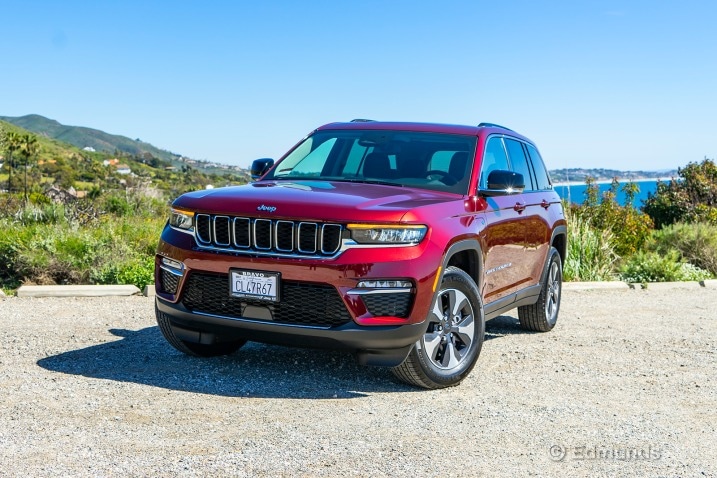
    WASHINGTON — The U.S. Supreme Court ruled on Monday that the use of a GPS device to track a suspect's Jeep Grand Cherokee violated privacy rights protected by the Fourth Amendment.

    But Justice Samuel Alito Jr. noted in a concurring opinion, that "many motorists purchase cars that are equipped with devices that permit a central station to ascertain the car's location at any time so that roadside assistance may be provided if needed and the car may be found if it is stolen."

    Police in this case — U.S. v. Jones — had installed a GPS tracking device on the undercarriage of a Jeep Grand Cherokee registered to the wife of Antoine Jones, the owner and operator of a nightclub in the District of Columbia, when it was parked in a public parking lot. The ruling said Jones "came under suspicion of trafficking in narcotics and was made the target of an investigation." He was the principal driver of the car. The Jeep was monitored for 28 days. By means of signals from multiple satellites, the device established the vehicle's location within 50 to 100 feet, and communicated that location by cellular phone to a government computer. It relayed more than 2,000 pages of data over a four-week period.

    "It is important to be clear about what occurred in this case: The government physically occupied private property for the purpose of obtaining information," wrote Justice Antonin Scalia for the unanimous Court. "We have no doubt that such a physical intrusion would have been considered a 'search' within the meaning of the Fourth Amendment when it was adopted."

    The court said the Fourth Amendment has a special concern for government trespass in "persons, houses, papers and effects." The Jeep Grand Cherokee in this case is considered an "effect."

    The Court rejected the government's argument that no search had taken place because Jones had no "reasonable expectation of privacy" in the Jeep's underbody and in the location of the Jeep on public roads.

    Justice Sonia Sotomayor, in a separate concurrence, noted that "with increasing regularity, the government will be capable of duplicating the monitoring undertaken in this case by enlisting factory- or owner-installed vehicle tracking devices or GPS-enabled smartphones."

    Sotomayor noted that "GPS monitoring generates a precise, comprehensive record of a person's public movements that reflects a wealth of detail about her familial, political, professional, religious and sexual associations."

    Citing People v. Weaver, Sotomayor noted that "disclosed in data?will be trips the indisputably private nature of which takes little imagination to conjure: trips to the psychiatrist, the plastic surgeon, the abortion clinic, the AIDS treatment center, the strip club, the criminal defense attorney, the by-the-hour motel, the union meeting, the mosque, synagogue or church, the gay bar and on and on. The government can store such records and efficiently mine them for information years into the future."

    Justice Alito said that the best solutions to privacy concerns in cases involving dramatic technological change may be legislative.

    "A legislative body is well suited to gauge changing public attitudes, to draw detailed lines, and to balance privacy and public safety in a comprehensive way," he wrote.

    Inside Line says: A key privacy ruling for our digital age — with plenty of impact on cars and law enforcement.

    Sort By:

    tbone85 says:

    03:12 PM, 01/25/2012

    It certainly looks out after the interests of my community and my family which I find shocking coming from this collection of Supremes. I do not want the government to have unlimited power, and this was clearly a case where the police pushed way beyond the boundaries. For the Supremes to rule unanimously clearly indicates just how far out this adventure was.

    The police have a difficult job and I have a lot of respect for them. The officers in this particular case were either sloppier or more hubristic than their fellow officers who find ample ways to enforce the law within the law. The criminal didn't win. The people lost, because some officers wanted to push the envelope instead of following the law.

    theinsurgent says:

    12:21 PM, 01/25/2012

    Criminals win another in the Supreme Court ... like law enforcment has time to care about gay clubs and AIDS treatment centers.

    This ruling does not look after the interest of my releigon, country or family.  Does this ruling look after the best interest of your family and the community you live in?

    davantriv says:

    03:45 PM, 01/24/2012

    @spar309: the case dealt with the government's unwarranted collection of personal data, not what private entities do with the mass amounts of data we communicate through them. And yes, private companies do provide the government with data about us, I believe(naive or not) only with a warrant.

    davantriv says:

    03:37 PM, 01/24/2012

    I believe the court also said it would have been totally legal if police had obtained a search warrant for the activity.

    I wish the editor who wrote this would have included that.

    spqr309 says:

    03:23 PM, 01/24/2012

    Really? When we sign up for cell phone services you give your okay for them to keep track of you if you want to use that amazing new Google,Apple phone. Hell when your on the Highway,photo radar takes a photo of you. Enter a Building to shop,cameras! Justice Alito hell all those Judges have no ideal how tech works and why they use over 100 LEGAL interns to give them some know how. This case proves that more laws are the problem and Common Sense is no where to be found! Now this filth will be let go and back selling drugs! Now what does this have to do with Chevy?

    pacocornholio says:

    01:55 PM, 01/24/2012

    Now that we've established that even the exterior of a private automobile is private property, can we prosecute for littering the dirtbags who wedge promotions under our wipers and window trim?

    surfwagon56 says:

    12:35 PM, 01/24/2012

    ZR1mand says "Chevy runs deep"

    kosmo69 says:

    10:44 AM, 01/24/2012

    ZR1man says " Be proud buy American."

    fandiesel says:

    08:58 AM, 01/24/2012

    Running out of car stuff to write, can't believe that !!

    Sort By:

    Close

    Share on Facebook Share on Facebook
    Share on Twitter Share on Twitter

    Advertisement

    Tags

    Advertisement