Used Nissan Z for Sale Near Me
Describe what you’re looking for
BETA
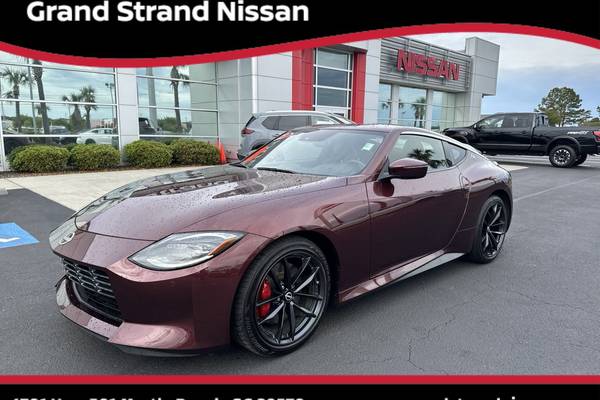
Located in Myrtle Beach, SC / 485 miles away from Columbus, OH
Certified. CARFAX One-Owner. Clean CARFAX.19/28 City/Highway MPGRosewood Metallic 2023 Nissan Z Performance 3.0L V6 RWD 9-Speed AutomaticNissan Certif...
Accident Free Vehicle: Yes
Personal Use Only: Yes
History Provider: AutoCheck
Title Details: Clean Title
Salvage Vehicle: No
Frame Damage: No
Theft History: No
Lemon Status: No
Free History Report: No
Features and Specs:
22 Combined MPG (19 City/28 Highway)
Listing Information:
VIN: JN1BZ4BH2PM310844
Stock: S24021A
Certified Pre-Owned: Yes
Listed since: 03-28-2024
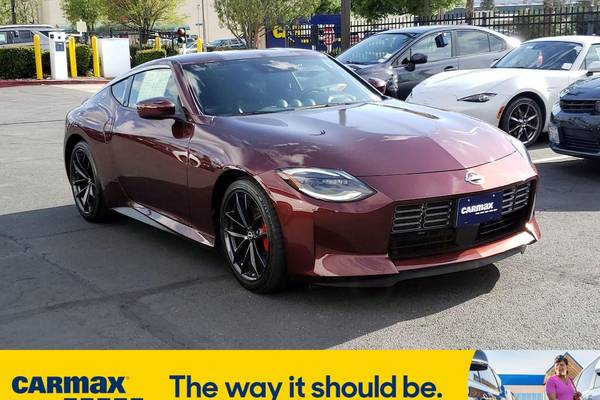
Located in Escondido, CA / 1,946 miles away from Columbus, OH
CarMax values transparency and wants you to love your next car, not settle on it. Certain vehicles may have unrepaired safety recalls. Check nhtsa.gov...
Accident Free Vehicle: Yes
Personal Use Only: Yes
History Provider: AutoCheck
Title Details: Clean Title
Salvage Vehicle: No
Frame Damage: No
Theft History: No
Lemon Status: No
Free History Report: No
Features and Specs:
22 Combined MPG (19 City/28 Highway)
Listing Information:
VIN: JN1BZ4BH7PM310564
Stock: 25443382
Certified Pre-Owned: No

Located in Bellingham, WA / 2,020 miles away from Columbus, OH
Clean CARFAX.Yellow 2023 Nissan Z Performance RWD 3.0L V6HOLIDAY SALE GOING ON NOW!!! Recent Arrival! Odometer is 2939 miles below market average!
Accident Free Vehicle: Yes
Personal Use Only: Yes
History Provider: AutoCheck
Title Details: Clean Title
Salvage Vehicle: No
Frame Damage: No
Theft History: No
Lemon Status: No
Free History Report: No
Features and Specs:
22 Combined MPG (19 City/28 Highway)
Listing Information:
VIN: JN1BZ4BH8PM311142
Stock: B9004
Certified Pre-Owned: No
Listed since: 05-05-2024
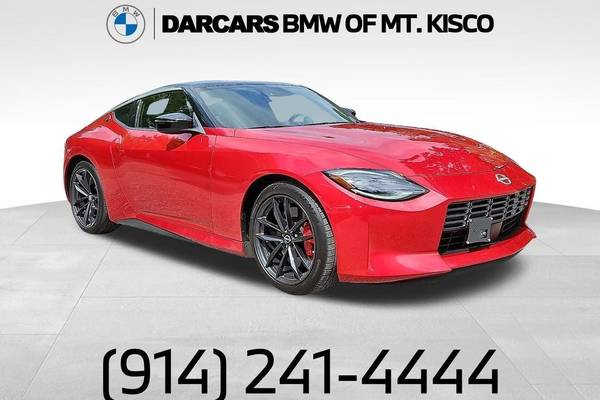
Located in Bloomfield, NJ / 458 miles away from Columbus, OH
This 2023 Nissan Z has passed the Lynnes comprehensive 172 point inspection with flying colors. Our ASE certified technicians have inspected this Z an...
Accident Free Vehicle: Yes
Personal Use Only: Yes
History Provider: AutoCheck
Title Details: Clean Title
Salvage Vehicle: No
Frame Damage: No
Theft History: No
Lemon Status: No
Free History Report: No
Features and Specs:
20 Combined MPG (18 City/24 Highway)
Listing Information:
VIN: JN1BZ4BH6PM310376
Stock: E7246P
Certified Pre-Owned: Yes
Listed since: 04-03-2024

Located in Milford, MA / 608 miles away from Columbus, OH
White 2023 Nissan Z Performance RWD 9-Speed Automatic 3.0L V6 MCGOVERN CERTIFIED, Heated Front Seats, Pushbutton Start, Remote Keyless Entry, Blind Sp...
Accident Free Vehicle: Yes
Personal Use Only: Yes
History Provider: AutoCheck
Title Details: Clean Title
Salvage Vehicle: No
Frame Damage: No
Theft History: No
Lemon Status: No
Free History Report: No
Features and Specs:
22 Combined MPG (19 City/28 Highway)
Listing Information:
VIN: JN1BZ4BH4PM310960
Stock: CH04209
Certified Pre-Owned: No
Listed since: 12-06-2023
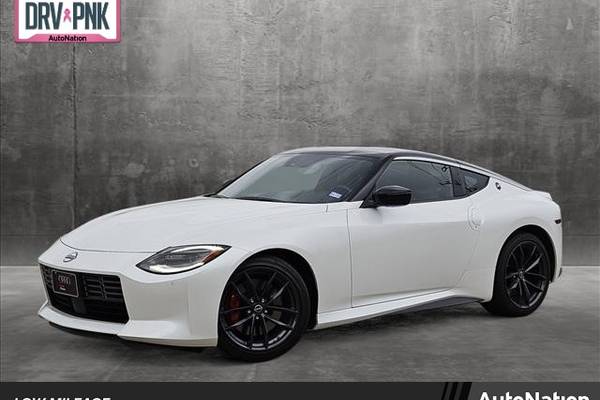
Located in Plano, TX / 913 miles away from Columbus, OH
[N93] Illuminated Kick Plate - Black Metallic Leather Seats Navigation System [L93] Floor Mat Package (L93) [N94] Interior Door Scuff Protection Keyle...
Accident Free Vehicle: Yes
Personal Use Only: Yes
History Provider: AutoCheck
Title Details: Clean Title
Salvage Vehicle: No
Frame Damage: No
Theft History: No
Lemon Status: No
Free History Report: No
Features and Specs:
22 Combined MPG (19 City/28 Highway)
Listing Information:
VIN: JN1BZ4BH3PM311534
Stock: PM311534
Certified Pre-Owned: No
Listed since: 03-14-2024

Located in Elkhart, IN / 200 miles away from Columbus, OH
Gun Metallic 2023 Nissan Z Performance ABS brakes, Active Cruise Control, Alloy wheels, Compass, Electronic Stability Control, Heated door mirrors, He...
Accident Free Vehicle: Yes
Personal Use Only: Yes
History Provider: AutoCheck
Title Details: Clean Title
Salvage Vehicle: No
Frame Damage: No
Theft History: No
Lemon Status: No
Free History Report: No
Features and Specs:
20 Combined MPG (18 City/24 Highway)
Listing Information:
VIN: JN1BZ4BH7PM310631
Stock: PM310631
Certified Pre-Owned: No
Listed since: 03-06-2024
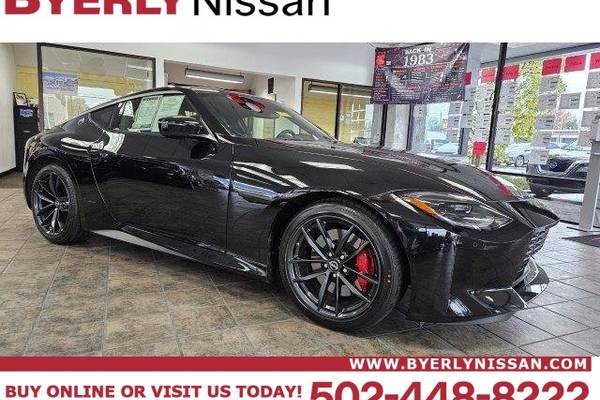
Located in Louisville, KY / 204 miles away from Columbus, OH
2023 Nissan Z Performance NISSAN CERTIFIED - This Nissan Certified 2023 Nissan Z Performance features an 84-month / 100,000-mile limited warranty, 24-...
Accident Free Vehicle: Yes
Personal Use Only: Yes
History Provider: AutoCheck
Title Details: Clean Title
Salvage Vehicle: No
Frame Damage: No
Theft History: No
Lemon Status: No
Free History Report: No
Features and Specs:
22 Combined MPG (19 City/28 Highway)
Listing Information:
VIN: JN1BZ4BHXPM311272
Stock: N1299A2
Certified Pre-Owned: Yes
Listed since: 11-25-2023
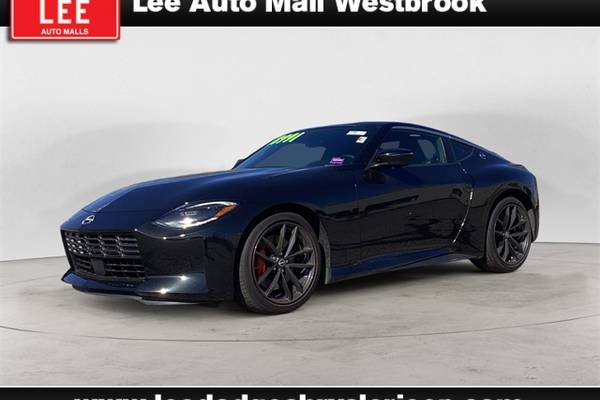
Located in Westbrook, ME / 690 miles away from Columbus, OH
CARFAX One-Owner. Clean CARFAX. Black Diamond Pearl 2023 Nissan Z Performance RWD 6-Speed Manual 3.0L V6 First Aid Kit, Floor Mat Package (L93), Navig...
Accident Free Vehicle: Yes
Personal Use Only: Yes
History Provider: AutoCheck
Title Details: Clean Title
Salvage Vehicle: No
Frame Damage: No
Theft History: No
Lemon Status: No
Free History Report: No
Features and Specs:
20 Combined MPG (18 City/24 Highway)
Listing Information:
VIN: JN1BZ4BH4PM310988
Stock: RA25513A
Certified Pre-Owned: No
Listed since: 01-01-2024

Located in Downers Grove, IL / 296 miles away from Columbus, OH
CARFAX One-Owner. Clean CARFAX. Certified. Black Diamond Pearl 2023 Nissan Z Performance 400HP Apple CarPlay/Android Auto, Auto High-beam Headlights, ...
Accident Free Vehicle: Yes
Personal Use Only: Yes
History Provider: AutoCheck
Title Details: Clean Title
Salvage Vehicle: No
Frame Damage: No
Theft History: No
Lemon Status: No
Free History Report: No
Features and Specs:
22 Combined MPG (19 City/28 Highway)
Listing Information:
VIN: JN1BZ4BH6PM311673
Stock: N8532
Certified Pre-Owned: Yes
Listed since: 04-06-2024
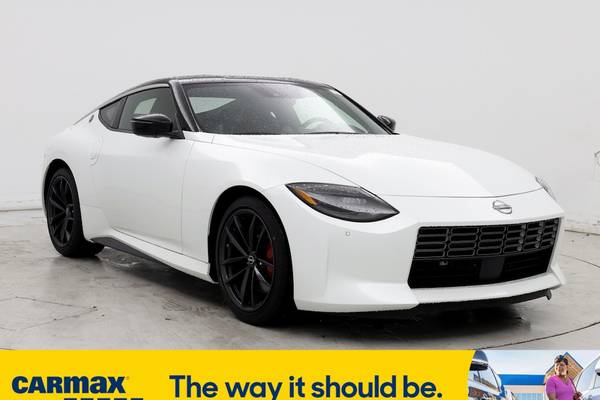
Located in South Portland, ME / 690 miles away from Columbus, OH
CarMax values transparency and wants you to love your next car, not settle on it. Certain vehicles may have unrepaired safety recalls. Check nhtsa.gov...
Accident Free Vehicle: Yes
Personal Use Only: Yes
History Provider: AutoCheck
Title Details: Clean Title
Salvage Vehicle: No
Frame Damage: No
Theft History: No
Lemon Status: No
Free History Report: No
Features and Specs:
22 Combined MPG (19 City/28 Highway)
Listing Information:
VIN: JN1BZ4BH4PM310859
Stock: 24267921
Certified Pre-Owned: No

Located in Lisle, IL / 298 miles away from Columbus, OH
CARFAX One-Owner. 2D Coupe Boulder Gray Two-Tone/Super Black 19/28 City/Highway MPG 2023 Nissan Clean CARFAX. Z Performance RWD 9-Speed Automatic 3.0L...
Accident Free Vehicle: Yes
Personal Use Only: Yes
History Provider: AutoCheck
Title Details: Clean Title
Salvage Vehicle: No
Frame Damage: No
Theft History: No
Lemon Status: No
Free History Report: No
Features and Specs:
22 Combined MPG (19 City/28 Highway)
Listing Information:
VIN: JN1BZ4BH1PM311550
Stock: P26604
Certified Pre-Owned: No
Listed since: 03-27-2024
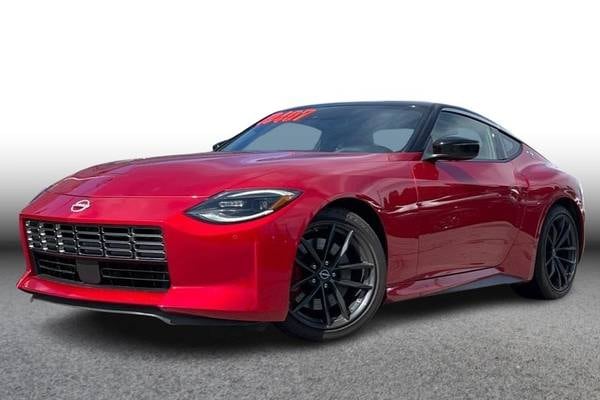
Located in Redwood City, CA / 2,112 miles away from Columbus, OH
Prices do not include government fees and taxes, any finance charges, dealer document processing charges, electronic filing charges, and/or any emissi...
Accident Free Vehicle: No
Personal Use Only: Yes
History Provider: AutoCheck
Title Details: Clean Title
Salvage Vehicle: No
Frame Damage: No
Theft History: No
Lemon Status: No
Free History Report: No
Features and Specs:
22 Combined MPG (19 City/28 Highway)
Listing Information:
VIN: JN1BZ4BH1PM310320
Stock: 13143
Certified Pre-Owned: No
Listed since: 12-12-2023

Located in Carlsbad, CA / 1,958 miles away from Columbus, OH
[N93] Illuminated Kick Plate - Black Metallic Leather Seats Navigation System [L93] Floor Mat Package [B94] Exterior Welcome Lighting [S92] Dual Camer...
Accident Free Vehicle: Yes
Personal Use Only: Yes
History Provider: AutoCheck
Title Details: Clean Title
Salvage Vehicle: No
Frame Damage: No
Theft History: No
Lemon Status: No
Free History Report: No
Features and Specs:
22 Combined MPG (19 City/28 Highway)
Listing Information:
VIN: JN1BZ4BH2RM361067
Stock: RM361067
Certified Pre-Owned: No
Listed since: 03-28-2024
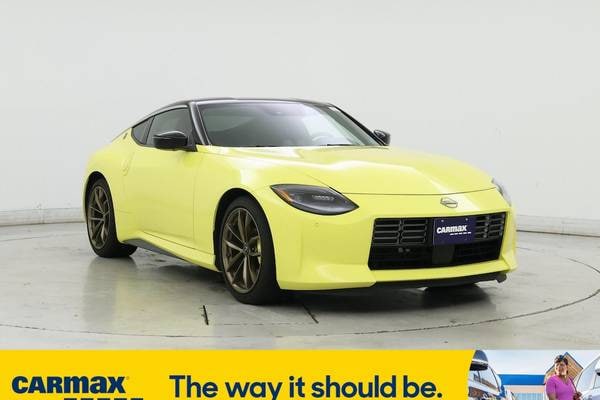
Located in Springfield, VA / 315 miles away from Columbus, OH
2023 Nissan Z Proto Spec Ikazuchi Yellow Pearl Tricoat/Super Black Proto Spec Carfax 1 Owner, Nissan Certified, Blind Spot, Back Up Camera, Navigation...
Accident Free Vehicle: Yes
Personal Use Only: Yes
History Provider: AutoCheck
Title Details: Clean Title
Salvage Vehicle: No
Frame Damage: No
Theft History: No
Lemon Status: No
Free History Report: No
Features and Specs:
20 Combined MPG (18 City/24 Highway)
Listing Information:
VIN: JN1BZ4BH3PM310349
Stock: N311840B
Certified Pre-Owned: Yes
Listed since: 11-27-2023
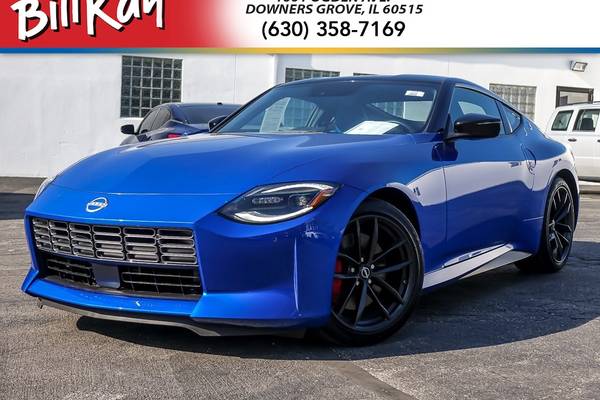
Located in Downers Grove, IL / 296 miles away from Columbus, OH
CARFAX One-Owner. Clean CARFAX. Certified. Seiran Blue Metallic/Super Black 2023 Nissan Z Performance 6-Speed Manual Apple CarPlay/Android Auto, Fully...
Accident Free Vehicle: Yes
Personal Use Only: No
History Provider: AutoCheck
Title Details: Clean Title
Salvage Vehicle: No
Frame Damage: No
Theft History: No
Lemon Status: No
Free History Report: No
Features and Specs:
20 Combined MPG (18 City/24 Highway)
Listing Information:
VIN: JN1BZ4BH3PM310755
Stock: N8536
Certified Pre-Owned: Yes
Listed since: 04-09-2024

Located in Tigard, OR / 2,038 miles away from Columbus, OH
CARFAX One-Owner. Clean CARFAX. RWDAll vehicles are equipped with StarGard priced at $695. Odometer is 1994 miles below market average! 19/28 City/Hig...
Accident Free Vehicle: Yes
Personal Use Only: Yes
History Provider: AutoCheck
Title Details: Clean Title
Salvage Vehicle: No
Frame Damage: No
Theft History: No
Lemon Status: No
Free History Report: No
Features and Specs:
22 Combined MPG (19 City/28 Highway)
Listing Information:
VIN: JN1BZ4BH3RM360610
Stock: RM360610
Certified Pre-Owned: No
Listed since: 03-12-2024
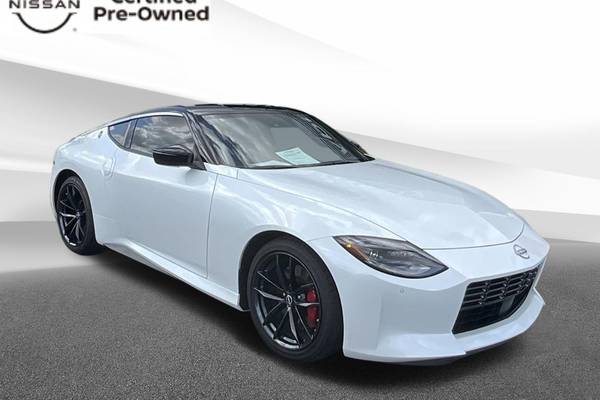
Located in Crystal Lake, IL / 321 miles away from Columbus, OH
Introducing the "High-Performance Nissan Z: Only 415 Miles!"Discover the exhilarating Nissan Z, boasting a Twin Turbo Premium Unleaded V-6 3.0 L/183 e...
Accident Free Vehicle: Yes
Personal Use Only: Yes
History Provider: AutoCheck
Title Details: Clean Title
Salvage Vehicle: No
Frame Damage: No
Theft History: No
Lemon Status: No
Free History Report: No
Features and Specs:
22 Combined MPG (19 City/28 Highway)
Listing Information:
VIN: JN1BZ4BH4PM310263
Stock: M6908
Certified Pre-Owned: Yes
Listed since: 02-28-2024
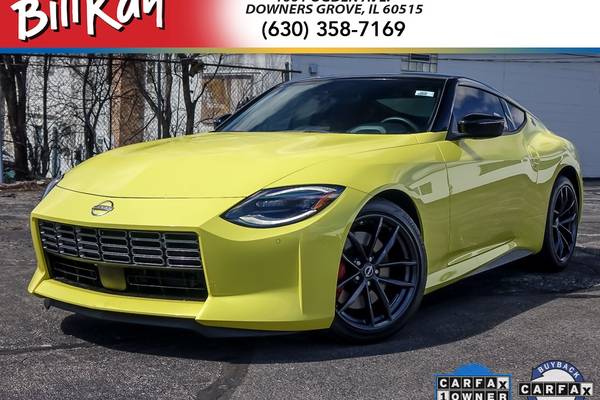
Located in Downers Grove, IL / 296 miles away from Columbus, OH
CARFAX One-Owner. Clean CARFAX. Certified. Ikazuchi Yellow Pearl Tricoat/Super Black 2023 Nissan Z Performance 6 Speed Apple CarPlay/Android Auto, Aut...
Accident Free Vehicle: Yes
Personal Use Only: Yes
History Provider: AutoCheck
Title Details: Clean Title
Salvage Vehicle: No
Frame Damage: No
Theft History: No
Lemon Status: No
Free History Report: No
Features and Specs:
20 Combined MPG (18 City/24 Highway)
Listing Information:
VIN: JN1BZ4BH0PM311779
Stock: N8504
Certified Pre-Owned: Yes
Listed since: 03-18-2024
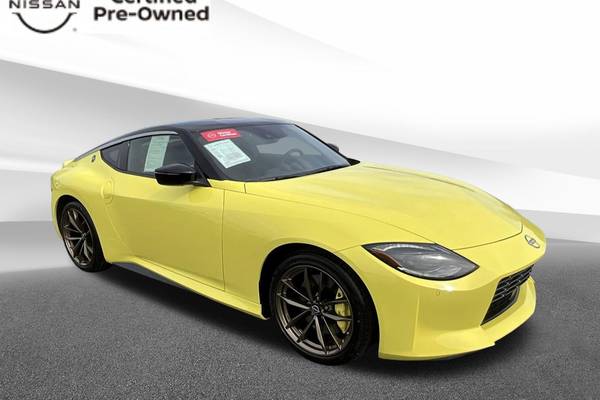
Located in Crystal Lake, IL / 321 miles away from Columbus, OH
Only 490 Miles! Scores 28 Highway MPG and 19 City MPG! This Nissan Z delivers a Twin Turbo Premium Unleaded V-6 3.0 L/183 engine powering this Automat...
Accident Free Vehicle: Yes
Personal Use Only: Yes
History Provider: AutoCheck
Title Details: Clean Title
Salvage Vehicle: No
Frame Damage: No
Theft History: No
Lemon Status: No
Free History Report: No
Features and Specs:
22 Combined MPG (19 City/28 Highway)
Listing Information:
VIN: JN1BZ4BH8PM310590
Stock: M7086
Certified Pre-Owned: Yes
Listed since: 03-08-2024
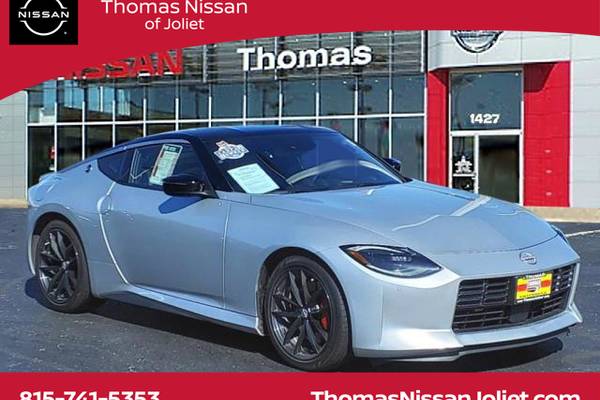
Located in Highland, IN / 262 miles away from Columbus, OH
Clean CARFAX. CARFAX One-Owner. Certified. 2023 Nissan Z Performance Brilliant Silver/Super Black 1 Owner, 4-Wheel Disc Brakes, 8 Speakers, ABS brakes...
Accident Free Vehicle: Yes
Personal Use Only: Yes
History Provider: AutoCheck
Title Details: Clean Title
Salvage Vehicle: No
Frame Damage: No
Theft History: No
Lemon Status: No
Free History Report: No
Features and Specs:
22 Combined MPG (19 City/28 Highway)
Listing Information:
VIN: JN1BZ4BHXPM311630
Stock: PM311630
Certified Pre-Owned: No
Listed since: 03-06-2024
Edmunds has 111 Used Nissan Zes for sale near you, including a 2023 Z Performance Coupe and a 2023 Z Proto Spec Coupe ranging in price from $45,994 to $62,495.
* Delivery of any kind does not apply to Alaska and Hawaii. Contact the dealer for delivery details, restrictions and costs.

