INSIDE LINE

Comparison Test: 2010 Ford Taurus vs. 2009 Honda Accord

Media Player

  • 2010 Ford Taurus vs. 2009 Honda Accord Comparison Test Video

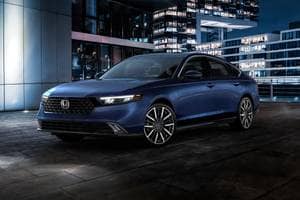
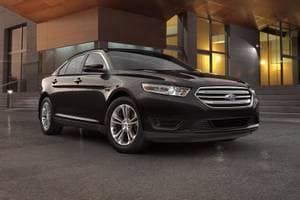
    The Ford Taurus and Honda Accord have been competing against each other since the 1980s and the Ford Taurus Limited vs Honda Accord Comparison Video shows they're still at it. | October 01, 2009

1 Video , 41 Photos | See more photos in this gallery »

Comparison

Comparison Test: 2010 Ford Taurus vs. 2009 Honda Accord

A Product of Their Times

    16 Ratings

    If you understand the limitless desire of Americans for personal space, then you understand the thinking behind the 2010 Ford Taurus Limited and 2009 Honda Accord EX-L V6 with Navigation. Taurus and Accord may be iconic midsize-sedan nameplates, but now the badges are on large-car rumps.

    Officially, the 2010 Ford Taurus and 2009 Honda Accord each seat five. Realistically, neither of these large sedans will ever see more than four passengers. And nobody will so much as rub an elbow, shoulder, buttock or knee during the 15-minute drive to the sushi buffet.

    As crossovers promise everyone a whole row of seating to himself, families are fleeing even the roomiest of family sedans like these. So you might be driving around by yourself in a Ford Taurus or Honda Accord. And you might care about something besides shoulder room and legroom.

    In its previous life, the Taurus couldn't stand up to such scrutiny. It was a big lug, a slobbery SUV shaped like a sedan. However, the 2010 Ford Taurus Limited reflects a serious change of heart at Ford. This is a smarter Taurus with crisper handling, quality interior bits, and up-to-date but easy-to-use technology.

    This is also exactly the sort of Taurus that should be able to do battle with the smarty-pants of the family car class, the 2009 Honda Accord EX-L V6 with Navigation.

    Tuck in That Tummy
    You'll notice we call both the Taurus and the Accord large cars. We don't kid you, though. The truth is, these two have gotten fat together.

    Our 2009 Honda Accord EX-L V6 Navi tester weighs in at nearly 3,600 pounds. It outweighs the previous-generation Accord by 250 pounds. It outweighs a 1999 Accord EX V6 sedan by more than 300 pounds.

    Although rivals like the Mazda 6 and Nissan Altima are close in size (and weight, in the case of the Mazda), only the Accord crosses the 120-cubic-foot interior volume threshold into the EPA's "large car" classification.

    Built on a 112.9-inch wheelbase (2.7 inches longer than the Accord's), our 2010 Ford Taurus Limited stretches nearly 203 inches from nose to tail. It's 8.5 inches longer than the Accord, not to mention unnaturally tall (60.7 inches) and wide (76.2 inches) for a sedan.

    The Taurus is certainly the hulk of the family sedan class. It draws fat jokes from strangers and outweighs the hefty Honda by 450 pounds. But at 122.3 cubic feet, its total interior volume only tops the Accord by a couple cubes.

    Pounds of Gadgets
    At least a few dozen of those pounds are accounted for by all the technology in our 2010 Ford Taurus Limited, which isn't even fully optioned. Notably, it lacks a sunroof, Ford's hard-drive-based navigation system and the multicontour seats that heat, cool and knead your backside. We'll live.

    For a $31,995 base price, the front-wheel-drive Taurus Limited provides a leather interior, 10-way power front seats, dual-zone automatic climate control, a USB jack, the Sync hands-free interface, wood-grain interior accents that may or may not be to your taste, and 19-inch wheels that definitely will not be to your taste.

    Our test car also has Package 302A ($2,000), which adds keyless ignition, a blind-spot information system (Volvo's BLIS), automatic high-beams and a very decent 12-speaker Sony audio system. The blind-spot radar supplements the car's standard rear-bumper sonar by providing useful warnings on the trip computer display like "vehicle approaching from the left" when you have the Taurus in reverse.

    Adaptive cruise control adds an additional $1,195 to the Ford's bottom line for a total of $35,190.

    Most of these features simply aren't available on the Accord. However, our 2009 Honda Accord EX-L V6 comes with the high-quality Acura navigation system (stripped of the nav weather and nav traffic features), as well as Bluetooth, heated leather-upholstered seats, dual-zone climate control, a sunroof, and an unassuming set of 17-inch wheels.

    We don't mind the lack of wood-grain appliqués in the Accord, but this car needs an iPod-friendly USB jack. Aux alone doesn't cut it in 2009.

    Still, this 2009 Honda Accord EX-L V6 with Navigation can be yours for $31,615 — a savings of $3,575 over the 2010 Taurus Limited.

    Different Personalities
    You wouldn't know the 2009 Honda Accord EX-L V6 Navi is the cheaper of the two based on how it drives.

    Right away, the Accord establishes itself as the sportier of the two sedans, which isn't terribly hard to do when your opponent weighs 2 tons. Still, we wonder if Honda has subtly recalibrated this car's drivetrain for 2009, because this Accord V6 doesn't feel as shortchanged on low-end torque as the 2008 models we tested. In addition, its five-speed automatic transmission shifts crisply right at the 3.5-liter V6's 6,800-rpm redline instead of short-shifting. Good thing, because there's still no manual shift gate.

    Honda has rerated the V6 sedan's output at 271 horsepower at 6,200 rpm (from 268 hp) and 254 pound-feet of torque at 5,000 rpm (from 248 lb-ft), but there's more here than meets the eye. Throttle response is downright snappy in the 2009 Honda Accord.

    At the track, the Accord reaches 60 mph from a standstill in 7.2 seconds (or 6.9 seconds with 1 foot of rollout as on a drag strip) and hits the quarter-mile in 15.3 seconds at 93.1 mph.

    The fact that our 2010 Taurus Limited breaks into the 15s at all borders is impressive considering its weight disadvantage. It runs a 7.8-second 0-60 time (7.5 seconds with rollout) and a 15.7-second quarter-mile. With a trap speed of just 88.9 mph, though, it has no hope of catching the Accord. The Ford's 3.5-liter V6 is rated at just 263 hp at 6,250 rpm, but its torque is accessible at lower rpm, with the peak 249 lb-ft available at 4,500 rpm.

    Most of the time, our 2010 Ford Taurus Limited accelerates adequately in traffic. It's only when you hop into the Accord that you realize what you've been missing. Shifts from the Ford's six-speed automatic transmission often feel lackadaisical, too, even in manual mode. Plus, torque steer is an issue under full throttle.

    Fuel economy ratings are close, with the V6 Accord earning a slight advantage with its 19 city/29 highway mpg figures versus a preliminary rating of 18 city/28 highway mpg for the front-drive 2010 Taurus. Both sedans return high teens in weekday traffic, though our Taurus test car's 2,500-mile road trip understandably pushes its two-week average above the Accord's, with its average during our test interval coming to 21.1 mpg versus 19.3 mpg.

    Weight Management
    Ordinarily, we don't give the current-generation Honda Accord a lot of credit in the handling department. Its steering is precise, but conservative suspension tuning, meek P225/50R17 Michelin Pilot HXMXM5 all-season tires and a few too many pounds rob it of it the usual Honda cornering character.

    But it's all relative, and a 2-ton 2010 Ford Taurus makes the Accord look good on a back road.

    It's not that the Taurus Limited is a terrible handler. There's just a lot of car to transition through corners, and Ford's legal team knows this, so the big sedan has a very aggressive and very non-defeatable stability control system. If it senses you're about to stuff the Taurus into a tight corner, it clamps down hard on that inside wheel. The steering ratio (17.0:1) also feels slower than it needs to be, and heavy inputs elicit moaning from the power steering pump.

    At our test track, the 2009 Honda Accord EX-L V6 manages 0.83g on the skid pad and 64.1 mph through the slalom. With its stability control active, the 2010 Ford Taurus Limited can't do any better than 0.79g and 60.3 mph. When we run the Accord through these tests with stability control on, the numbers are closer: 0.79g on the skid pad and 62.2 mph in the slalom.

    In braking tests, the Ford's wider P255/45R19 100Y Goodyear Eagle RS-A tires give it a slight advantage. The Taurus stops from 60 mph in 131 feet. This is 2 feet shorter than the Accord's best stop. Still, we prefer the Accord's firmer pedal. And notably, this is the first Honda we've tested in months — even years — that hasn't had an issue with brake fade (though there's still some smoke coming off the rotors after our testing).

    The Comfort Argument
    We're not sure how Ford's chassis engineers were able to get such a well-damped ride out of a car with a 19-by-8-inch wheel weighing down each corner, but they did. The 2010 Ford Taurus Limited has an exceptional ride quality. It's plush over most interstate freeways, yet highly controlled at all times. This is the family sedan you want to drive cross-country.

    You could do the same in the 2009 Honda Accord EX-L V6, but it wouldn't be quite so comfortable. In Honda tradition, the Accord's ride is all about firm control. You might be fine with this as a driver, but passengers often give a different opinion.

    We measure a higher decibel level in the Accord at a 70-mph cruise, and we blame it on characteristic Honda road noise, which detracts from cabin calm even when you're just running errands around town.

    Better Packaged Accord
    Yet you might put up with the extra noise, because the smaller 2009 Honda Accord EX-L V6 has a subtly more spacious cabin. The beltline is lower, the seats are wider and, whether you're driving or riding in back, the cabin has an airier feel. Here we are back at the personal space argument again.

    But there's also cohesion to the Accord's cabin design that makes the car easier to live with day-to-day. All the displays and controls have an ergonomic design that feels instantly familiar, and there's a unity to how everything works. You and the car and all its stuff are part of one Honda life form.

    That's not to say you can't live well in the 2010 Ford Taurus Limited, which feels more upscale than the Accord and offers many more conveniences for iPod and BlackBerry users. But somehow the tall chairs, deeply recessed gauge pods, pixelated radio displays and sophisticated Sync interface in this Taurus Limited feel more like a collection of stuff than elements of a whole.

    Critical Mass
    Family sedans don't necessarily involve your family anymore, so most of us are looking for more than vast amounts of space on the cheap. We want quick acceleration; we'll take adroit handling if we can get it; and the cabin electronics had better play nice with our smart phone.

    The 2009 Honda Accord EX-L V6 with Navigation wins this test by 2.6 points, largely because it's faster and more agile, yet less expensive. It's hardly a sport sedan, but of these two, the Accord is the driver's pick. A more space-efficient cabin design is another big point in the Honda's favor.

    At the same time, the 2010 Ford Taurus Limited is more refined and personable than any Taurus to date. Its nicely resolved ride is no small benefit if you take long road trips, and we really do like Sync. Yet it's tough to justify paying $35K for a 263-hp sedan that needs almost 8 seconds to hit 60 mph.

    There's a larger issue here, too, as we'd like to have an intervention with both Ford and Honda to talk about weight. From the standpoint of acceleration, handling, braking and fuel economy, neither the Honda Accord nor the Ford Taurus can afford to get any larger. If anything, make them smaller.

    The manufacturers provided Edmunds these vehicles for the purposes of evaluation.

    Comparison

    Top 10 Features

    There's a $3,575 price gap between the 2009 Honda Accord EX-L V6 with Navigation ($31,615) and the 2010 Ford Taurus Limited ($35,190), but Ford throws in some worthwhile features for the extra dough.

    Features
      2010 Ford Taurus Limited 2009 Honda Accord EX-L V6 w/ Navi
    Adaptive cruise control O N/A
    Blind-spot warning system O N/A
    Heated seats O* S
    Keyless ignition system O N/A
    Manual mode for automatic transmission S N/A
    Moonroof O* S
    Navigation system O* S
    Satellite radio S S
    USB jack S N/A
    Voice-based telematics S N/A

    Key:
    S: Standard
    O: Optional
    O*: Optional but not equipped on test vehicle
    N/A: Not Available

    Adaptive cruise control: If you use cruise control all the time, adaptive systems can save you the trouble of repeated cancelling and resuming in changing traffic conditions. This is especially true in the 2010 Ford Taurus, which still doesn't have a cancel button.

    Blind-spot warning system: Simple LED projections on the side mirrors of the Ford Taurus let you know if another car (or a guardrail) has entered your blind spot. We particularly like the fact that Ford integrates these sensors with the Limited model's standard rear sonar to provide cross-traffic warnings in the trip computer display when you're in Reverse ("Vehicle approaching from the right," for example).

    Heated seats: They're a must when you have leather seats and they should be standard in cars that cost more than $30K.

    Keyless ignition system: Walk up, open the door, press the start button and go. No fumbling with keys at all. We're not sure why Honda doesn't offer this convenience on high-line Accords.

    Manual mode for automatic transmission: Choosing your own gears is not about performance in these heavyweight sedans. It's about being in the right gear on back roads, and not having to ride the brakes on downhill grades. And as long as Honda refuses to give us full manual access, we'll keep complaining about it.

    Moonroof: This is a basic luxury, a way to make up for Vitamin D deficiencies, and we can't understand why we have to pay extra for one on the $35K Taurus Limited.

    Navigation system: Aftermarket units are popular, but there's nothing like having a navigation unit integrated into the dash. It also provides a much better interface for Sync in the Ford Taurus, so you pretty much have to spend the money.

    Satellite radio: For as long as Sirius XM remains in business, satellite radio will remain a sanity saver on long trips, particularly in the Honda Accord, which has XM's Major League Baseball package.

    USB jack: Sync uses a USB jack for iPod integration in the Taurus, but we'd still like a USB hookup in the Honda Accord. We look forward to the day when Honda realizes there's no good reason to restrict this convenience to the Acura line.

    Voice-based telematics: Sync Services uses your cell phone signal to provide audio navigational guidance in the 2010 Ford Taurus. You search for points of interest or specific addresses via the system's voice prompts, and Sync will then download instructions to the Taurus. It's not a perfect setup, as its effectiveness is contingent upon your phone's signal strength, but it's a useful hands-free accompaniment to a traditional navigation system.

    Comparison

    Second Opinion

    Inside Line Executive Editor Michael Jordan says:
    You know, we can parse these cars all day and not come to any sensible conclusion. The Accord is easier to drive around all day, while the Taurus is what you want if you're actually going some place. The Taurus is also a lot more fun to drive if you're squealing the tires; though it's hard to believe very many people will find this out.

    For me the unspoken question is whether these cars stack up to a crossover when it comes to daily utility. And I don't think so.

    SUV haters have always claimed that once you make a car as spacious as a utility vehicle, then there's no reason to have anything other than a sedan. But I find in the Taurus and Accord another reminder that sedans are driven around largely free of passengers most of the time, just like utility vehicles. And when you do fill them up with people, the guys in back always feel slightly crowded because the visibility is poor. And folding rear seats not withstanding, it's way easier to pack stuff in the back of a crossover (you know, like the dog), and the flat load floor comes in handy every weekend besides.

    A sedan makes a fine people-hauling device, and we've got two of them here. Each gets good gas mileage compared to a crossover, and that's a good thing (in fact the Taurus purposely compromises engine output to ensure the mpg is respectable). But when it comes to daily utility, a crossover is what you want. The rejection of the conventional sedan for utility vehicles over the last decade has not been some sort of strange conspiracy, no matter what SUV haters might say.

    What the Ford Taurus and Honda Accord really offer is luxury — quietness, composure and all the convenience amenities. And if that's their mission in life, then the Taurus is my pick. It's the best of the American-style sedans, and a better deal than a Hyundai Genesis V6 or Toyota Avalon besides.

    Comparison

    Final Rankings and Scoring Explanation

    Final Rankings
      Item Weight 2009 Honda Accord EX-L V6 w/ Navi 2010 Ford Taurus Limited
    Personal Rating 2.5% 83.3 66.7
    Recommended Rating 2.5% 100.0 50.0
    Evaluation Score 20% 79.0 76.0
    Feature Content 20% 40.0 70.0
    Performance 20% 99.3 82.2
    Fuel Consumption 15% 100.0 95.6
    Price 20% 100.0 88.7
           
    Total Score 100.0% 83.4 80.6
    Final Ranking   1 2

    Personal Rating (2.5%): Purely subjective. After the test, each participating editor ranks the 2010 Ford Taurus Limited and 2009 Honda Accord EX-L V6 with Navigation in order of preference based on which he or she would buy if money were no object.

    Recommended Rating (2.5%): After the test, each participating editor ranks the sedans in order of preference based on which he thinks would be best for the average person shopping in this segment.

    28-Point Evaluation (20%): Each participating editor scores the sedans based on a comprehensive 28-point evaluation. The evaluation covers everything from engine performance to rear-seat comfort. Scoring is calculated on a point system and subsequently averaged based on all test participants' evaluations.

    Feature Content (20%): For this category, the editors pick the top 10 features they think would be most beneficial to someone shopping for a large V6 family sedan priced at $30,000-$35,000. For each car, the score is based on the number of actual features it has versus the total possible (10). Standard and optional equipment are taken into consideration.

    Performance Testing (20%): Both cars are put through a comprehensive battery of instrumented tests, including 0-60-mph acceleration, quarter-mile runs and panic stops from 60 mph. They are also run through a 600-foot slalom course to test transitional handling, and around a skid pad to determine ultimate grip. Each sedan is awarded points based on how close it comes to the better-performing car's score in each category.

    Fuel Consumption (15%): The scores listed are the result of a simple percentage calculation based on the car with the highest EPA combined fuel economy rating (55 percent city plus 45 percent highway).

    Price (20%): The numbers listed are the result of a simple percentage calculation. Using the "as tested" prices of the actual evaluation vehicles, the cheaper Honda Accord ($31,615) receives a score of 100, with the more expensive Ford Taurus ($35,190) receiving a lesser score.

    Sort By:

    gearhead1977 says:

    12:42 PM, 06/10/2010

    Good write up, although the size of the trunk, as brought up by another poster, is important to a lot of people.

    As these two cars come of age, they still keep their respective traits. The Honda is better handling but noisier inside (as a former Accord owner, this is one of the things I disliked about the car). The Taurus is not as responsive and larger, but much quieter and softer riding.

    As good as the new Taurus is, it's still designed for the "softer" side of driving, while the Accord has a bit more of an edge to it ( compared to the Taurus).  I also share the opinion that the Taurus has a cramped feel inside, not unlike the Chrysler 300.

    I'd still go for the Honda, especially if they can find a way to put active noise cancellation in all of their cars.

    blockhole says:

    09:11 PM, 01/22/2010

    Weak review and slightly biased.

    "Still, this 2009 Honda Accord EX-L V6 with Navigation can be yours for $31,615 - a savings of $3,575 over the 2010 Taurus Limited."

    Poor way to compare the price and equiptment factor. To get the navigation package on the Taurus, you are forced to have certain pricey features not available (some of them you might not need) on Honda Accord! Ford options can be frustrating for others. If you buy a base model and want a navigation, dream on.

    How can he say faster if the Accord's acceleration advantage by 0.6s standstill and 0.6s with roll out. Not too shocking for a car with 6Hp advantage anfd 450lbs lighter.

    The Accord handles with a whopping s 0.83g on the skid pad and 64.1 slalom, with the STABILITY CONTROL DISABLED. I hope they tested the Taurus with no stability control (by pulling fuse to ripping the computer chip) That could have complete the circle.


    This guy added "It's tough to justify paying $35K for a 263-hp sedan that needs almost 8 seconds to hit 60 mph."

    Why this guy only mention a menial acceleration advantage? What happend to the "airy spacious interior" or the slight handling advantage? He didn not even mention Honda's reliability reputation (I guess by saying that it makes him more Honda biased)?

    Ford hyped "athletic sportier performance" on Taurus and this guy is so deeply offended.

    juan_mx says:

    10:20 AM, 01/12/2010

    The cars look alike from the front and have the same interior space, lets make a comparison....mmmmm.

    The exterior dimensions of the Taurus are much larger than those of the Accord,
    ---- that does not count?.

    Cargo volume 14.0 cu-ft vs 20.1 cu-ft

    ---- that does not count?

    Sound level at 70mph is 70.7db vs 68.0db

    ---- does not count either?

    (the Nissan Versa, at 70.2db, is quieter than the Accord, want to compare them?)


    Apples vs Oranges for sure.


    myershift says:

    11:31 PM, 12/22/2009

    Although not in the market for such sedans (I own a 2008 Volkswagen Golf V), I find that the new Taurus is a far more attractive automobile than the gawky Accord; of which I preferred the previous generation by far.
    The Taurus DOES feel rather tight inside for such a huge car, but the quality of materials seems very nice, particularly in the SHO model, and myself being nearly 5' 8", found the interior to be an absolute delight in comfort and presentation!

    fniguy28 says:

    12:08 PM, 12/06/2009

    Hey Erin
    From what the experts are saying about the New 2010 Ford Taurus you are way off the mark.....
    Please stop writing about automobiles that you have absolutely no clue about
    We all know that you just hate the 2010 Ford Taurus and that you are blindly in love with Toyota, talking of, how about all those 4.3+ million Toyota vehicles that are being recalled and what's your take on DEATH BY LEXUS?
    In the mean time do some home work and tell the few readers that you have the truth....

    Los Angeles, Dec. 2, 2009 - The 2010 Ford Taurus today was named International Car of the Year (ICOTY) at the Los Angeles Auto Show.

    The ICOTY award honors new-year model vehicles that foster an emotional connection with consumers. The all-new Ford Taurus was voted the winner of the 14th annual award by a panel of 19 automotive media from around the U.S. representing top newspapers, magazines and Web sites.

    "This award is not centered on power and performance. It's about how a car reflects our personalities, lifestyles and self-image and how well the automaker achieves that goal through the design and marketing of the vehicle," said Courtney Caldwell, ICOTY's creator and executive producer.

    With its athletic, upscale design, the 2010 Ford Taurus combines class-leading technologies with confident, engaging driving dynamics. It features an impressive set of standard and available technologies that add convenience, connectivity, safety and value for customers, such as Blind Spot Information System (BLIS®) with Cross Traffic Alert, MyKeyż parental programmability, Ford SYNC® and Voice-Activated Navigation with SIRIUS Travel Linkż.

    "Taurus is not just a car you need to get from point A to point B, it is a car you want to arrive in in style," said Pei-Wen Hsu, Taurus marketing manager. "The new Taurus gives you a little blast of attitude and turns heads around every corner."

    cobraboy1 says:

    11:52 AM, 11/12/2009

    This is a BS test, you can't compare apples to oranges. The Fusion is the car that now competes against the accord, not the Taurus. An accurate comparo of the Accord would be the Fusion Sport FWD w/ nav. The Taurus needs to be compared with cars like the Toyota Avalon, Nissan Maxima, Dodge Charger, and Chevorlet Impala. big cars should be compared with other big cars. I could've told you ahead of time that the accord was going to win.

    sealsr says:

    03:39 PM, 11/07/2009

    I can't believe all the sniveling.  All of you 6'3" people would complain about any car.  If you don't like American autos that's fine.  As for Edmunds, Motor Trend, Car and Driver, Road and Track, etc., it is rare that any of these magazines say anything positive about American cars.  I have driven American cars for well over 25 years and have very complaints.  If I wanted a race car I would have bought a Ferrari.  If I wanted luxury, I would have bought a Bentley.  It seems Edmunds would have done greater justice by comparing the Taurus with its appropriate competition - the 300.  These are big cars. I'm sorry you big fellows whine about your size.  Buy a pickup, pull the seat out of it, and sit in the bed.  How about saying something positive for a change.

    ba27 says:

    05:34 AM, 10/26/2009

    I stopped in to look at at a Taurus SHOW (whatever - we owned an older SHO, and always called it S-H-O, but now Ford calls it a SHOW - I guess they'd rather that people forget that the original S-H-O had a Yamaha-designed Super High Output V-6), but the dealer didn't have one in stock.  

    Instead, I sat in a standard version, and was amazed at the LACK of room in the car, considering the size.  I personally think the trend toward higher beltlines on newer cars is one of the dumber trends in recent memory.

    At 6' 2", the only way I could sit in the car was to adjust the seat until my head was positioned up into the moonroof cutout!  Backseat?  Forget it - no way for me to fit comfortably.  Seems impossible to me that a company could design such a large car with so little interior space.  Oh, the materials were decent (I'm spoiled on that front - I drive an Audi), and the trunk is truly massive, but to me, the vehicle's design forces too many compromises.  I'd sooner have the newer powertrains with an updated version of the previous body style...

    efinils2 says:

    03:15 PM, 10/25/2009

    There is a mismatch here, I thought the Fusion competed with the Accord, and the Taurus was out to duke it out with the Avalon, Maxima, and G8 (RIP); I bet if you were to compare it against those, the results would be a lot more indicative of what choices buyers in the large sedan category -the Taurus +8 inches longer than the Honda- may cross-reference.

    hondacura4 says:

    07:16 AM, 10/25/2009

    "Yet you might put up with the extra noise, because the smaller 2009 Honda Accord EX-L V6 has a subtly more spacious cabin. The beltline is lower, the seats are wider and, whether you're driving or riding in back, the cabin has an airier feel. Here we are back at the personal space argument again."


    I sat in a Taurus Limited about 3 weeks ago and was instantly surpised by the substantially higher level of material and build quality over it's Enterprise rental car predecessors. It felt much more upscale and actually desirable. On the contrary, I felt like I was in a much smaller car as the dash board and center consoles visual and physical bulk were so substantial. The high belt line, although a good fashion statement, made that situation even worse. I did like the overall interior design but Ford needs to scale it down a bit as it gives the impresseion of large scale furniture in a small room. Although the Taurus is not for me, it's a subtantially better executed car that any previous Taurus.

    As for the Accord and Honda's in general, space management (visual and physical) have always been part of the package. Honda's, especailly the late 80's and 90's models have always had large windscreens and large greenhouses to make the cabin feel visually larger and airier. Unfortunately, that's airiness has decreased somewhat over the years because increased safety regulations and changes in front suspension design/geometry.


    "Still, we wonder if Honda has subtly recalibrated this car's drivetrain for 2009, because this Accord V6 doesn't feel as shortchanged on low-end torque as the 2008 models we tested. In addition, its five-speed automatic transmission shifts crisply right at the 3.5-liter V6's 6,800-rpm redline instead of short-shifting. Good thing, because there's still no manual shift gate. Honda has rerated the V6 sedan's output at 271 horsepower at 6,200 rpm (from 268 hp) and 254 pound-feet of torque at 5,000 rpm (from 248 lb-ft), but there's more here than meets the eye. Throttle response is downright snappy in the 2009 Honda Accord."

    This was actually surprising and satisfying to see as although Honda rerated both the Accord's 3.5L V6's (on paper) there were no mechanical updates or mechanical changes that caused the "increase in power". On the contrary, If I recall correctly, I did hear of a TSB for a reflash for the 2008 and some early build 2009 Accord's with the V6/5AT (VCM) combo.  If that's accurate, that could be the reason for the test cars new found urgency.

    For those who dont know, the VCM system (variable cylinder management) is standard in the Accord V6/5AT combo (coupe or sedan) and was criticzed right off the bat for lack of low and midrange torque, overly sluggish throtte response and sleepy character overall. I drove the 08 Accord V6/5AT sedan and the 08 Accord V6/6MT back to back and the 6MT's V6 felt like an entirely different engine. Not because of the 6MT but the character, urgency, response, instant power/torque were completely in a whole different league vs the VCM equipped V6. Yes, I expected a notable performance difference between the 2 given the 5AT vs 6MT but the difference in the engines characteristics were unfortunately and extremely surprising.

    In contrast, the last generation Accord's V6/5AT vs V6/AT difference wasn't nearly as drastic as even though the 6MT gave better acceleration (as expected) both V6's behaved and felt similar.


    P.S. Although the Accord's dash seems visually button happy, it's actually easy to use and operate.

    Sort By:

    Close

    Share on Facebook Share on Facebook
    Share on Twitter Share on Twitter

    Advertisement

    Tags

    Specs & Performance

    Vehicle
    Model year2009
    MakeHonda
    ModelAccord
    StyleEX-L V-6 4dr Sedan w/Navigation (3.5L 6cyl 5A)
    Base MSRP$31,615
    Options on test vehicleNone.
    As-tested MSRP$31,615
    Drivetrain
    Drive typeFront-wheel drive
    Engine type60-degree V6 with cylinder deactivation
    Displacement (cc/cu-in)3,471cc (212 cu-in)
    Block/head materialAluminum/aluminum
    ValvetrainSingle overhead camshaft, 4 valves per cylinder, variable intake and exhaust valve timing and lift
    Compression ratio (x:1)10.5:1
    Redline (rpm)6,800
    Horsepower (hp @ rpm)271 @ 6,200
    Torque (lb-ft @ rpm)254 @ 5,000
    Transmission type5-speed automatic
    Transmission and axle ratios (x:1)I = 2.697, II = 1.606, III = 1.071, IV = 0.766, V = 0.612, Final Drive = 4.310, R = 1.889
    Chassis
    Suspension, frontIndependent, double wishbones, coil springs and stabilizer bar
    Suspension, rearIndependent, multilink, coil springs and stabilizer bar
    Steering typeEngine speed-proportional hydraulic-assist rack-and-pinion power steering
    Turning circle (ft.)37.7
    Tire brandMichelin
    Tire modelPilot HX MXM4
    Tire typeAll-season
    Tire size, frontP225/50R17 93V
    Tire size, rearP225/50R17 93V
    Wheel size17-by-7.5 inches front and rear
    Wheel materialAluminum alloy
    Brakes, front11.8-inch ventilated disc with single-piston sliding caliper
    Brakes, rear11.1-inch solid disc with single-piston sliding caliper
    Track Test Results
    0-45 mph (sec.)4.8 (5.0 traction control on)
    0-60 mph (sec.)7.2 (7.4 traction control on)
    0-60 with 1 foot of rollout (sec.)6.9 (7.1 traction control on)
    0-75 mph (sec.)10.5 (10.8 traction control on)
    1/4-mile (sec. @ mph)15.3 @ 93.1 (15.5 @ 92.5 traction control on)
    Braking, 30-0 mph (ft.)33
    60-0 mph (ft.)133
    Slalom, 6 x 100 ft. (mph)64.1 (62.2 stability control on)
    Skid pad, 200-ft. diameter (lateral g)0.83 (0.79 stability control on)
    Sound level @ idle (dB)42.5
    @ Full throttle (dB)75.6
    @ 70 mph cruise (dB)70.7
    Test Driver Ratings & Comments
    Acceleration commentsOnly a couple tenths were gained by switching off traction control. Virtually zero torque steer even at WOT. Crisp, clean upshifts at redline. Still pulling strong at the end of the quarter-mile. Gear ratios keep the engine in the sweet spot. Nice engine -- bright and vigorous.
    Braking ratingGood
    Braking commentsSurprise! No fading in eight stops -- highly unusual for a Honda. They must've gotten tired of poor ratings, but there was some smoke. Quiet ABS pump, firm pedal and straight stops all.
    Handling ratingGood
    Handling commentsSkid pad: Very clear information coming through the steering wheel without undue/unnecessary weight. With stability control (VSA) turned off, the rear of the car slips ever so slightly, and it gains pace. Good balance and feel. Slalom: VSA is pretty subtle as it grabs brakes early and minimally. With VSA off, the Accord feels very nimble, precise and capable, but the tires heat up and begin to lose grip... There may be a quicker pass in this car (@ 65+ mph), but it'd have to be on one of the first passes with cool tires.
    Testing Conditions
    Elevation (ft.)1,121
    Temperature (°F)74.3
    Wind (mph, direction)6.6
    Fuel Consumption
    EPA fuel economy (mpg)19 city/29 highway/24 combined
    Edmunds observed (mpg)19.3
    Fuel tank capacity (U.S. gal.)18.5
    Dimensions & Capacities
    Curb weight, mfr. claim (lbs.)3,616
    Curb weight, as tested (lbs.)3,575
    Weight distribution, as tested, f/r (%)62.2/37.8
    Length (in.)194.3
    Width (in.)72.7
    Height (in.)58.1
    Wheelbase (in.)110.2
    Track, front (in.)62.2
    Track, rear (in.)62.2
    Legroom, front (in.)42.5
    Legroom, rear (in.)37.2
    Headroom, front (in.)39.0
    Headroom, rear (in.)37.2
    Shoulder room, front (in.)58.2
    Shoulder room, rear (in.)56.4
    Seating capacity5
    Cargo volume (cu-ft)14.0
    Warranty
    Bumper-to-bumper3 years/36,000 miles
    Powertrain5 years/60,000 miles
    Corrosion5 years/Unlimited miles
    Roadside assistanceNot available
    Free scheduled maintenanceNot available
    Safety
    Front airbagsStandard
    Side airbagsStandard dual front
    Head airbagsStandard front and rear
    Knee airbagsNot available
    Antilock brakes4-wheel ABS
    Electronic brake enhancementsBraking assist, electronic brakeforce distribution
    Traction controlStandard
    Stability controlStandard
    Rollover protectionNot available
    Tire-pressure monitoring systemStandard
    Emergency assistance systemNot available
    NHTSA crash test, driver5 stars
    NHTSA crash test, passenger5 stars
    NHTSA crash test, side front5 stars
    NHTSA crash test, side rear3 stars
    NHTSA rollover resistance5 stars
    CollapseSpecs and Performance Expand Collapse

    Specs & Performance

    Vehicle
    Model year2010
    MakeFord
    ModelTaurus
    StyleLimited 4dr Sedan (3.5L 6cyl 6A)
    Base MSRP$31,995
    Options on test vehicleRapid Spec 302A Package ($2,000 -- includes adjustable pedals, auto-dimming driver mirror, auto high-beams, blind-spot information system, keyless ignition, rain-sensing wipers and Sony premium sound), Adaptive Cruise Control ($1,195).
    As-tested MSRP$35,190
    Drivetrain
    Drive typeFront-wheel drive
    Engine type60-degree V6
    Displacement (cc/cu-in)3,496cc (213 cu-in)
    Block/head materialAluminum/aluminum
    ValvetrainDouble overhead camshaft, 4 valves per cylinder, variable intake valve timing
    Compression ratio (x:1)10.3:1
    Redline (rpm)6,700
    Horsepower (hp @ rpm)263 @ 6,250
    Torque (lb-ft @ rpm)249 @ 4,500
    Transmission type6-speed automatic with paddle shifters
    Transmission and axle ratios (x:1)I = 4.484, II = 2.872, III = 1.842, IV = 1.414, V = 1.000, VI = 0.742, Final Drive = 2.77/3.16, R = 2.882
    Chassis
    Suspension, frontIndependent MacPherson strut, coil springs, stabilizer bar
    Suspension, rearIndependent multilink, coil springs, stabilizer bar
    Steering typeHydraulic-assist rack-and-pinion power steering
    Steering ratio (x:1)17.0:1
    Turning circle (ft.)39.7
    Tire brandGoodyear
    Tire modelEagle RS-A
    Tire typeAll-season
    Tire size, frontP255/45R19 100V
    Tire size, rearP255/45R19 100V
    Wheel size19-by-8-inch front and rear
    Wheel materialAluminum alloy
    Brakes, front12.8-by-1.2-inch ventilated disc with two-piston sliding caliper
    Brakes, rear13-by-0.4-inch solid disc with single-piston sliding caliper
    Track Test Results
    0-45 mph (sec.)5.0 (5.0 traction control on)
    0-60 mph (sec.)7.8 (7.9 traction control on)
    0-60 with 1 foot of rollout (sec.)7.5 (7.6 traction control on)
    0-75 mph (sec.)11.4 (11.5 traction control on)
    1/4-mile (sec. @ mph)15.7 @ 88.9 (15.8 @ 88.7 traction control on)
    Braking, 30-0 mph (ft.)33
    60-0 mph (ft.)131
    Slalom, 6 x 100 ft. (mph)60.3 (stability control undefeatable)
    Skid pad, 200-ft. diameter (lateral g)0.79 (stability control undefeatable)
    Sound level @ idle (dB)43.3
    @ Full throttle (dB)72.2
    @ 70 mph cruise (dB)68.0
    Test Driver Ratings & Comments
    Acceleration commentsVirtually nothing to be gained with wheelspin. Steering wheel gets a little darty under WOT (i.e., torque steer). Without a distinct redline, the manual shift mode would be futile. Upshifts occurred between 6,000 and 6,500 rpm depending on gear (slow tach?), and were reasonably quick.
    Braking ratingAverage
    Braking commentsAside from the readily obvious ABS pump and loud tires, all stops were straight, controlled and well grouped at an acceptable distance for a 2-ton sedan. Some forward pitch and medium-travel pedal.
    Handling ratingAverage
    Handling commentsSkid pad: Non-defeat stability control system chops throttle to limit speed around pad, so there's not under- or oversteer at all. Still, 0.79g indicates a decent amount of grip. Steering load is moderate and I could hear moaning as I turned the wheel. Slalom: Non-defeat stability control limits yaw with brake applications. The system is obviously set to conservative levels, but adequate grip provided a decent speed nonetheless. Some delay/gain between steering input and change in direction, but at 60 mph, it was easily predictable.
    Testing Conditions
    Elevation (ft.)1,121
    Temperature (°F)75.6
    Wind (mph, direction)5.9
    Fuel Consumption
    EPA fuel economy (mpg)18 city/28 highway/23 combined (estimated)
    Edmunds observed (mpg)21.1
    Fuel tank capacity (U.S. gal.)19.0
    Dimensions & Capacities
    Curb weight, mfr. claim (lbs.)4,015
    Curb weight, as tested (lbs.)4,042
    Weight distribution, as tested, f/r (%)60.5/39.5
    Length (in.)202.9
    Width (in.)76.2
    Height (in.)60.7
    Wheelbase (in.)112.9
    Track, front (in.)65.3
    Track, rear (in.)65.5
    Legroom, front (in.)41.9
    Legroom, rear (in.)38.1
    Headroom, front (in.)39.0
    Headroom, rear (in.)37.8
    Shoulder room, front (in.)57.9
    Shoulder room, rear (in.)56.9
    Seating capacity5
    Cargo volume (cu-ft)20.1
    Warranty
    Bumper-to-bumper3 years/36,000 miles
    Powertrain5 years/60,000 miles
    Corrosion5 years/Unlimited miles
    Roadside assistance5 years/60,000 miles
    Free scheduled maintenanceNot available
    Safety
    Front airbagsStandard
    Side airbagsStandard dual front
    Head airbagsStandard front and rear
    Knee airbagsNot available
    Antilock brakes4-wheel ABS
    Electronic brake enhancementsElectronic brakeforce distribution (standard), collision warning system with brake support (optional)
    Traction controlStandard
    Stability controlStandard
    Rollover protectionStandard
    Tire-pressure monitoring systemStandard
    Emergency assistance systemStandard on Limited (Sync services)
    NHTSA crash test, driverNot tested
    NHTSA crash test, passengerNot tested
    NHTSA crash test, side frontNot tested
    NHTSA crash test, side rearNot tested
    NHTSA rollover resistanceNot tested
    CollapseSpecs and Performance Expand Collapse

    Advertisement