INSIDE LINE

Vortech Supercharged 2005 Ford Mustang GT

Media Player

  • 2005 Ford Mustang Picture

    2005 Ford Mustang Picture

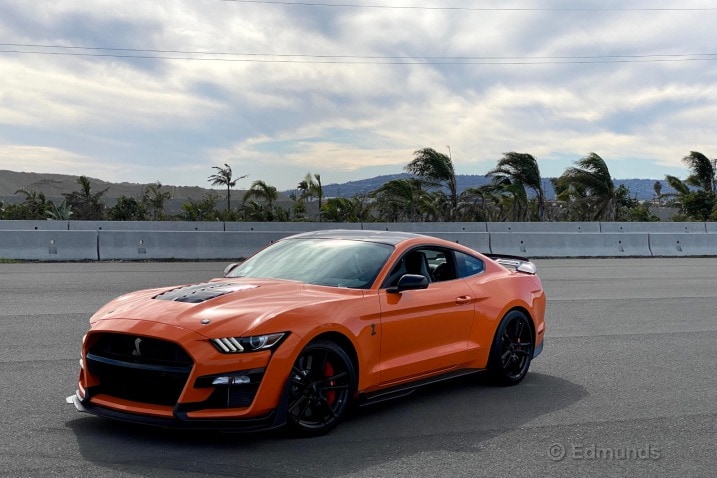
    Wearing slicks, the Vortech Mustang ran an 11.6-second quarter-mile on a hot day at California Speedway in Fontana, California. | September 15, 2009

Feature

Vortech Supercharged 2005 Ford Mustang GT

Thunder Horse

    4 Ratings
    Turn the key and the Vortech Mustang GT starts with a unique and menacing mix of rumble and whine. Some might prefer additional low bass in the exhaust and less high treble from the supercharger, but the sound is distinct to Vortech-equipped vehicles and is an essential element of the car's personality.

    Vortech Engineering has been building supercharger kits for the Mustang from the instant the company was founded in Oxnard, California, in 1990. For an entire generation of young enthusiasts, a Mustang with the unmistakable sound of a Vortech churning boost into a 5.0-liter V8 is as much a performance icon as a fender-less '32 Ford or jacked-up '55 Chevy was for their dads and granddads.

    Vortech does not take its icon status lightly. When it decided to design a blower system for the 2005 Mustang GT's new three-valve 4.6-liter, single-overhead cam engine, the company faced two challenges: It had to create an all-new supercharger system that made the kind of power Vortech was famous for along with the kind of durability its customers expect. It also had to make sure a 21st-century Mustang equipped with that system would be just as mesmerizing as its predecessors.

    Missions accomplished.

    Blow By Blow
    The heart of Vortech's basic $3,889 system for the new 2005 Mustang GT is its V2 S-Trim blower. Like all of Vortech's centrifugal superchargers, the design is an impeller wheel spun by a small transmission that in turn is driven by a belt lashed around a crank pulley.

    It's the straight cut gears in that transmission that gives the Vortech its unique sound — a sound you either love or loath, but it never lets the driver forget he's piloting something special. The resulting 8.5 to 9.5 pounds of boost are fed into the engine through cast-aluminum ducting and into the stock throttle body and intake manifold.

    To help the engine deal with the atmospheric crush, the fuel injectors are replaced with new high-flow units, a high-flow fuel pump is fitted and a Diablosport Predator handheld programmer is used to reprogram the flash memory in the Engine Control Module (ECM) to Vortech's calibrations.

    That basic system is enough, claims Vortech, to boost total output of the Mustang GT engine up from the stock 300 to 420 horsepower while running on 91-octane pump gas. Add in the optional air-to-water charge cooler to keep the fuel-air mixture dense and that rises to 475 hp.

    Still there's more power to be had. Throw on high-flowing fuel rails, a different crank pulley to make more boost and a few other tweaks and Vortech has had this Mustang make up to 575 hp.

    When we had the car, it was fitted with headers and a cat-back exhaust system from JBA, but the output was still closer to 475 horses than 575. And the fifth gear in the Tremec heavy-duty five-speed transmission was taller than stock for greater top speed potential.

    Fortification
    With that much thrust, it only makes sense to reinforce the rest of the car to deal with it. So Vortech tied the structure together using a front strut tower brace and floor pan transmission tunnel brace from BMR Fabrication. It also tweaked the suspension using BMR's adjustable tubular lower front control arms, front A-arm support braces, adjustable Panhard rod, and upper Panhard rod support.

    Eibach coil-over shock-and-spring combinations lower the car an inch all the way around and mount just inboard of Stoptech's 14-inch front disc brakes with four-piston calipers and the stock discs in the back. The chassis assembly is capped by Ronal LZ Eleganz 18-by-8-inch wheels inside Toyo Proxes RA-1 275/40ZR18 DOT-legal competition radials.

    This 2005 Ford Mustang GT has lived a tough life. As Vortech's test mule it has been put through dozens of runs on the company's dynamometer, more than a few drag strip sessions and at least one blast at sustained high speed before coming into our hands. Still the car felt tight and the engine felt eager and muscular.

    Visceral Muscle
    Heave the shifter into first gear, let up the heavy Centerforce clutch and the car moves forward with no real need to dip into the accelerator.

    With the supercharger attached, the Mustang's V8 revs so quickly it seems to reach its 6,250-rpm fuel cutoff a nanosecond after you lay into the throttle. At first the shifter and Tremec transmission can be reluctant to move from gear to gear, but the driver acclimates quickly to the situation and soon masters the required indelicate mix of directional determination and sledgehammer muscle motion.

    Launched at about 3,000 rpm, the car rockets forward as if it's been head-butted by a 767. Grabbing second barks the rear Toyos and the entire rear of the car torques over to the left.

    During hard acceleration, the two-three upshift is the toughest to execute with precision, but if it's done right you're already blasting along at the sort of speed that turns the surrounding air into a whipped dessert topping. Find fourth and that rush of air begins to ripple the skin of the Mustang's aluminum hood. Fifth? We ran out of road and into our own sense of self-preservation before blazing into that gear.

    In special trim the Mustang has accelerated to 179 mph in just one mile. Modifications for that exercise included unique gearing and aerodynamic tweaks like a rear underbody air diffuser and removing the rear spoiler to reduce drag.

    In pure drag strip trim — racing slicks, no front sway bar, higher boost and racing gas — the car has run the quarter-mile in 11.6 seconds with a 122.4-mph trap speed. During that pass the 0-to-60-mph time was just 3.6 seconds.

    We sampled the car in pure street trim in which the Mustang can run a mid-12-second quarter-mile, 0-to-60-mph time in the mid-fours and reach 150-plus mph.

    Cornered in the Real World
    On twisting roads, the big tires, stiffer structure and much stiffer suspension pay off in noticeably higher cornering limits and better initial turn-in. However, the Mustang still uses a solid rear axle, so any sort of road irregularity in midcorner will send a shudder through the rear end and cause the car to skitter across the road. The best technique for staying out of trouble is to use the excellent brakes hard entering a corner and let the supercharged engine's thrust pull it out. Duh.

    The suspension modifications do make this Mustang an engaging on-road entertainment system, but in everyday use its stiff ride can be brutal. The car crashes over parking lot speed bumps, and potholes hit at cruising speeds threaten to shatter the Mustang into its component molecules.

    The engine, on the other hand, seems just as happy drooping along at 30 mph as it does running for the redline. Of course it's loud — very loud — but it doesn't heave, sputter, hesitate or knock at all. The highest compliment we can pay it is that we've driven untouched engines in regular production cars that weren't as well behaved as the beast in Vortech's Mustang.

    More Macho Mustang
    Of course the Vortech Mustang GT is much quicker and faster than the standard car. But it also has a different personality. Its mission in life is now more simply defined. It's not an unfriendly car, but it's definitely manlier than the untouched machine. It's as if the Mustang GT was dipped in testosterone and baked to a beautiful golden brown.

    For the hard-core enthusiast, it's done to a turn.

    Sort By:

    Sort By:

    Close

    Share on Facebook Share on Facebook
    Share on Twitter Share on Twitter

    Advertisement

    Tags

    Advertisement