Skip to FiltersReport abuse
541 listings
- Price Drop$2,991great price$6,727 below market
- 152,832 miles
- No accidents, 1 owner, personal use only
- 4cyl automatic
- Plantation Ford (Plantation, FL)
Close
Located in Plantation, FL / 975 miles away from Columbus, OH
Thank you for your interest in one of Plantation Ford's online offerings. Please continue for more information regarding this 2006 Honda Element 4WD E...
AutoCheck Vehicle History Summary
Accident Free Vehicle: Yes
Personal Use Only: Yes
History Provider: AutoCheck
Title Details: Clean Title
Salvage Vehicle: No
Frame Damage: No
Theft History: No
Lemon Status: No
Free History Report: No
Features and Specs:
20 Combined MPG (19 City/23 Highway)
Listing Information:
VIN: 5J6YH28746L003123
Stock: SA12607A
Certified Pre-Owned: No
Listed since: 04-01-2025 - $7,249fair price$1,280 below market
- 169,479 miles
- No accidents, 1 owner, personal use only
- 4cyl automatic
- Honda of Gainesville (Gainesville, FL)
Close
Located in Gainesville, FL / 716 miles away from Columbus, OH
!!!AS-IS!!! ****GREAT VALUE***Are you looking for a versatile and practical vehicle that can handle both city commutes and outdoor adventures? Look n...
AutoCheck Vehicle History Summary
Accident Free Vehicle: Yes
Personal Use Only: Yes
History Provider: AutoCheck
Title Details: Clean Title
Salvage Vehicle: No
Frame Damage: No
Theft History: No
Lemon Status: No
Free History Report: No
Features and Specs:
22 Combined MPG (20 City/25 Highway)
Listing Information:
VIN: 5J6YH18957L010708
Stock: E021876N
Certified Pre-Owned: No
Listed since: 03-28-2025 - $3,495good price$1,531 below market
- 235,700 miles
- No accidents, 3 owners, personal use only
- 4cyl automatic
- Granite Subaru (Hudson, NH)
Close
Located in Hudson, NH / 620 miles away from Columbus, OH
!!!!AS-IS!!!!, AWD. Priced below KBB Fair Purchase Price!The Value Vault works as follows: All vehicles marked as such in their descriptions are sp...
AutoCheck Vehicle History Summary
Accident Free Vehicle: Yes
Personal Use Only: Yes
History Provider: AutoCheck
Title Details: Clean Title
Salvage Vehicle: No
Frame Damage: No
Theft History: No
Lemon Status: No
Free History Report: No
Features and Specs:
20 Combined MPG (19 City/23 Highway)
Listing Information:
VIN: 5J6YH28716L008893
Stock: FL562BB
Certified Pre-Owned: No
Listed since: 03-05-2025 - Price Drop$3,990good price$1,145 below market
- 230,160 miles
- No accidents, 3 owners, personal use only
- 4cyl automatic
- Urban Motors Red (Denver, CO)
Close
Located in Denver, CO / 1,174 miles away from Columbus, OH
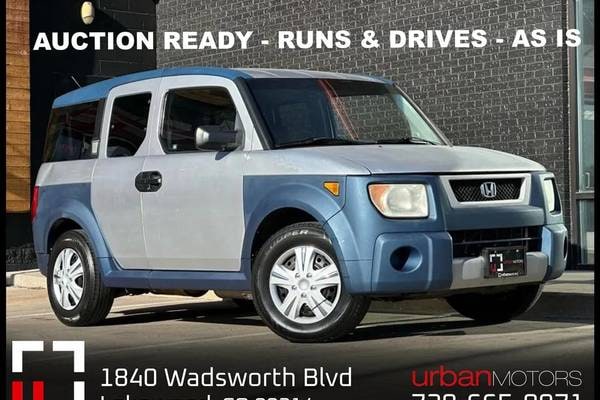
AUCTION READY! Recent Local Trade. Clean CarFax No Accidents. This Auction Ready Inspected Vehicle has been deemed road worthy although it did not pas...
AutoCheck Vehicle History Summary
Accident Free Vehicle: Yes
Personal Use Only: Yes
History Provider: AutoCheck
Title Details: Clean Title
Salvage Vehicle: No
Frame Damage: No
Theft History: No
Lemon Status: No
Free History Report: No
Features and Specs:
21 Combined MPG (19 City/24 Highway)
Listing Information:
VIN: 5J6YH18386L013113
Stock: 31136
Certified Pre-Owned: No
Listed since: 04-12-2025 - Price Drop$8,330good price$2,447 below market
- 155,273 miles
- 1 accident, 2 owners, personal use only
- 4cyl automatic
- Lee Auto Group (Fort Myers, FL)
Close
Located in Fort Myers, FL / 938 miles away from Columbus, OH
Our incredible 2011 Honda Element EX 4WD Crossover shown in Crystal Black Pearl is here to have some fun and doesn't mind getting dirty in the process...
AutoCheck Vehicle History Summary
Accident Free Vehicle: No
Personal Use Only: Yes
History Provider: AutoCheck
Title Details: Clean Title
Salvage Vehicle: No
Frame Damage: No
Theft History: No
Lemon Status: No
Free History Report: No
Features and Specs:
21 Combined MPG (19 City/24 Highway)
Listing Information:
VIN: 5J6YH2H70BL004117
Stock: F7018
Certified Pre-Owned: No
Listed since: 12-26-2024 - $6,797good price$1,009 below market
- 186,590 miles
- No accidents, 3 owners, personal use only
- 4cyl automatic
- Steve's Hometown Chevrolet GMC (Fruitland, ID)
Close
Located in Fruitland, ID / 1,757 miles away from Columbus, OH
Clean CARFAX. ALL VEHICLES HAVE OIL CHANGE, INSPECTION AND COMPLETE AUTO DETAIL, EX & LX Sport Package, Fog Light Kit, Power door mirrors, Rear (Tailg...
AutoCheck Vehicle History Summary
Accident Free Vehicle: Yes
Personal Use Only: Yes
History Provider: AutoCheck
Title Details: Clean Title
Salvage Vehicle: No
Frame Damage: No
Theft History: No
Lemon Status: No
Free History Report: No
Features and Specs:
20 Combined MPG (19 City/23 Highway)
Listing Information:
VIN: 5J6YH287X6L021416
Stock: 25021416
Certified Pre-Owned: No
Listed since: 03-19-2025 - $4,269good price$933 below market
- 223,404 miles
- No accidents, 3 owners, personal use only
- 4cyl automatic
- Tom Gibbs Chevrolet (Palm Coast, FL)
Close
Located in Palm Coast, FL / 736 miles away from Columbus, OH
2003 Honda Element EX AWD 4-Speed Automatic with Overdrive 2.4L I4 DOHC 16V i-VTEC AWD. All prices plus $995 dealer fee, tax, tag, and registration. P...
AutoCheck Vehicle History Summary
Accident Free Vehicle: Yes
Personal Use Only: Yes
History Provider: AutoCheck
Title Details: Clean Title
Salvage Vehicle: No
Frame Damage: No
Theft History: No
Lemon Status: No
Free History Report: No
Features and Specs:
20 Combined MPG (19 City/23 Highway)
Listing Information:
VIN: 5J6YH28553L005358
Stock: 25354B
Certified Pre-Owned: No
Listed since: 05-09-2025 - New Listing$7,995fair price
- 124,836 miles
- No accidents, 1 owner, personal use only
- 4cyl automatic
- Driveway (In-stock online)
- Delivery available*
Close
Located in Grapevine, TX / 928 miles away from Columbus, OH
CarFax No Accidents Reported,Low Mileage,High Demand,Steel Wheels,Power Door Locks,Front Wheel Drive,Gasoline Fuel,CD Player,Cloth Seats,Rear Defrost,...
AutoCheck Vehicle History Summary
Accident Free Vehicle: Yes
Personal Use Only: Yes
History Provider: AutoCheck
Title Details: Clean Title
Salvage Vehicle: No
Frame Damage: No
Theft History: No
Lemon Status: No
Free History Report: No
Features and Specs:
21 Combined MPG (20 City/24 Highway)
Listing Information:
VIN: 5J6YH18364L001815
Stock: 4L001815P
Certified Pre-Owned: No - New Listing$5,994fair price$681 below market
- 180,817 miles
- No accidents, 2 owners, personal use only
- 4cyl automatic
- Drive Nation (Fredericksburg, VA)
Close
Located in Fredericksburg, VA / 314 miles away from Columbus, OH
WE OFFER A LARGE SELECTION PRE OWNED VEHICLES. WE OFFER FINANCING AND FREE DELIVERY TO ALL OUR CUSTOMERS. NEED TO BE PICKED UP AT AN AIR PORT? WE OFFE...
AutoCheck Vehicle History Summary
Accident Free Vehicle: Yes
Personal Use Only: Yes
History Provider: AutoCheck
Title Details: Clean Title
Salvage Vehicle: No
Frame Damage: No
Theft History: No
Lemon Status: No
Free History Report: No
Features and Specs:
20 Combined MPG (19 City/23 Highway)
Listing Information:
VIN: 5J6YH28513L046263
Stock: DN6263
Certified Pre-Owned: No - Price Drop$4,995good price$883 below market
- 178,272 miles
- 3 accidents, 6 owners, personal use only
- 4cyl automatic
- PDX Motorcars (Beaverton, OR)
Close
Located in Beaverton, OR / 2,038 miles away from Columbus, OH
Clean Title, Power steering, Power windows. 22/26 City/Highway MPGWelcome to PDX Motorcars Our clients have high expectations for their vehicles, an...
AutoCheck Vehicle History Summary
Accident Free Vehicle: No
Personal Use Only: Yes
History Provider: AutoCheck
Title Details: Clean Title
Salvage Vehicle: No
Frame Damage: No
Theft History: No
Lemon Status: No
Free History Report: No
Features and Specs:
21 Combined MPG (20 City/24 Highway)
Listing Information:
VIN: 5J6YH18513L019588
Stock: CT12553
Certified Pre-Owned: No
Listed since: 02-07-2025 - $6,988fair price$335 above market
- 200,959 miles
- No accidents, 5 owners, personal use only
- 4cyl automatic
- Kendall Toyota of Eugene (Eugene, OR)
Close
Located in Eugene, OR / 2,063 miles away from Columbus, OH
Black 2007 Honda Element SC 4D Sport Utility FWD 2.4L I4 DOHC i-VTEC 16V 5-Speed Automatic DETAILED, OIL CHANGE, 18" Machined Alloy Wheels, 4-Wheel Di...
AutoCheck Vehicle History Summary
Accident Free Vehicle: Yes
Personal Use Only: Yes
History Provider: AutoCheck
Title Details: Clean Title
Salvage Vehicle: No
Frame Damage: No
Theft History: No
Lemon Status: No
Free History Report: No
Features and Specs:
22 Combined MPG (20 City/25 Highway)
Listing Information:
VIN: 5J6YH189X7L000563
Stock: TZH9729
Certified Pre-Owned: No
Listed since: 03-31-2025 - $11,598fair price$1,116 above market
- 147,104 miles
- 1 accident, 3 owners, personal use only
- 4cyl automatic
- Honda of Vallejo (Vallejo, CA)
Close
Located in Vallejo, CA / 2,098 miles away from Columbus, OH
Formerly known as Avery Greene Honda, Honda of Vallejo has new ownership and a new attitude!! Come see how we're taking savings and service to a whole...
AutoCheck Vehicle History Summary
Accident Free Vehicle: No
Personal Use Only: Yes
History Provider: AutoCheck
Title Details: Clean Title
Salvage Vehicle: No
Frame Damage: No
Theft History: No
Lemon Status: No
Free History Report: No
Features and Specs:
22 Combined MPG (20 City/25 Highway)
Listing Information:
VIN: 5J6YH1H79AL005713
Stock: U00290
Certified Pre-Owned: No
Listed since: 03-25-2025 - $8,999fair price$652 above market
- 177,035 miles
- No accidents, 3 owners, personal use only
- 4cyl automatic
- Greenline Motors (Bellevue, NE)
Close
Located in Bellevue, NE / 689 miles away from Columbus, OH
5J6YH28796L0000412006 Honda Element EX-P Sport Utility 4D4-Cyl, VTEC, 2.4 LiterAutomatic177,0354WD*Clean title *Financing available!GREENLIN...
AutoCheck Vehicle History Summary
Accident Free Vehicle: Yes
Personal Use Only: Yes
History Provider: AutoCheck
Title Details: Clean Title
Salvage Vehicle: No
Frame Damage: No
Theft History: No
Lemon Status: No
Free History Report: No
Features and Specs:
20 Combined MPG (19 City/23 Highway)
Listing Information:
VIN: 5J6YH28796L000041
Stock: 24-321
Certified Pre-Owned: No
Listed since: 03-20-2025 - $6,500fair price$405 above market
- 197,586 miles
- No accidents, 1 owner, personal use only
- 4cyl automatic
- Victory Auto Group (Stuart, FL)
Close
Located in Stuart, FL / 902 miles away from Columbus, OH
Victory Auto Store is a family pre-owned car dealership. The store has been operating since 2011. We are located in Stuart, Florida - the 'Sailfish Ca...
AutoCheck Vehicle History Summary
Accident Free Vehicle: Yes
Personal Use Only: Yes
History Provider: AutoCheck
Title Details: Clean Title
Salvage Vehicle: No
Frame Damage: No
Theft History: No
Lemon Status: No
Free History Report: No
Features and Specs:
20 Combined MPG (19 City/23 Highway)
Listing Information:
VIN: 5J6YH28533L029089
Stock: C24-244
Certified Pre-Owned: No
Listed since: 01-18-2025 - $15,500
- 120,345 miles
- No accidents, personal use only
- 4cyl manual
- Seattle Finest Motors (Lynnwood, WA)
Close
Located in Lynnwood, WA / 2,011 miles away from Columbus, OH
Our fantastic 2008 Honda Element SC offers fun and functionality in Alabaster Silver Metallic! Powered by a 2.4 Liter 4 Cylinder delivering 166hp pair...
AutoCheck Vehicle History Summary
Accident Free Vehicle: Yes
Personal Use Only: Yes
History Provider: AutoCheck
Title Details: Clean Title
Salvage Vehicle: No
Frame Damage: No
Theft History: No
Lemon Status: No
Free History Report: No
Features and Specs:
20 Combined MPG (18 City/23 Highway)
Listing Information:
VIN: 5J6YH17928L800213
Stock: V800213
Certified Pre-Owned: No
Listed since: 03-26-2025 - $8,999fair price$566 below market
- 97,287 miles
- No accidents, 3 owners, personal use only
- 4cyl automatic
- Automotive Connection (Fairfield, OH)
Close
Located in Fairfield, OH / 102 miles away from Columbus, OH
Please visit WWW.AUTOCONNECTIONOH.COM for more information, photos, and FREE Car Fax or Call Us Today at 513-858-6555. We sell our inventory near whol...
AutoCheck Vehicle History Summary
Accident Free Vehicle: Yes
Personal Use Only: Yes
History Provider: AutoCheck
Title Details: Clean Title
Salvage Vehicle: No
Frame Damage: No
Theft History: No
Lemon Status: No
Free History Report: No
Features and Specs:
20 Combined MPG (19 City/23 Highway)
Listing Information:
VIN: 5J6YH28533L007867
Stock: D250126
Certified Pre-Owned: No
Listed since: 01-15-2025 - New Listing$13,356fair price$104 above market
- 97,699 miles
- No accidents, 2 owners, personal use only
- 4cyl automatic
- AutoNation Chrysler Jeep West (Golden, CO)
Close
Located in Golden, CO / 1,181 miles away from Columbus, OH
MoonroofStandard PaintThis vehicle includes a Money-Back Guarantee* and passed our precise inspection process. Best of all the price you see is th...
AutoCheck Vehicle History Summary
Accident Free Vehicle: Yes
Personal Use Only: Yes
History Provider: AutoCheck
Title Details: Clean Title
Salvage Vehicle: No
Frame Damage: No
Theft History: No
Lemon Status: No
Free History Report: No
Features and Specs:
21 Combined MPG (19 City/24 Highway)
Listing Information:
VIN: 5J6YH28368L008176
Stock: 8L008176
Certified Pre-Owned: No
Listed since: 05-14-2025 - $7,000fair price$154 above market
- 139,023 miles
- 1 accident, 5 owners, rental vehicle
- 4cyl automatic
- Kargar Motors (Manassas, VA)
Close
Located in Manassas, VA / 301 miles away from Columbus, OH
BUYING A CAR HAS NEVER BEEN THIS EASY.We specialize in 100% GUARANTEED APPROVAL. BAD CREDIT, NO CREDIT, BANKRUPTCY, REPO, FORECLOSURE...NO PROBLEM. NO...
AutoCheck Vehicle History Summary
Accident Free Vehicle: No
Personal Use Only: No
History Provider: AutoCheck
Title Details: Clean Title
Salvage Vehicle: No
Frame Damage: No
Theft History: No
Lemon Status: No
Free History Report: No
Features and Specs:
22 Combined MPG (20 City/25 Highway)
Listing Information:
VIN: 5J6YH18308L007163
Stock: KMM11292
Certified Pre-Owned: No - $13,990fair price$1,284 above market
- 68,959 miles
- 2 accidents, 2 owners, personal use only
- 4cyl automatic
- Shirlie Slack Mitsubishi (Fredericksburg, VA)
Close
Located in Fredericksburg, VA / 312 miles away from Columbus, OH
Alabaster Silver Metallic exterior and Black/Gray interior. iPod/MP3 Input, Alloy Wheels, Premium Sound System. SEE MORE!KEY FEATURES INCLUDEPremiu...
AutoCheck Vehicle History Summary
Accident Free Vehicle: No
Personal Use Only: Yes
History Provider: AutoCheck
Title Details: Clean Title
Salvage Vehicle: No
Frame Damage: No
Theft History: No
Lemon Status: No
Free History Report: No
Features and Specs:
21 Combined MPG (19 City/24 Highway)
Listing Information:
VIN: 5J6YH18716L013960
Stock: 84623H
Certified Pre-Owned: No
Listed since: 07-26-2024 - $10,490
- 126,209 miles
- Hail damage reported, 4 owners, personal use only
- 4cyl automatic
- Urban Motors Green (Lakewood, CO)
Close
Located in Lakewood, CO / 1,175 miles away from Columbus, OH
2004 Honda Element EX. Automatic. AWD. Sunroof/Moonroof. Daytime Running Lights. Alloy Wheels. New Oil and Filters. Clean Title. This vehicle has b...
AutoCheck Vehicle History Summary
Accident Free Vehicle: Yes
Personal Use Only: Yes
History Provider: AutoCheck
Title Details: Issue reported
Salvage Vehicle: No
Frame Damage: Yes
Theft History: No
Lemon Status: No
Free History Report: No
Features and Specs:
20 Combined MPG (19 City/23 Highway)
Listing Information:
VIN: 5J6YH28584L016498
Stock: 71718
Certified Pre-Owned: No
Listed since: 03-27-2025 - 225,643 miles
- No accidents, 3 owners, personal use only
- 4cyl automatic
- ENE Motors (Racine, WI)
Close
Located in Racine, WI / 320 miles away from Columbus, OH
Staying In? WE WILL COME TO YOU! We buy cars! Do your deal online! We'll deliver your car to YOU! We can do it ALL! Phone · Email · Text · Chat Facebo...
AutoCheck Vehicle History Summary
Accident Free Vehicle: Yes
Personal Use Only: Yes
History Provider: AutoCheck
Title Details: Clean Title
Salvage Vehicle: No
Frame Damage: No
Theft History: No
Lemon Status: No
Free History Report: No
Features and Specs:
20 Combined MPG (19 City/23 Highway)
Listing Information:
VIN: 5J6YH28685L030556
Stock: 6645
Certified Pre-Owned: No
Listed since: 03-21-2025





Showing 1 - 21 out of 541 listings
Consumer Reviews for the Honda Element
Read recent reviews for the Honda Element
Never gonna GIVE YOU UP...
JCP in NC, 11/14/2018
2011 Honda Element
First off, if you have an element, you will meet people that LOVE it, or HATE it. The haters don't like it because it's ugly apparently. That's fine. More for me. I bought this brand new. Dog friendly edition package. This car is pure perfection for ME. I am an avid cyclist, outdoorswoman, adventure seeker, antique-er and so on.. The rear seats are roomy and EASILY removable. It's the … quintessential UTILITY vehicle. DON'T HOSE IT OUT. It has no drain holes, dummy. It's not a 6 cylinder. Pretty much the only bummer about this vehicle. Otherwise, it's irreplaceable. I have had several strangers approach me asking if it's for sale. My omni blue pearl Elly is really a sea foam green. And she's not for sale. Ever. I'm worried I'll never find a similar replacement. But if you ask me what is close in style, utility, and performance? Maybe the Toyota RAV4. Subaru?... meh...Honda, do me a favor, bring back the Elly.
UPDDATE: 5/16/19:
95,000 ish miles on it and I still don't have any issues. Pretty sure it may be time to replace the brake pads. But that's about it thus far.
More about the Honda Element
Edmunds has 541 Used Honda Elements for sale near you, including a 2006 Element EX-P SUV and a 2008 Element SC SUV ranging in price from $2,991 to $15,500.
How much is the used Honda Element?
- There are 541 used Honda Element vehicles for sale near you, with an average cost of $8,054.Edmunds found one or more Great deals on a used Honda Element near you, starting at $2,991.That's $5,063 less than the average price of a used Element near you.
Is the used Honda Element a good car?
- The used Honda Element received an average score of 4.5 out of 5 based on 216 consumer reviews at Edmunds. If you want to learn more about the Honda Element, read Edmunds' expert review.
Filters
Skip to ResultsApplied Filters4Active
Make & Model
Year
New / Used
Price & Payments
Price Rating
Body Type
Trim
Mileage
Accidents & History
Engine & Drivetrain
Exterior Color
Interior Color
Total Seating
Edmunds Review
Features
MPG
* Delivery of any kind does not apply to Alaska and Hawaii. Contact the dealer for delivery details, restrictions and costs.