INSIDE LINE

2011 Chevrolet Volt First Drive and Video

Media Player

  • 2011 Chevrolet Volt First Drive Video

    Chevy's Volt is one of the most anticipated cars of 2010. And we got to drive its latest incarnation at Los Angeles' very own Dodger Stadium. | November 29, 2009

1 Video , 21 Photos | See more photos in this gallery »

Road Test

2011 Chevrolet Volt First Drive and Video

Striving Toward Normalcy

    34 Ratings

    Toppling the Nissan GT-R is a mighty task, yet the 2011 Chevrolet Volt has done it. No, not lap times at the Nürburgring. This time it's a contest of anticipation and speculation, and the Chevy Volt has eclipsed the mighty Japanese supercar.

    The hype machine has been running full-tilt for the 2011 Chevrolet Volt since GM revealed the 2007 Volt Concept car, and although we've previously wheeled a development mule, we've now driven the car you see here, a pre-production Volt.

    With all the hoopla, it's easy to forget that the 2011 Chevy Volt strives to be a normal car.

    The Volt?
    If you're a hermit who just descended from a remote mountaintop hovel yesterday, here's the lowdown on the 2011 Chevrolet Volt. It's a four-passenger, series-type plug-in hybrid with which GM has been doing a slow striptease — and with good reason, as the Volt is indeed unlike any hybrid to come before it.

    All of the familiar bits are in place — a gasoline engine, an electric motor and a battery pack — but the Volt's twist is that its wheels are driven solely by the electric motor. GM reckons there's up to 40 miles of cruising range until the battery pack runs down to about 30 percent of "full," at which point the Volt's 1.4-liter gasoline-powered (it'll run on E85 ethanol, too) engine kicks on. The engine generates electricity to power the electric motor and maintain the battery's state of charge to this level and no more.

    There's a good reason for this strategy. Replenishing the Volt's battery is less expensive when you use a wall outlet rather than burning gasoline, so the engine maintains rather than replenishes. Meanwhile, charging the Volt using household 120-volt current, a full recharge takes about 8 hours, while a special 240-volt supply is expected to shorten this process to 3 hours.

    Under the skin, the Volt is related to the upcoming 2011 Chevrolet Cruze compact car. Its shares the steel chassis, overall width and same wheelbase in the interests of minimizing costs, but when you add its 400-pound battery pack the Volt reaches a curb weight of roughly 3,300 pounds.

    A Question of Range
    GM's estimate of 40 miles of battery-only propulsion is based on the EPA city driving cycle. It is a best-case estimate, as the pattern of cruising, stopping and starting in the EPA's simulation of city driving involves plenty of opportunities for regenerative braking, while the air-conditioning and other power-sapping accessories are switched off.

    This pre-production Volt drives more naturally and feels more substantial than the Honda Insight.

    Volt chief engineer Andrew Farah makes it clear. "The Volt's [battery-only] range is up to 40 miles. Most people will get less than 40 miles. A few people will get more than 40."

    Once the gasoline engine is fired up to sustain the charge, Farah reckons the Volt will run completely out of fuel — again, assuming you drive in a way that's similar to the EPA's city driving cycle — in another 300 miles. Since the Volt's fuel tank is presently 8 gallons in volume, this overall mileage expectation equates to more than 38 mpg when driving in this "charge-sustaining" mode.

    This total driving range of about 340 miles elevates the Volt from commuter-car compromise to a realistic full-time transportation alternative that's comparable to modern conventional automobiles.

    Of course, even advanced lithium-ion batteries like those in the Volt have limitations. For example, heat is an issue. Charging and discharging batteries in particularly hot climates can send battery temperatures up to a point where the battery's performance can be compromised. Farah acknowledges, "The Volt may not be right for everyone. If you live in the Southwest, depending on how you use your car, the Volt might not be right for you."

    Still, the Volt will be available in all 50 states once it reaches full production in early 2011, while select dealerships will have Volts in the showroom in late 2010. At this point, the estimated price will be about $40,000, or $32,500 with the current $7,500 federal incentive.

    Volt in the Metal
    The car we drove was one of about 80 pre-production Volts, and while it is not the finished product, Farah confirms, "It's 99 percent correct in terms of hardware, and about 65 percent correct in its calibration." In lay terms this means that they're still fine-tuning the powertrain, suspension, interior fitment and NVH characteristics.

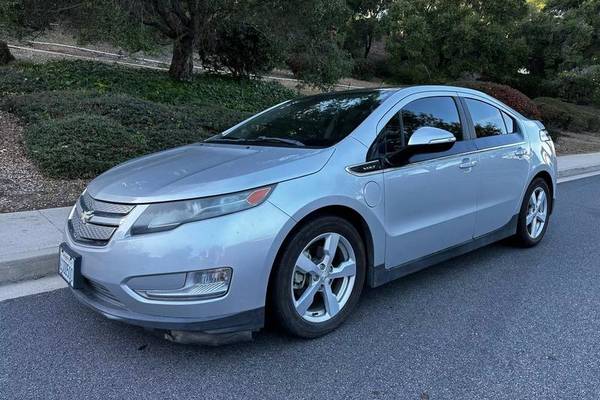
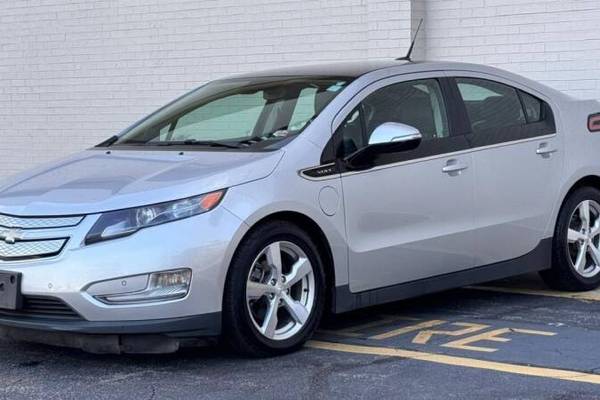
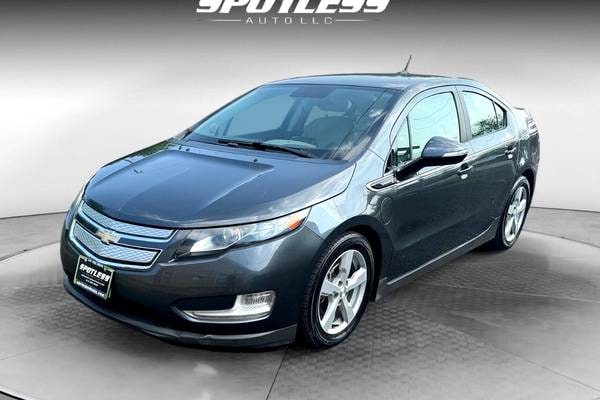
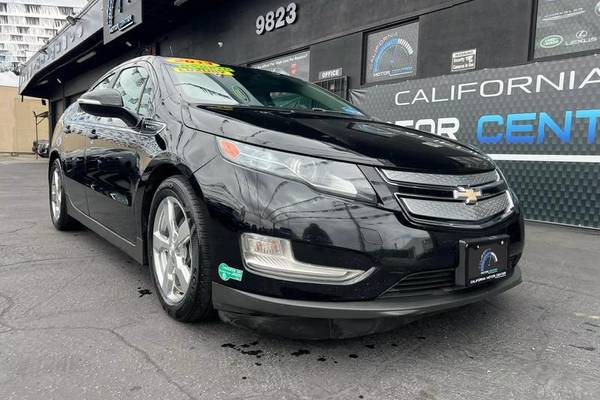
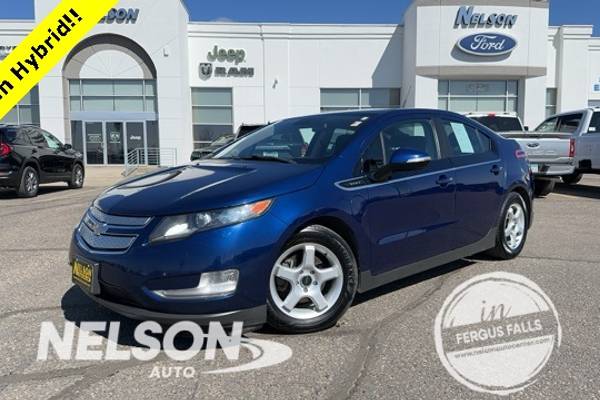
    During our drive on a prepared course around Parking Lot 1 at Dodger Stadium, about 3 miles from where the car will be displayed during the 2009 Los Angeles Auto Show, the Chevy Volt is a rather handsome thing. The blacked-out rocker sills and beltline of the greenhouse visually slim the car so it looks less slab-sided, and there's a forward thrust to the styling that's missing in your average hybrid. Its 17-inch alloy wheels lend it some style, even if these P215/55R17 Goodyear Assurance Fuel Max tires are low-rolling-resistance jobs. Only the nose looks a bit ponderous due to its sheer size, though the detailing of grille and headlights lessens the blow.

    On the driver's fender is a round door at the height of your thigh, through which the charging port is accessed. The GM engineering team wanted to retain the showcar's better-integrated charging port — it was inside the badge on the fender — but practical considerations such as structural integrity and sealing against the elements ruled it out.

    You open the Volt's door and are presented with an unusual-looking glossy white center stack with touch-sensitive controls and two blacked-out video screens. Once you press the Start button, the two screens blink to life in sharp, vivid color. The windshield is steeply raked for aerodynamic reasons, and this makes for a very deep cowl.

    Other than that, the Volt's cabin seems like that of a normal car. The seat has a manual rake and mechanical height adjustment, and the horseshoe-shaped gear selector is your typical grab-and-slide affair, albeit one that resides in a dark well that is sure to collect all manner of Cheetos and pocket lint.

    Driving the Volt
    Like a pure electric vehicle, the Volt's acceleration is smooth, quiet and instantaneous. Its shove is linear, too, and this makes for deceptively effective pointing and squirting. This is certainly one of the mixed blessings for the Volt's development staff — the hushed nature of electric propulsion makes the gasoline engine that much more noticeable when it finally thrums to life. It is heard rather than felt, particularly because the engine doesn't necessarily need to run when you floor the throttle as it does in even a hybrid like the Toyota Prius.

    A Sport button on the left side of the center stack increases the responsiveness of the throttle pedal as well as its ultimate limit, resulting in acceleration from a standstill to 60 mph in less than 9 seconds, Chevy tells us. Sport mode provides a very noticeable sharpening of the Volt's urge to scoot.

    Likewise, the console-mounted gear selector includes an "L" setting that, like in a normal car, provides more aggressive deceleration than does Drive. Farah says the engineering team has done this to make the car feel more familiar to those accustomed to using Low when driving down steep grades in a conventional car. "It's also really nice for stop-and-go driving," he says.

    The Volt feels slightly nose-heavy when you bend it around a corner, but it makes its moves with little body roll. Even in this relatively early state of development, the brake pedal operates seamlessly as it modulates regenerative and conventional braking, which is a real accomplishment.

    Indeed, from the compliance of its ride quality to the weight and response of the steering, this pre-production Chevy Volt drives more naturally and feels more substantial than the Honda Insight we happened to drive to the event.

    A People's Car
    The overall, overriding impression the 2011 Chevrolet Volt gives you is one of normalcy. There are no bad habits or overtly obvious telltales of what's going on behind the curtain. You just get in and drive.

    And that is truly the key bit. Aside from the charging process, the Volt functions usefully as a normal car. It doesn't force you to live with the limitations of a pure electric car, while providing a large chunk of the benefit. Certainly diligence in keeping the battery topped up will tip the payoff equation to the car's benefit, but the Volt doesn't force the consumer's hand.

    "We're trying to build a car, not a battery on wheels," says Farah. He acknowledges that the world waits for a breakthrough that allows pure EVs to match the range and ease of refueling of a conventional vehicle, but notes, "The Volt is something we can do now."

    Edmunds attended a manufacturer-sponsored event, to which selected members of the press were invited, to facilitate this report.

    Sort By:

    kingisback350 says:

    06:19 PM, 12/10/2009

    can someone help me. The Volt gets...

    340 miles on full tank divided by an 8 gallon tank = 42.5MPG

    How is it suppose to be better than a prius when its gonna cost 40K

    zoolander1 says:

    03:42 PM, 12/03/2009

    ROCKET: If I want to talk about the appearance of this vehicle I have to compare it to semi-direct competitors such as the Prius and the Insight and this vehicle is better proportionate.

    CWMOO740: The practicality of its range is debatable. In my case I drive 14 miles to work each way. Theorically I could drive on purely electric power on a round trip to work.

    A lot of commuter people panic-purchased Priuses only to later found out that the HWY MPG is good but comparable to a regular Civic.

    guy1974 says:

    06:59 AM, 12/01/2009

    hondaacura4 - you sound defensive. Remember that this Chevy is one year away from production and it is already a better sorted vehicle than the production Insight (which is a copy of the 10 year old Prius).. I am usually a fan of Honda but GM deserve credit for this. Yes it is more expensive, but it has a more advanced drive train and propulsion system. Hybrids were very expensive at the start and required subsidy. This is a continuation of it. It isn`t for everyone - no-one said it was.

    rocket_ says:

    10:25 PM, 11/30/2009

    words cannot express what an utter styling disappointment this car has become.

    Worst of all is the horrendous, disgusting base of the a-pillar: it is hard to imagine a more discordant mishmash of discombobulated cutlines, angles, plastic panels, chrome, and bends. Barf.

    icecubefosho says:

    07:21 PM, 11/30/2009

    Whoa look the Prius and Civic made a child!

    hondacura4 says:

    05:54 PM, 11/30/2009

    "This pre-production Volt drives more naturally and feels more substantial than the Honda Insight."

    Given the price point of the Volt is double the price of the Insight, I would hope it would be more substantial and natural.

    resugar says:

    05:41 PM, 11/30/2009

    The typical commute in many smaller cities is 20-30 minutes/15-20 miles one way, mostly highway driving.  The opportunity to drive to work and home everyday without having to fuel up and only a slightly higher electrical bill at the end of the month is what will make this car sell, even at $40,000.  Sure, if you take it on a roadtrip, its mileage is less than a Prius, but that's not the point.  How many American's have two $30,000-$40,000 vehicles sitting in their garage or driveway.  This car could easily replace one of the those.  This car is not just built for enthusiasts and fanboys, it's a step in the right direction and it won't be the first or only one of its kind.

    cwmoo740 says:

    03:37 PM, 11/30/2009

    wait... so it's 12 mpg short of a prius once you get over the 40 mile electric-only limit?

    So we have this equation (x-40)/(38) = x/50,  which gives x = 166.667 miles. Okay, so if you drive over 166.67 miles without plugging in your volt, a prius will be better. Score one for the volt.

    What about a plug in conversion for a prius?

    Dunno if this is true or not, but toyota said they're thinking about releasing an NiMH plug in prius for 2010 with an electric-only cruising range of 12.5 miles.

    (x-40)/(38) = (x-12.5)/50, which gives x = 127.08 miles. Okay, still reasonable for the volt.

    We still run into the problem of price though. A fully loaded prius will run 35 grand, but only starts at 23 grand. A stripper prius is $9000 less than a volt, and that buys a lot of gas.

    nicked says:

    01:38 PM, 11/30/2009

    No doubt Volt is a futuristic technical statement and I'm sure super-rich/government agency/Hollywood stars will swallow these $40,000 cars without hesitation. But for normal people looking for a green and economical car, this generation of VOLT is totally POINTLESS.

    dieseltc says:

    01:37 PM, 11/30/2009

    Don't laugh at the price. People are shelling out several hundred dollars for an iPhone plus a hundred a month on the phone plan and pay for a BMW 1 series what a 3 series cost only 5  years ago.

    I'm not a hybrid or electric car fan but seems like this is a step in the right direction.

    morey000 says:

    01:06 PM, 11/30/2009

    For the 1st year, they'll sell just fine to the enthusiasts, environmentalists and those who prefer to give their money to GM rather than Exxon.  When gas climbs past $6/gal ($3600/yr for gas), which it most certainly will, even Joe the Plumber will plink down $40K for one, plus, then the Caddy version will be ready.

    Kudos to GM for coming up with the right engineering solution and not building a "battery on wheels" (although the Tesla is very cool)

    I fully expect other manufacturers to copy this idea.

    06scooby says:

    01:04 PM, 11/30/2009

    Before the volt comes to market, GM should be able to pretty much isolate that engine to where you hardly know it's running. Since it's not connected to the drivetrain directly, they should be able to put that thing on the softest mounts they can find and then wrap that engine bay with sound deadening and a very quiet exhaust.

    you guys that keep saying it's too expensive, aren't looking at the point that it's like no other car out there yet. you would be paying a premium for a "theoretical" electric car that you can also take more than 20-30 miles from your house and will have lower operating costs and pollution than a hybrid. A car which right now doesn't exist. If this car is in the $30k-40k range I don't think it will be a hard sell. Obviously as more people by and the technology becomes easier to produce then the price will come down.

    Untill Toyota or somebody else builds a similar car for less than this one, you can't say it's "too" expensive.

    cz75 says:

    12:43 PM, 11/30/2009

    "This pre-production Volt drives more naturally and feels more substantial than the Honda Insight."


    THAT is faint praise.

    guy1974 says:

    12:01 PM, 11/30/2009

    kdhspyder - GM knows the price marginalises it. Hence why they are looking to build 10000 in 2011. There are more than 10000 people in the US who could and would buy this car. Once they have sold quite a few over 2-3 years then I would expect the price to come down (before tax credit) to maybe $30K this opens up the market a bit and then you continue to get economies of scale which reduce it further. Joe Lunchbox (or Joe the Plumber) would not buy this in the next 5 years, but after 2015 who knows.

    kdhspyder says:

    11:51 AM, 11/30/2009

    The $40000 price tag is the biggest hurdle that it or any other PHEV has to overcome IMO.  The $7500 tax credit is a mirage!!!!!

    First, the buyer cannot deduct the tax credit from the price at time of delivery.  The buyer has to pay the full price to GM upfront.
    Second, that price is the vehicle price.  In Cali and NY/NJ you can add 8-9% sales tax on top of that.  OUTCHHH.  That's $3000+ right there.
    Third, big IF, the buyer has to qualify for a loan on a $40000 vehicle...or of course pay cash!!!  
    Fourth, those capable of paying $40000 in cash or those now qualified to get a $40000 loan are the very comfortable and well-to-do.  Joe and Jane Lunchpail need not apply.

    It's technology that should and must be developed for the future.  It's only niche material right now.  No matter how good it is the $40000+ price tag marginalizes the vehicle.

    wrinklebump says:

    11:40 AM, 11/30/2009

    Interior looks slick. Kind of diggin the white stack

    jazzor says:

    09:29 AM, 11/30/2009

    $40,000... Laughing Out Loud.

    guy1974 says:

    08:44 AM, 11/30/2009

    One poster before said that this car (minus its batteries and pwertrain) couldn`t compete with $40000. Of course and on-one including GM says it could.

    The tax credit is there to help reduce the price and when they have had a couple of years and some mass production they will reduce the price due to economies of scale and general manufacturing efficiencies. The US government gave people tax creidts to buy the Prius years ago and that was foreign developed, designed and built. The Volt is American research, developed, design and build. So it completely worthy of the help.

    If we want to start being energy independent we need this and other electric/gasoline cars now. As the Chevy engineer said at the end of the article, it isn`t perfect and will use fuel but it is something we can do now rather than just talk about a perfect EV in 2030.

    erik25 says:

    07:57 AM, 11/30/2009

    It's a nice car for the celebereties,get them out of the Prius into this "home made" car.
    But when you look at cost and reliability it's still a long way to go.Batteries are really doing bad in states where the temps are hitting 95 or more.....look at reviews from honda civic hybrids where the batteries are quit working after 50.000 miles......
    But the car makers have to do this to sell cars in the future,i wait with this new tech till they really can beat a small gas car in price per milage.I can still make 45 mpg with a normal car,so not really a big advanche of having a hybrid.When they make something what comes near to 75 mpg or more i will think about it.
    So the people who buy them now,hope they have fun with helping Gm for there research driving them and get the bugs out of the car.(lol)

    charlesb says:

    07:48 AM, 11/30/2009

    I sure hope that the Chevy Volt really doesn't cost $40, 000 because, save the drivetrain, nothing in this car seems capable of competing in that price range.

    fuhteng says:

    07:15 AM, 11/30/2009

    Why does this (like the Prius and the Insight) have such a high trunk? I figure it has to be for aerodynamics, but it can't be easy to see out of. I hope those ugly black pieces are dumped from the sides too.  Other than that, the price is steep, but I hope it sells to get the technology worked out.

    1487 says:

    06:07 AM, 11/30/2009

    They are only hoping to sell 10k or so in a full year. This is not a mass market car like the Prius so anyone saying "this wont topple the Prius" is correct. Chevy never said otherwise. It's too expensive to be a 10k a month vehicle. That said, there are plenty of people who can afford a $32k electric car.

    "Please tell me you actually got to drive the Volt in Range-Extended mode.  Without that, this will be yet another "first drive" saying the same things as all the other ones."

    the car guy from MSNBC drove it in both modes. Look it up.

    firstclass:

    its not an IRS- the car is based on the Cruze/Astra platform which lack IRS.

    "correct me if i'm wrong here, but like all batteries, the one in that car is going to lose it's ability to hold a charge over time and it's going to need to be replaced. "

    They want the battery to last 10 years. Also, the battery only drains to a certain capacity (like 30% charge or something) in order to lengthen its life. Since the battery doesn't fully deplete I don't think there will be an issue with reduced energy capacity over time- it never uses all of the charge in the first place.

    alexdi says:

    04:18 AM, 11/30/2009

    It costs $7500 too much after the government incentive. The difference is almost certainly in the battery. When sales start to slack in the third model year, I hope for GM's sake that new technology or a volume discount is waiting in the wings.

    efinils2 says:

    01:09 AM, 11/30/2009

    I think this car will look best in black, since it will help hide all those tacky plastic pieces

    double_duece says:

    10:31 PM, 11/29/2009

    well one thing i was happy to hear this guy say was it was "normal".  i don't think anything puts people off quite as quickly as something being abnormal.  i do have to commend Chevy for doing a great job of hiding the typical aerodynamic hybrid shape rather than fall directly into the same mold (as Honda did with the Insight),  they kinda...i dunno..tried to make it look like it was a nearly normal compact sedan?  

    this car isn't on my list of cars i want sitting in my garage. no, all those cars are far too vulgar and anti-politically correct.  but this car does get me thinking "have they actually made one of these electric things with fewer compromises?"  seems that way thus far, but i do wonder about the truth cost of ownership.  correct me if i'm wrong here, but like all batteries, the one in that car is going to lose it's ability to hold a charge over time and it's going to need to be replaced.  so how much is that going to cost? how long does it take for this car to pay for itself? how much more aerodynamic and fuel efficient can you make it before it looks like an abomination?(though i'm not sure anything with beat the Pontiac Aztek)

    trjnflip says:

    02:50 PM, 11/29/2009

    The overall shape is just like any dedicated hybrid on the market (Insight, Prius).  Chevy was just more creative in hiding the shape with a truck design (like the Scion tC).  I personally feel that the general market will 1) see this vehicle as too expensive without government rebates/OEM incentives, 2) the PHEV technology is still unproven that people will be hesistant to purchase this vehicle (Prius is already on its 3rd generation and has proven its tech), and 3) the Chevy brand has negative stigma (I see Volt conquesting early adopters that want the latest and greatest (less brand loyal), but mainstream buyers will probably stick to the proven players).

    nickdago says:

    08:03 PM, 11/25/2009

    Actually this blows the Prius away. If this car can do what it says and the goverment kicks back the 7500 they are talking about this could be a really great car. Definitly a move in the right direction.

    Once they advance the technology and ramp up production they will probably be able to bring the cost down, just like any other new technology, i.e computers, flat screen tv's, etc.

    firstclass says:

    06:59 PM, 11/22/2009

    @ rocket

    I'm sorry. But can you explain "hood cut" and "clam shell" I'm not familiar with that terminality? If there's a wrong line on this car I'm not seeing it.

    rocket_ says:

    01:46 PM, 11/21/2009

    what is the deal with the hood cut: Is it the original standard style, or the neo-clamshell?

    The clamshell is SO FUGLY.

    firstclass says:

    11:46 PM, 11/20/2009

    The Photos are amazing. I was disappointed to see how much the production style deviated from the original concept but slowly I've been starting to admire the volt more and more. The pictures just strengthen my feelings. I hope the test drive will prove that the volt is much more than just a pretty face.       Please tell me that the rear suspension is not beam axle though?!

    pr5 says:

    09:45 PM, 11/20/2009

    Please tell me you actually got to drive the Volt in Range-Extended mode.  Without that, this will be yet another "first drive" saying the same things as all the other ones.

    Sort By:

    Close

    Share on Facebook Share on Facebook
    Share on Twitter Share on Twitter

    Advertisement

    Speed Read

    Vehicle Tested:

    2011 Chevrolet Volt

    Base Price:

    $40,000 (est.)

    Engine:

    1.4-liter inline-4 gasoline engine; three-phase AC electric motor

    Gearbox:

    Single-speed reduction gear

    Power:

    149 hp (electric motor)

    EPA Rating:

    n/a

    On Sale:

    October 2010

    Tags

    Specs & Performance

    Vehicle
    Model year2011
    MakeChevrolet
    ModelVolt
    Style4dr Hatchback (1.4L 4cyl gas/electric hybrid)
    Base MSRP$40,000 (est.)
    Drivetrain
    Drive typeFront-wheel drive
    Engine typeInline-4
    Displacement (cc/cu-in)1,364/83.2
    Block/head materialAluminum/aluminum
    ValvetrainDOHC, four valves per cylinder
    Redline (rpm)15,000 (electric motor)
    Horsepower (hp @ rpm)149 (electric motor); 71 (internal combustion engine)
    Torque (lb-ft @ rpm)273 (electric motor)
    Transmission typeSingle-speed reduction gear
    Chassis
    Suspension, frontIndependent, MacPherson strut, coil spring, stabilizer bar
    Suspension, rearIndependent, torsion beam, coil spring, integated stabilizer bar
    Steering typeElectric power steering
    Tire brandGoodyear
    Tire modelAssurance Fuel Max
    Tire typeAll-season
    Tire size, frontP215/55R17 93S
    Tire size, rearP215/55R17 93S
    Wheel size17 inches
    Wheel materialAluminum alloy
    Brakes, frontSingle-piston sliding caliper, ventilated discs
    Brakes, rearSingle-piston sliding caliper
    Fuel Consumption
    Fuel tank capacity (U.S. gal.)8
    Dimensions & Capacities
    Curb weight, mfr. claim (lbs.)3,300 (est.)
    Length (in.)177
    Width (in.)70.8
    Height (in.)56.3
    Wheelbase (in.)105.7
    Seating capacity4
    Max. cargo volume, seats folded (cu-ft)10.6
    Warranty
    Free scheduled maintenanceNot Available
    Safety
    Front airbagsStandard
    Side airbagsStandard dual front
    Head airbagsStandard front and rear
    Knee airbagsNot Available
    Antilock brakesFour-wheel ABS
    Electronic brake enhancementsNot Available
    Traction controlStandard
    Stability controlStandard
    Tire-pressure monitoring systemNot Available
    Emergency assistance systemNot Available
    NHTSA crash test, driverNot Available
    NHTSA crash test, passengerNot Available
    NHTSA crash test, side frontNot Available
    NHTSA crash test, side rearNot Available
    NHTSA rollover resistanceNot Available
    CollapseSpecs and Performance Expand Collapse

    Advertisement