INSIDE LINE

Comparison Test: 2002 BMW M3 vs. 2008 BMW 135i vs. 2008 BMW 335i

Media Player

  • 2002 BMW M3 vs. 2008 BMW 135i vs. 2008 BMW 335i Comparison Test Video

    Watch the 2002 BMW M3 vs. 2008 BMW 135i vs. 2008 BMW 335i Comparison Test Video | October 14, 2009

2 Videos , 22 Photos | See more photos in this gallery »

Comparison

Comparison Test: 2002 BMW M3 vs. 2008 BMW 135i vs. 2008 BMW 335i

Differences That Don't Make a Difference

    0 Ratings
    Click here for 2008 BMW 335i Coupe Track Video 

    It's not until late in our cross-country test bash that the defining differences between the 2008 BMW 135i, 2008 BMW 335i and our long-term 2002 BMW M3 become crucial. We're vectoring along California State Highway 190 approaching Death Valley and climbing to the 4,963-foot summit of Towne Pass, and then the turbocharged 3.0-liter inline-6 engines of these 1 Series and 3 Series BMWs begin to carve out a decided advantage over the normally aspirated mill of the brilliant but aging M3.

    The less frenetic acceleration of the current-generation cars becomes their most profound strength on this long, steep climb above 3,000 feet. Fewer gearshifts, more accessible power and a less demanding load on the driver are good when ripping across straight sections of desert road at barely sub-mach velocity.

    But only a few hundred miles back, where the road was smooth and winding and the air was far denser, the M3 had been in its element. The question, then, is which is the better machine?

    To find out, we drove these three cars on back roads and byways. We headed to the hills and to the desert and then on to the track — the 1.5-mile, 10-turn Radical Loop at Spring Mountain Motorsports Ranch in Pahrump, Nevada, to be exact. In between, we hit our usual test facility to gather standardized data for acceleration, braking and handling.

    We also ran the 2002 BMW M3, 2008 BMW 135i and 2008 BMW 335i through our 28-point testing evaluation, quizzed each participating editor about his personal favorite and weighed the features of each carefully to determine a victor. May the best BMW win.

    Tale of the Tape
    As we've already seen in plenty of comparison tests, the 2008 BMW 335i offers levels of refinement, comfort and performance unmatched by any coupe in its segment — but it comes with a price. The 2008 BMW 135i offers the same latitude in the performance/comfort compromise but does so in a smaller, lighter, less expensive package. But it's the 2002 BMW M3 which is the truly engaging component of this face-off. With a far less substantial cost of entry, a design more focused on performance and a still reasonable ride, it might just be the best answer for most enthusiasts.

    At $46,720 our 335i test car is anything but cheap. Still, you get a lot for your money with this coupe. This example has the $2,550 Premium package, $750 Cold Weather package, the $400 iPod and USB adapter as well as HD and satellite radio. It's also the biggest, heaviest car in the contest. Its 108.7-inch wheelbase is 1.2 inches longer than the M3 and 4 inches longer than the 135i. At 3,542 pounds it's also the heaviest car here — 70 pounds heavier than the M3 and 143 pounds heavier than the 135i.

    Fortunately, all of the 335i's comfort, speed and driving character are now available in the 135i, a smaller package that features the same twin-turbo inline-6 rated at 300 horsepower and 300 pound-feet of torque, plus, in this case, the same six-speed manual transmission. Our 135i runs up a $39,125 sticker with the addition of black leather upholstery, the Sport package and the iPod and USB adapter.

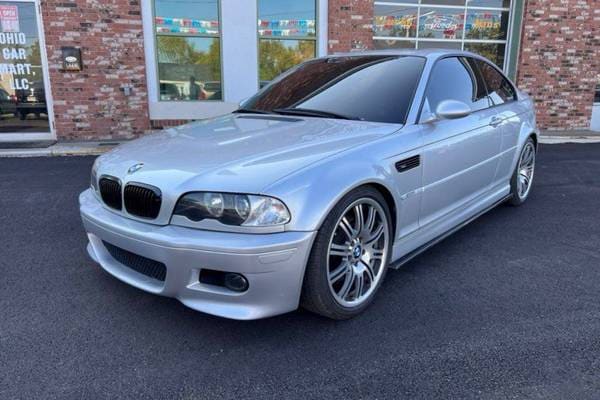
    By comparison, Inside Line's long-term 2002 BMW M3 is an undeniable value. Its normally aspirated 3.2-liter inline-6 screams to the tune of 333 hp and 262 lb-ft of torque. It also sports a six-speed manual transmission. Best of all, we paid $30,000 for the car that has both a navigation system and a limited-slip differential — features distinctly absent from its competitors here. Of course, we've incurred $2,487 in repairs and replacement parts, which we've calculated into its as-tested price for scoring in this contest.

    3rd Place: 2008 BMW 335i
    The BMW 335i sets the standard in its class and has finished last in our previous comparison tests on exactly zero occasions. Until now. But this trouncing is not a huge surprise in a test where it's matched against examples of its Bavarian brethren that are not only equally powerful but also lighter.

    Our judgment is swayed by the 335i's powerful engine and elegant chassis tuning every time we sit behind the wheel. It has a sublime ride quality that comes from its ability to mute road harshness, and yet it can deliver just-right control feel and response. But in this company, the BMW 335i seems almost overwrought. At speed, things happen more slowly in the 335i. Its responses are perfectly quick enough among its competition in the luxury coupe class, but its additional mass (however little) becomes a liability when compared to the smaller 1 Series and more focused M3.

    These disadvantages play out on the drag strip, where the 335i is 0.2 second behind the 135i to 60 mph (5.0 seconds vs. 5.2 seconds) — a gap that holds to the end of the quarter-mile, where the 135i finishes its run in 13.3 seconds at 104 mph vs. the 335i's performance of 13.5 seconds at 103.7 mph. The M3 is the slowest of this group, running to 60 mph in 5.4 seconds and finishing the quarter-mile in 13.7 seconds at 103.3 mph.

    Braking was a wash across the board, with all three cars stopping from 60 mph in 109 feet.

    The new E90 3 Series is synonymous with great handling, and it slashed through the slalom cones 0.6 mph quicker than the M3, a testament to BMW's unmatched ability to tune a chassis for both comfort and performance. Here's a car that's utterly soft relative to the M3 and yet still manages to slither between the cones with slightly more speed. Nevertheless, the little 135i did so even faster yet at 72.4 mph.

    The unyielding hand of physics had its way with the larger 3 Series on the skid pad, where it managed 0.88g to the 0.89g performance of its rival BMWs. Performance on the road course at Spring Mountain proved similarly close, with only a span of 0.35 second covering all three cars. With a time of 1:26.10, the 335i lapped the slowest of the three, but it's really just a matter of driver performance when the results are this close. Still, it's on the road course where the 335i's compliant suspension calibration with its lack of roll stiffness can be seen to cost it some time relative to the M3. The 335i remains utterly controllable and predictable, but it lacks the M3's precision or the 135i's urgency.

    But it's not all bad news for the 335i. It wins the editors' popular vote when it comes to the car we'd most like to have if cost were no object. Having the most usable backseat and largest trunk of the group doesn't hurt. It's also arguably the easiest car to live with — large enough to comfortably haul four, yet quick and nimble enough for all but the most demanding drivers.

    1st Place: 2008 BMW 135i (tie)
    Considered by most editors to be the best-of-both-worlds compromise between the larger 335i and the harsher M3, the 135i is the perfect package in many ways. On the tightest, twistiest roads, the 135i is unquestionably the car to have. Offering the perfect combination of nimbleness, suspension compliance and tractable power delivery, it is easily the most rapid car over mountain roads.

    Since there's little appreciable difference between the 135i's ride quality and that of the 335i, these extra dynamic qualities come with virtually no penalty. But this car does understeer more than we'd like. The M3, for its part, became more and more nervous as the roads became rougher and more off-camber corners appeared.

    Newtonian physics are on the 135i's side at the test track. It's the quickest accelerating car in the test, as 60 mph is achieved in 5.0 seconds and the quarter-mile is dispatched in 13.3 seconds at 104 mph. It's also the fastest car between the slalom cones at 72.4 mph and it ties the M3 for outright grip around the skid pad at 0.89g.

    Still, advantages in these tests aren't enough to give the 135i the quickest lap time on the road course. Its 1:25.88 lap is only 0.13 second behind the M3, but this gap doesn't reveal the whole story. Like the larger 335i, the 1 Series coupe lacks the exacting precision required to drive with full confidence on a road course. It's tuned to understeer heavily at the limit, and the front tires quickly overheat and cornering grip decreases. More importantly, this much understeer detracts from the pleasure of the driving experience.

    The very traits that make the 135i so quick in the real world — suspension compliance and forgiving handling — hurt its racetrack performance. The lack of a limited-slip differential (mostly mitigated on the road by a compliant, long-travel suspension) also costs the 135i valuable time on the track because it saps driver confidence.

    There are other faults as well. As the smallest car in the test, the 135i simply doesn't offer the same usability as its larger competitors. Its trunk has more volume than the M3's, but its shape isn't as useful. And good luck getting more than two people in this car — when even an average-size driver sits behind the steering wheel, the rear-seat foot room is uselessly small.

    1st Place: 2002 BMW M3 (tie)
    From the performance perspective, the M3 is disappointingly off the mark in this test. It's outshined on virtually all fronts by its modern counterparts. So how did it end up tied with the 135i for 1st place? Simple. It's a hell of a lot less expensive and it rewards in ways that less focused cars never will. The bottom line is, the 2002 BMW M3 is still a lot of car for $30 grand — six years old or not.

    The one test that the M3 wins outright is on the road course, and maybe this is the best measure of the car's driving character. Yet its winning lap time — 1:25.75, only marginally better than the 135i — is less significant than what it offers its driver on a racetrack. This car gives you control, lots of it. Even with more than 50,000 miles on the clock, the E46 M3 is a textbook-perfect rear-drive performance car. Steering precision, body control, feedback and response all come together in a way that makes the 135i and 335i seem downright soft and less serious.

    Most telling on the track is the M3's confidence through the Radical Loop's turn 3-4 combination. Here as you accelerate from 75 mph to 105 over a blind crest and down the long straight, the M3 feels perfectly composed and painted to the pavement. Its chassis offers inch-perfect precision that allows you to stay in the throttle far longer than you can in the other cars. Part of this equation is the M3's limited-slip differential, which doles out power where it's needed rather than letting it evaporate through the path of least resistance. This same level of control extends to smooth public roads.

    But when the road becomes rough (which it inevitably does), the M3's otherwise excellent suspension works against it. On such roads we struggled to keep its rubber in contact with the ground, and on more than one occasion, found the rear tires trying to lead instead of follow.

    To be fair, the M3's age did begin to show during the most demanding portions of our test. On the road course it became obvious that we will need brake pads with more lining and better thermal capacity if we want them to keep up with the beating they get. Clutch engagement also became softer and softer with every launch. More track time, whether in a straight line or on a road course, will require further investment in these areas.

    The Take Away
    When you compare hard numbers, you'll find that the 2002 BMW M3, 2008 BMW 135i and 2008 BMW 335i are separated by only 0.35 second on the road course, a small 0.4-second gap between all three in the quarter-mile, and a 0.01g margin on the skid pad, while they register a dead heat in braking. It could be argued that it's futile to draw conclusions from these nearly identical results. And this is exactly why we put words between the numbers.

    The decision, then, is down to price, feature content, our subjective evaluation and our personal and recommended picks — that is, which cars we'd pick for ourselves and recommend to someone shopping in the segment.

    It's in these tiny details where the real hair-splitting gets done. It's in these details that we realize how far BMW has come between its E46 and more recent E87 and E90 platforms. It's here that we find ourselves in awe of the new 3.0-liter turbo engine's ability to be turbine smooth and locomotive powerful. It's here that we learn to respect a chassis with high dynamic limits and smooth-riding comfort. And it's here that, on this occasion, it's impossible to choose between the razor-sharp M3 and the docile-yet-quick 135i.

    The manufacturers provided Edmunds these vehicles for the purposes of evaluation.

    Close

    Share on Facebook Share on Facebook
    Share on Twitter Share on Twitter

    Advertisement

    Tags

    Specs & Performance

    Vehicle
    MakeBMW
    ModelM3
    Model year2002
    Style2dr Coupe
    Base MSRP$30,000
    As-tested MSRP$32,487
    Drive typeRear-wheel drive
    Transmission type6-speed manual
    Engine typeInline-6
    Displacement (cc/cu-in)3.2
    Horsepower (hp @ rpm)333 @ 7900
    Torque (lb-ft @ rpm)262 @ 4900
    Brakes, front4-wheel ventilated disc with dynamic brake control
    Suspension, frontStrut-type with forged lower control arms
    Suspension, rearIndependent with stabilizer bar
    Tire size, front225/45R18
    Tire size, rear255/40R18
    Tire brandYokohama
    Tire modelAdvan Neova ADO7
    Curb weight, as-tested (lbs.)3,472
    Fuel type91
    Fuel tank capacity (gal)16.6
    EPA fuel economy (mpg)16 City / 24 Highway
    Edmunds observed (mpg)18.6
    Conditions for Testing
    Temperature (°F)70.4
    Elevation (ft.)421
    Wind (mph, direction)0
    Performance
    0 - 30 (sec.)2.1
    0 - 45 (sec.)3.7
    0 - 60 (sec.)5.4
    0 - 75 (sec.)8
    1/4 mile (sec. @ mph)13.7 @ 103.3
    30 - 0 (ft.)27
    60 - 0 (ft.)109
    Braking ratingVery Good
    Slalom, 6 x 100 ft (mph)71
    Skid pad, 200 ft diameter (lateral g)0.89
    Handling ratingVery Good
    Sound level @ idle (db)51.5
    Sound level @ full throttle (db)50.8
    Sound level @ 70 mph cruise (db)71.1
    Acceleration commentsSoft clutch requires the zero-slip launch technique and costs the M3 some time both at launch and during shifts. 1-2, 2-3 shifts happened with no tire chirp. Much more of this kind of beating will kill the clutch.
    Braking commentsDated brake feel -- long travel and soft by modern standards. Feels slightly worn, but still stops like a champ.
    Handling commentsThis car's grip and balance are as good as I've experienced in an E46 M3. Steering precision and overall sense of control are impressive for a six-year-old car.
    Specifications
    Length (in.)176.8
    Width (in.)70.1
    Height (in.)54
    Wheelbase (in.)107.5
    Legroom, front (in.)41.7
    Legroom, rear (in.)33.2
    Headroom, front (in.)37.5
    Headroom, rear (in.)36.5
    Seating capacity5
    Cargo volume (cu-ft)9.5
    Max. cargo volume, seats folded (cu-ft)9.5
    Warranty Information
    Bumper-to-bumper4 years/50,000 miles -- expired
    Powertrain4 years/50,000 miles -- expired
    Corrosion12 years/unlimited mileage
    Roadside assistance4 years/50,000 miles -- expired
    Scheduled maintenanceN/A
    Safety Information
    Front airbagsStandard
    Side airbagsStandard
    Head airbagsStandard
    Knee airbagsStandard
    Antilock brakesStandard
    Electronic brake enhancementsStandard
    Traction controlStandard
    Stability controlStandard
    Rollover protectionStandard
    Emergency assistance systemNot Available
    NHTSA crash test, driverNot Tested
    NHTSA crash test, passengerNot Tested
    NHTSA crash test, side frontNot Tested
    NHTSA crash test, side rearNot Tested
    NHTSA rollover resistanceNot Tested
    CollapseSpecs and Performance Expand Collapse

    Specs & Performance

    Vehicle
    MakeBMW
    Model1 Series
    Model year2008
    Style135i 2dr Coupe (3.0L 6cyl Turbo 6M)
    Base MSRP$35,675
    As-tested MSRP$39,125
    Options on test vehicleiPod and USB Adapter ($400), Boston Leather ($1,450), Cold Weather Package ($600), Sport Package ($1,000)
    Drive typeRear-wheel drive
    Transmission type6-speed manual
    Transmission and axle ratios (x:1)I = 4.06; II = 2.40; III = 1.58; IV = 1.19; V = 1.00; VI = 0.87; R = 3.68; Diff = 3.08
    Engine typeInline-6 with twin turbochargers
    Displacement (cc/cu-in)2,979/182
    Block/head materialAluminum
    ValvetrainDOHC, 4 valves per cylinder, variable intake and exhaust valve timing
    Compression ratio (x:1)10.2
    Redline (rpm)7,000
    Horsepower (hp @ rpm)300 @ 5,800
    Torque (lb-ft @ rpm)300 @ 1,400
    Brakes, front13.3-inch ventilated discs, 6-piston fixed calipers
    Brakes, rear12.8-inch ventilated discs, 2-piston fixed calipers
    Steering typeHydraulic-assist speed-proportional power steering
    Steering ratio (x:1)16:01
    Suspension, frontIndependent, MacPherson struts, coil springs, dual-pivot split lower control arms and stabilizer bar
    Suspension, rearIndependent, multilink, coil springs and stabilizer bar
    Tire size, front215/40R18 85Y
    Tire size, rear245/35R18 88Y
    Tire brandBridgestone
    Tire modelPotenza RE050A
    Tire typeSummer Performance, run-flat
    Wheel size18 by 7.5 front -- 18 by 8.5 rear
    Wheel materialAlloy
    Curb weight, mfr. claim (lbs.)3,373
    Curb weight, as-tested (lbs.)3,399
    Weight distribution, F/R (%)52/48
    Fuel typePremium unleaded (required)
    Fuel tank capacity (gal)14
    EPA fuel economy (mpg)17 City / 25 Highway
    Edmunds observed (mpg)20.8
    Conditions for Testing
    Temperature (°F)72.1
    Elevation (ft.)421
    Wind (mph, direction)5.7
    Performance
    0 - 30 (sec.)2
    0 - 45 (sec.)3.4
    0 - 60 (sec.)5
    0 - 75 (sec.)7.4
    1/4 mile (sec. @ mph)13.3 @ 104.0
    0-60 with 1-ft rollout (sec.)4.7
    30 - 0 (ft.)28
    60 - 0 (ft.)109
    Braking ratingVery Good
    Slalom, 6 x 100 ft (mph)72.4
    Skid pad, 200 ft diameter (lateral g)0.89
    Handling ratingVery Good
    Sound level @ idle (db)47.7
    Sound level @ full throttle (db)76.8
    Sound level @ 70 mph cruise (db)68.2
    Acceleration commentsBoiling the tires is easy with this engine, so managing wheelspin carefully is critical to a fast launch. Our fastest launch came with almost no wheelspin, feeding in the clutch at 3,500 rpm.
    Braking commentsQuick and effective engagement. Typical BMW feel -- immediate effectiveness with consistent stopping performance.
    Handling commentsControl feel is virtually identical to 335i, but chassis is quicker responding and more nimble. Handling numbers are marginally better than 335i.
    Specifications
    Length (in.)172.2
    Width (in.)68.8
    Height (in.)55.4
    Wheelbase (in.)104.7
    Front Track (in.)57.9
    Rear Track (in.)58.9
    Turning circle (ft)35.1
    Legroom, front (in.)41.4
    Legroom, rear (in.)32
    Headroom, front (in.)37.9
    Headroom, rear (in.)37.1
    Shoulder room, front (in.)56
    Shoulder room, rear (in.)55
    Seating capacity4
    Cargo volume (cu-ft)13.1
    Warranty Information
    Bumper-to-bumper4 years/50,000 miles
    Powertrain4 years/50,000 miles
    Corrosion12 years/unlimited mileage
    Roadside assistance4 years/Unlimited miles
    Scheduled maintenance4 years/50,000 miles
    Safety Information
    Front airbagsStandard
    Side airbagsStandard dual front
    Head airbagsStandard front and rear
    Knee airbagsNot Available
    Antilock brakes4-wheel ABS
    Electronic brake enhancementsBraking assist, electronic brakeforce distribution
    Traction controlStandard
    Stability controlStandard
    Rollover protectionStandard
    Tire-pressure monitoring systemDirect tire pressure monitoring
    Emergency assistance systemNot Available
    NHTSA crash test, driverNot Tested
    NHTSA crash test, passengerNot Tested
    NHTSA crash test, side frontNot Tested
    NHTSA crash test, side rearNot Tested
    NHTSA rollover resistanceNot Tested
    CollapseSpecs and Performance Expand Collapse

    Specs & Performance

    Vehicle
    MakeBMW
    Model3 Series
    Model year2008
    Style335i 2dr Coupe (3.0L 6cyl Turbo 6M)
    Base MSRP$41,575
    As-tested MSRP$46,720
    Options on test vehicleCold Weather Package ($750), Comfort Access ($500), HD Radio ($350), iPod and USB Adapter ($400), Premium Package ($2,550), Sirius Satellite Radio ($595)
    Drive typeRear-wheel drive
    Transmission type6-speed manual
    Transmission and axle ratios (x:1)I=4.06:1, II=2.40:1, III=1.58:1, IV=1.19:1, V=1.00:1, VI=0.87:1, Final drive=3.08:1
    Engine typeInline-6
    Displacement (cc/cu-in)2,979cc (182 cu-in)
    Block/head materialAluminum block and head
    ValvetrainDouble overhead camshaft
    Compression ratio (x:1)10.2
    Redline (rpm)7,000
    Horsepower (hp @ rpm)300 @ 5,800
    Torque (lb-ft @ rpm)300 @ 1,400
    Brakes, frontVentilated disc
    Brakes, rearVentilated disc
    Steering typeSpeed-proportional power steering
    Steering ratio (x:1)16.0:1
    Suspension, frontMacPherson strut
    Suspension, rearMultilink
    Tire size, front225/45R17 H
    Tire size, rear225/45R17 H
    Tire brandBridgestone
    Tire modelPotenza RE050A
    Tire typeAll-season
    Wheel size17 by 8.0
    Wheel materialAlloy
    Curb weight, mfr. claim (lbs.)3,571
    Curb weight, as-tested (lbs.)3,542
    Weight distribution, F/R (%)51/49
    Fuel typePremium unleaded (required)
    Fuel tank capacity (gal)16.1
    EPA fuel economy (mpg)17 City / 26 Highway
    Edmunds observed (mpg)22.2
    Conditions for Testing
    Temperature (°F)69
    Elevation (ft.)421
    Wind (mph, direction)0
    Performance
    0 - 30 (sec.)2.1
    0 - 45 (sec.)3.6
    0 - 60 (sec.)5.2
    0 - 75 (sec.)7.6
    1/4 mile (sec. @ mph)13.5 @ 103.7
    0-60 with 1-ft rollout (sec.)4.9
    30 - 0 (ft.)28
    60 - 0 (ft.)109
    Braking ratingExcellent
    Slalom, 6 x 100 ft (mph)71.6
    Skid pad, 200 ft diameter (lateral g)0.88
    Handling ratingVery Good
    Sound level @ idle (db)49.9
    Sound level @ full throttle (db)76.8
    Sound level @ 70 mph cruise (db)67.4
    Acceleration commentsManaging wheelspin is the key to good acceleration times in the 335i. Best launch rpm is 3,500-4,000. We were deliberate in getting the clutch pedal out quickly without bogging the engine.
    Braking commentsQuick, effective engagement and consistent stopping performance.
    Handling commentsControl feel is the same as 135i, but everything happens a little slower. Still, there's lots of grip. Throttle inputs feel damped relative to 135.
    Specifications
    Length (in.)181.1
    Width (in.)70.2
    Height (in.)54.1
    Wheelbase (in.)108.7
    Front Track (in.)59.1
    Rear Track (in.)59.6
    Turning circle (ft)36.1
    Legroom, front (in.)41.8
    Legroom, rear (in.)33.7
    Headroom, front (in.)37.1
    Headroom, rear (in.)36.1
    Shoulder room, front (in.)55.3
    Shoulder room, rear (in.)51.9
    Seating capacity4
    Cargo volume (cu-ft)11.1
    Max. cargo volume, seats folded (cu-ft)N/A
    Warranty Information
    Bumper-to-bumper4 years/50,000 miles
    Powertrain4 years/50,000 miles
    Corrosion12 years/unlimited mileage
    Roadside assistance4 years/Unlimited miles
    Scheduled maintenance4 years/50,000 miles
    Safety Information
    Front airbagsStandard
    Side airbagsStandard dual front
    Head airbagsStandard front and rear
    Knee airbagsNot Available
    Antilock brakes4-wheel ABS
    Electronic brake enhancementsBraking assist, electronic brakeforce distribution
    Traction controlStandard
    Stability controlStandard
    Tire-pressure monitoring systemTire pressure monitoring
    Emergency assistance systemNot Available
    NHTSA crash test, driver4 stars
    NHTSA crash test, passenger4 stars
    NHTSA crash test, side front5 stars
    NHTSA crash test, side rear5 stars
    NHTSA rollover resistance4 stars
    CollapseSpecs and Performance Expand Collapse

    Advertisement