INSIDE LINE

Comparison Test: 2007 Audi RS4 vs. 2008 Lexus IS-F

Media Player

  • 2007 Audi RS4 vs. 2008 Lexus IS-F Comparison Test Video

    Watch the 2007 Audi RS4 vs. 2008 Lexus IS-F Comparison Test Video on Edmunds' Inside Line | October 14, 2009

1 Video , 23 Photos | See more photos in this gallery »

Comparison

Comparison Test: 2007 Audi RS4 vs. 2008 Lexus IS-F

Can Lexus Take Down the Germans Again?

    0 Ratings
    With the introduction of the 2009 Lexus IS-F, it's supposed to be 1989 all over again.

    That was the year that Toyota dared to take on the established German luxury carmakers with its brand-new luxury division, Lexus. And it was also the year that the Lexus LS 400 sedan's immediate success embarrassed those German luxury carmakers into dramatically improving their quality, their customer service and even their prices.

    Lexus would like you to believe that the 416-horsepower IS-F will have a similar impact on the market for over-endowed hot-rod sedans that is dominated by (you guessed it) the Germans. The "F" suffix for this new variant of the IS is a nod to the early days of Lexus, when "F1" became the code designation for the LS 400 prototype.

    But Wait Just a Minute There
    Don't don your bomber jacket, crank up the Whitesnake and pretend it's 1989 just yet. There's the small matter of those three German sedans, each of which makes around the same 400-plus horsepower as the IS-F.

    To put the $60,000 2009 Lexus IS-F to the test, we rounded up one of our favorite German über-sedans, the Audi RS4. We left out the BMW M3 partly because it is only currently offered as a two-door and also because it hasn't, you know, actually been formally introduced to the U.S. yet. And the same goes for the Mercedes-Benz C63 AMG.

    For now, though, it is a battle between the bulked-up, slammed-down Lexus IS-F and the Audi RS4, the all-wheel-drive A4 with a 420-hp V8 that we recently described as "The Best Driving Audi Ever."

    Freaky Styley
    Unfortunately, before you can take a seat behind the wheel of the Lexus IS-F, you have to, you know, see it. We accept that the question of styling is largely a subjective matter. So there might be some Toyota fanboys who will admire the IS-F's nose — so like that of a Beluga whale. They might even like the dewlaplike growths behind the front wheels. But no one of sound mind could love the stacked quad exhaust tips. This is at least partly because they are not actually exhaust tips. In fact, they are not connected to the exhaust system in any way. They are simply jewelry for the rear fascia. It's an uncharacteristically cheesy execution by Lexus.

    Yet when you see it slammed down almost an inch on 19-inch anthracite-finish BBS wheels, the spokes of which look like a pinwheel of razor-sharp chef's knives, the IS-F is sufficiently menacing. Glinting behind the wheels you'll find drilled and vented brake rotors with Brembo calipers. At 14.2 inches in diameter, the front rotors are slightly larger than a large Domino's pizza, while the rears are only about a half-inch smaller.

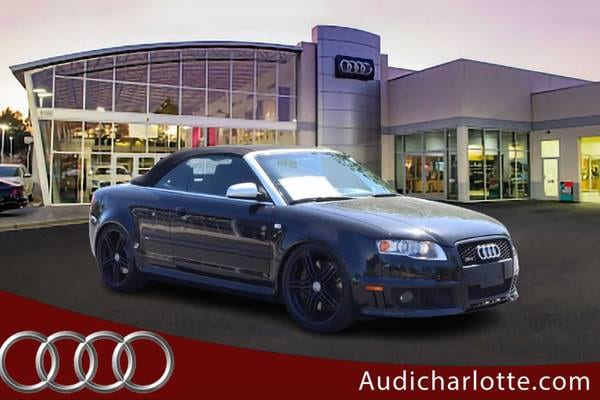
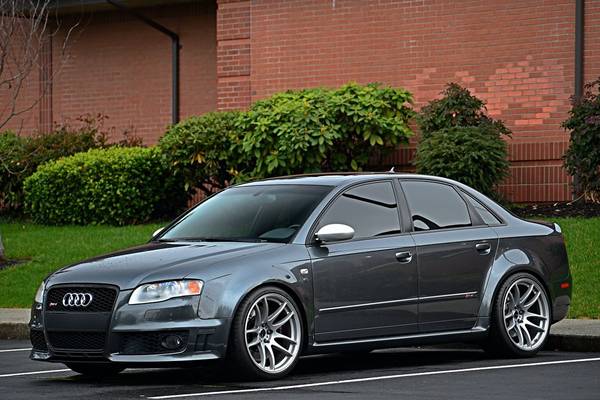
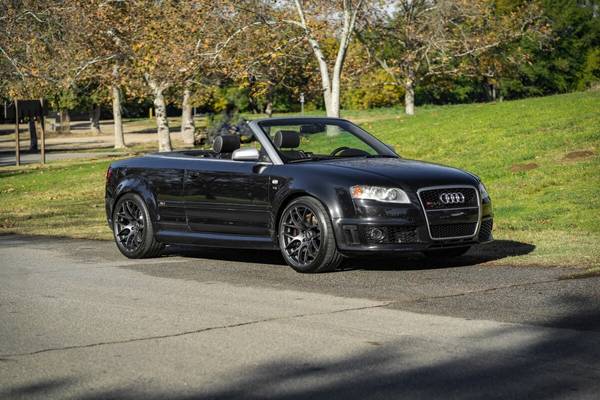
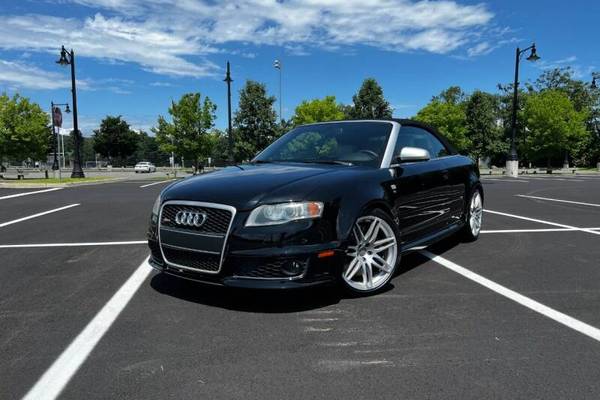
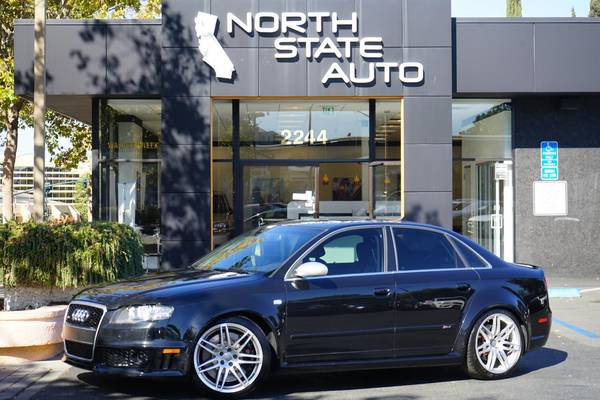
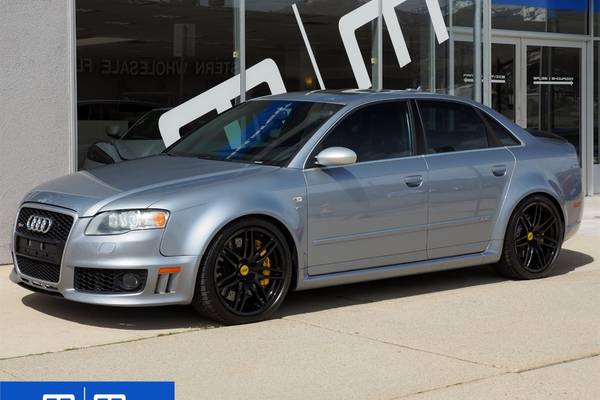
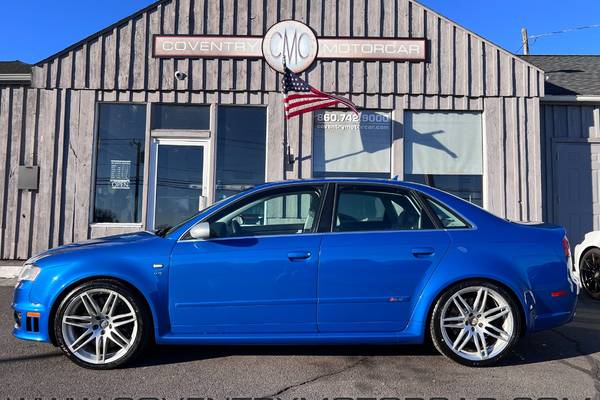
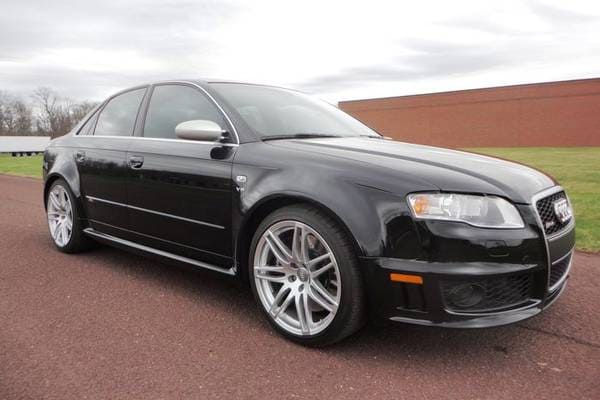
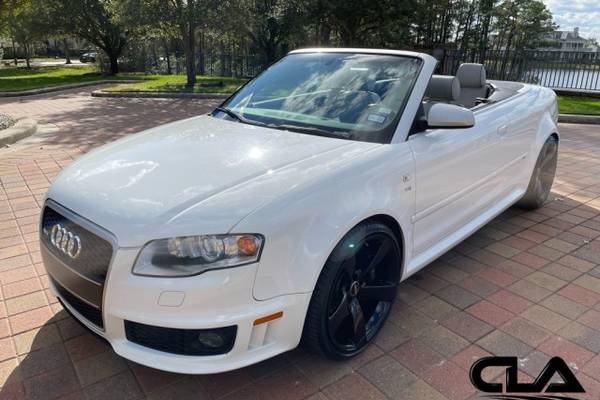
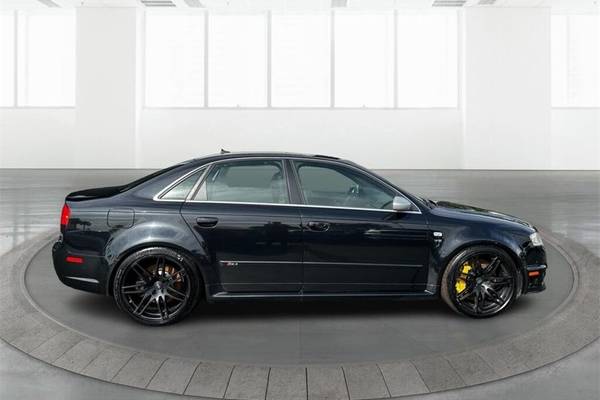
    Where the IS-F has a certain look that we associate with the worst excesses of the aftermarket, the Audi is all understated musculature. It's relatively subtle, but we like it. Wide 19-inch wheels and tires are covered (barely) by dramatically flared fenders. And the special trunk lid has the sweetest ducktail spoiler formed into the metal. A lower ride height, satin-finish metal trim, a deeper front fascia and gorgeous wheels round out the RS4's visual signifiers.

    The Inside Lines
    Audi carries the same subtlety into the interior of the RS4. The seats are unique to the RS4, and they combine stellar support and comfort. This car also arrived with glossy strips of decorative carbon-fiber interior trim. (Brushed aluminum is also available but isn't as fast as carbon fiber.) Our test vehicle didn't come with the optional navigation system to confuse passengers or the memory-function seats to comfort them. It is what you might call a stripper if you can ever call a $68,875 car a stripper.

    The poor bastards you cram in the backseat of the RS4 will become intimately acquainted with the meaning of "compact sedan" and also with each other, because the Audi rides on a 104.3-inch wheelbase that doesn't leave much legroom for those in the rear. At the same time, the rear-seat passengers for the Lexus IS-F are no more comfortable despite a wheelbase that's 3 inches longer. The Lexus seems more sporty because the rear seat accommodates only two passengers in quasi-buckets separated by an armrest, while the Audi is more practical, with three seatbelts in place on a conventional bench.

    The IS-F's interior is a bit flashier than that of the austere German. Start it up and the blue needles for the tachometer and speedometer spin while a little "F" logo materializes between them. The almost-white woven-metal trim is a little showy for our taste, and the IS-F is seemingly always binging or beeping while in operation.

    All Motor
    Lexus could have just dropped its standard 4.6-liter V8 into the nose of the IS nose and made an easy 350 hp. Instead, the company started with the 5.0-liter V8 that is the gas-burning portion of the LS 600h powertrain. In the IS-F, the 5.0-liter makes 416 hp and 371 pound-feet of torque.

    To get such power, Lexus threw everything it has at this engine. It's got titanium intake valves. It's got a water-cooled oil-cooler. It's got hollow camshafts. It's got direct injection and port injection. Hell, even the center shaft of the throttle butterfly is 3 millimeters narrower to permit incrementally better airflow when the butterfly is open.

    You'll really notice the dual air intake. At low speeds, the engine breathes discreetly through the primary inlet. At engine speeds of 3,600 rpm or greater, a secondary valve opens and draws air from the right wheelwell. When that secondary air intake opens, it's as if the fine coffee you normally drink has been secretly replaced with nitromethane. The intake howl sounds fantastic and makes the IS-F feel quicker than it really is.

    We wish only that Lexus could have given the engine note south of 3,600 rpm a little whiff of that high-rpm fury. Around town, only a faint rumble differentiates the IS-F's V8 from lesser Lexus motors, and you don't have any sense of the beast waiting on the right side of the tachometer.

    Audi's 420-hp 4.2-liter V8 makes up for its displacement deficit with high revs, and it will constantly remind you why you write such a big check every month. It has the finest exhaust note on the market today, and the tone never wavers. There are no pronounced bursts of power in the Audi's curve; instead there's power everywhere.

    Speed Shifting
    If the IS-F's engine seems complicated, get a load of its one transmission offering. This eight-speed automatic is adapted from the tranny in the LS luxo barge.

    Leave the shifter in fully automatic mode and you can never quite shake the impression that there are three too many gears in the box. It seems to always be lounging around in 7th on the highway and dithering among its many gears around town. Downshifts are slow to come. When it finally finds a nice low gear, the engine is spinning wildly, the engine note has turned angry and you've got more power than you asked for, plus it arrives later than you wanted it. Use the automatic mode only for traffic jams.

    It's better to leave the transmission in manual mode and use the steering-column-mounted shift paddles to choose from the myriad gears. In all but 1st gear, this transmission uses a lock-up clutch to connect the engine and transmission, something like a conventional manual powertrain. When you combine the crisp feeling of engine response that results with tremendously quick upshifts and downshifts (with automatic throttle blips), the complex transmission becomes one of the most entertaining sequential-shift automatics.

    The RS4 is offered only with a six-speed manual. Turns out, for a dedicated high-performance car, that old gearlever-and-clutch-pedal thing is still the way to go.

    Numbers Don't (Often) Lie
    Even with the roughly 70 pounds of extra weight that it carries, the 3,848-pound Audi is the quicker of these two cars.

    Try this with your friend's RS4. At full stop, engage 1st gear, keep the clutch depressed and push the accelerator pedal until the tachometer registers 5,500 rpm. Then remove your foot from the clutch. All four wheels spin for a moment and then the RS4 digs its claws into the pavement and catapults forward to 60 mph in 4.3 seconds and on through the quarter-mile in 12.8 seconds at 108.5 mph. The all-wheel-drive Lamborghini Gallardo posts better numbers, but not by much.

    The 3,780-pound IS-F gets to 60 mph in 4.8 seconds and does the quarter-mile in 13.2 seconds at 109 mph, trailing the RS4 to 60 mph by about a half-second and to the quarter-mile by almost as much. This is with the stability and traction control systems off (yes, Lexus actually allows such a thing, a policy initiated for its performance cars for 2007) and the transmission in Drive. Later we made our runs and manually shifted the IS-F's transmission, which feels fast but predictably isn't, especially since the launch is better in Drive.

    Not that it matters. For all its displacement, technology and furious bark, the Lexus 5.0-liter doesn't make the IS-F much quicker than a BMW 335i, which makes 116 hp less.

    Both cars stop with tremendous force and stability in a commendably short distance, with the Lexus coming to a halt from 60 mph in 112 feet and the Audi doing the job in 117 feet.

    The Real Road and Track
    The Lexus generates an impressive 0.93g of grip on the skid pad with its Michelin Pilot Sport PS2 tires, significantly more than the Audi's 0.89g on its Continental ContiSport Contact3 rubber. Despite this, the RS4 barrels through the slalom fractionally faster at 70.5 mph to the IS-F's 70.2 mph. Give some credit here to the Audi's super-quick steering ratio and some blame to the IS-F's tail, which according to one understated tester, "gets pretty lively."

    For all their similarities, including the near-identical performance in the slalom, these two cars go about their business in opposite ways. And neither acts quite like you might expect it to.

    According to tradition, the Audi should lack steering feel thanks to its all-wheel-drive system. It should understeer heavily as it gets led around by its heavy nose. And it should exhibit a flinty ride. Yet the Audi has the more communicative steering here. Its cornering attitude is surprisingly neutral. And its compromise between a comfortable ride and good handling ranks with the best that BMW has accomplished over the years.

    The Lexus should be the one with the plusher ride, the less treacherous handling and the more intrusive safety net of electronic gizmos. Wrong again. Front spring and damper rates are up a whopping 90 percent compared to the standard IS, and the rear rates are 50 percent firmer. This is a stiff car — so stiff over freeway undulations that it forces small, involuntary exhalations from its passengers. One of us even knocked his noggin into the headliner, badly mussing his hair.

    The World We Live In
    The 2009 Lexus IS-F is the kind of car that really benefits from switching off the stability control, as it'll do some really wicked powerslides. And the IS-F handles really nicely and precisely. It's just too much for us, though. Too much to look at, too intricate to fully appreciate and too hard-core for the street.

    The all-wheel-drive 2007 Audi RS4 just plain hauls ass. It doesn't rotate around an apex like a rear-driver. It's less the rapier than it is the broadsword. But it's devastatingly effective as a street machine, so it wins.

    So it's not 1989, but it might just be the good old days anyway.

    The manufacturers provided Edmunds these vehicles for the purposes of evaluation.

    Close

    Share on Facebook Share on Facebook
    Share on Twitter Share on Twitter

    Advertisement

    Tags

    Specs and Performance

    Vehicle
    MakeAudi
    ModelRS4
    Model year2007
    Style4dr Sedan (4.2L 8cyl 6M)
    Base MSRP$66,775
    As-tested MSRP$68,875
    Drive typeAll-wheel drive
    Transmission type6-speed manual
    Engine typeV8
    Displacement (cc/cu-in)4,163 (254)
    Horsepower (hp @ rpm)420 @ 7,800
    Torque (lb-ft @ rpm)317 @ 6,000
    Brakes, frontVentilated/drilled Disc
    Brakes, rearVentilated/drilled Disc
    Steering typeSpeed-proportional hydraulic power steering
    Suspension, frontIndependent, multilink, split upper/lower control arms, coil springs and stabilizer bar
    Suspension, rearIndependent, double wishbones, coil springs and stabilizer bar
    Tire size, front255/35ZR19 96Y
    Tire size, rear255/35ZR19 96Y
    Tire brandContinental
    Tire modelContiSport Contact3
    Curb weight, mfr. claim (lbs.)3,957 (3,848 as tested)
    Fuel typePremium unleaded
    Fuel tank capacity (gal)16.6
    EPA fuel economy (mpg)14 city/21 highway (13/20 adjusted for 2008)
    Edmunds observed (mpg)15.9 (best: 20.2/ worst: 13.6)
    Conditions for Testing
    Temperature (°F)68
    Elevation (ft.)421
    Wind (mph, direction)2.0 NE
    Performance
    0 - 30 (sec.)1.6
    0 - 45 (sec.)2.8
    0 - 60 (sec.)4.3
    0 - 75 (sec.)6.4
    1/4 mile (sec. @ mph)12.8 @ 108.5
    30 - 0 (ft.)29
    60 - 0 (ft.)117
    Braking ratingExcellent
    Slalom, 6 x 100 ft (mph)70.5
    Skid pad, 200 ft diameter (lateral g)0.89
    Handling ratingExcellent
    Sound level @ idle (db)46.9 ("S" on 49.3)
    Sound level @ full throttle (db)78.5 (79.5)
    Sound level @ 70 mph cruise (db)67.9 (68.4)
    Acceleration commentsWith the ESP off and "S" button on, a 5,500-rpm launch spins/barks all four tires from a standstill. It leaves like a bucking bronco when the gate is opened. Clutch is light, the shifts a bit long, but never miss the gate. The engine pulls just as hard at its 8,000-rpm redline as it does anywhere else. What an animal. By the way, I didn't detect any driveline-protecting devices (electronic or mechanical) as was mentioned in both prior RS4 tests.
    Braking commentsSome ABS pulsing/buzzing in the pedal, but it still manages smooth and short stops. Very consistent distances from first to last indicate excellent fade resistance. Pedal is firm, but not objectionably so -- just right for this car's mission.
    Handling comments(ESP off and "S" on.) Despite what we've come to expect from Audi's lead-tipped-arrow dynamics, the RS4 exhibits remarkable balance on the skid pad. How'd they do that?! The steering actually has some life as it approaches its built-in understeering limit. In the slalom, I had some trouble determining where the corners of the car were, but once done, I could chip away at technique. A mix of Evo-aggression and Porsche-precision worked best. Too hot, and the car would either drift wide or over-rotate depending on throttle application. I appreciated the sculpted steering wheel and its quick ratio.
    Specifications
    Length (in.)180.7
    Width (in.)71.5
    Height (in.)55.7
    Wheelbase (in.)104.3
    Legroom, front (in.)41.3
    Legroom, rear (in.)34.3
    Headroom, front (in.)38.4
    Headroom, rear (in.)37.2
    Seating capacity5
    Cargo volume (cu-ft)13.4
    Max. cargo volume, seats folded (cu-ft)Not specified
    Warranty Information
    Bumper-to-bumper4 years/50,000 miles
    Powertrain4 years/50,000 miles
    Corrosion12 years/Unlimited miles
    Roadside assistance4 years/Unlimited miles
    Scheduled maintenance1 year/5,000 miles
    Safety Information
    Front airbagsStandard
    Side airbagsStandard dual front
    Head airbagsStandard front and rear
    Antilock brakes4-wheel ABS
    Electronic brake enhancementsBrake assist, electronic brakeforce distribution
    Traction controlStandard
    Stability controlStandard
    Rollover protectionStandard
    Tire-pressure monitoring systemNot available
    Emergency assistance systemNot tested
    NHTSA crash test, driverNot tested
    NHTSA crash test, passengerNot tested
    NHTSA crash test, side frontNot tested
    NHTSA crash test, side rearNot tested
    NHTSA rollover resistanceNot tested
    CollapseSpecs and Performance Expand Collapse

    Specs and Performance

    Vehicle
    MakeLexus
    ModelIS-F
    Model year2008
    Style4dr Sedan (5.0L 8cyl 8A )
    Base MSRP$59,900 (est.)
    As-tested MSRP$62,540 (est.)
    Drive typeRear-wheel drive
    Transmission type8-speed automatic
    Engine typeV8
    Displacement (cc/cu-in)4,969 (303)
    Horsepower (hp @ rpm)416 @ 6,600
    Torque (lb-ft @ rpm)371 @ 5,200
    Brakes, frontVentilated/drilled Disc
    Brakes, rearVentilated/drilled Disc
    Steering typeSpeed-proportional electric-assist power steering
    Suspension, frontIndependent, double wishbones, coil springs and stabilizer bar
    Suspension, rearIndependent, multilink, coil springs and stabilizer bar
    Tire size, front225/40R19 93Y
    Tire size, rear255/35R19 96Y
    Tire brandMichelin
    Tire modelPilot Sport PS2
    Curb weight, mfr. claim (lbs.)3,780 (3,780 as tested)
    Fuel typePremium unleaded
    Fuel tank capacity (gal)16.9
    EPA fuel economy (mpg)16 city/23 highway (preliminary estimate)
    Edmunds observed (mpg)16.3 (best: 21.3 / worst: 13.5)
    Conditions for Testing
    Temperature (°F)62
    Elevation (ft.)421
    Wind (mph, direction)1.5 NE
    Performance
    0 - 30 (sec.)1.9
    0 - 45 (sec.)3.3
    0 - 60 (sec.)4.8
    0 - 75 (sec.)6.8
    1/4 mile (sec. @ mph)13.2 @ 109.3
    30 - 0 (ft.)28
    60 - 0 (ft.)112
    Braking ratingExcellent
    Slalom, 6 x 100 ft (mph)70.2
    Skid pad, 200 ft diameter (lateral g)0.93
    Handling ratingExcellent
    Sound level @ idle (db)46.9
    Sound level @ full throttle (db)80.5
    Sound level @ 70 mph cruise (db)67.2
    Acceleration commentsWith VSC off and Sport mode on, the first run in Drive happened to be the quickest of many more attempts that followed. That "best" launch was not able to be duplicated, nor were the blazingly quick manual shifts (which came later) able to make up the difference. I suspect I left 2/10ths on the table for the 0-60 time. Same 1.9-second launch plus mind-blowingly fast paddle shifts would certainly be a little quicker. Be that as it may, the IS-F doesn't roast the rear tires as instantly as, say, a 6.3 AMG engine does because the IS-F feels a little artificially torque-restrained from a standstill (brake diff?). Otherwise, power is linear up to the 3,700-rpm secondary intake threshold, where it goes mental. The sound and the fury of the V8 and exhaust system should be recorded for posterity.
    Braking commentsNot one bit of ABS noise or flutter, but the tires lurched against the pavement a couple times. Highly fade resistant as the distances tumbled with each additional stop. The pedal is extremely hard under full-ABS stops.
    Handling commentsWith VSC off and Sport mode on, the IS-F has gallbladder-flattening grip on the skid pad, but not much feel for what the front tires are enduring. Gentle understeer becomes a resolute "push" when prodded beyond its happy place. I really had to manhandle the car to coax smokey oversteer: It first resists with chattering understeer, then with the brake-actuated limited-slip differential, which finally gives up and allows lurid slides, drifting 1.5 times around the skid pad on full opposite lock. Unlike the stubborn understeer we experienced on the skid pad, the IS-F's tail gets pretty lively in the slalom, which ultimately is the limiting factor. Turn-in is amazingly good, with reassuring bite and grip that works up to a point when the tail begins to walk away gently. The Michelin PS2 tires are progressive and don't fall off abruptly when max grip is exceeded. Steering is still phoning it in rather than telling me in person.
    Specifications
    Length (in.)183.5
    Width (in.)71.5
    Height (in.)55.7
    Wheelbase (in.)107.5
    Legroom, front (in.)43.9
    Legroom, rear (in.)30.6
    Headroom, front (in.)37.2
    Headroom, rear (in.)36.7
    Seating capacity4
    Cargo volume (cu-ft)13.3
    Max. cargo volume, seats folded (cu-ft)Not specified
    Warranty Information
    Bumper-to-bumper4 years/50,000 miles
    Powertrain6 years/70,000 miles
    Corrosion6 years/Unlimited miles
    Roadside assistance4 years/Unlimited miles
    Scheduled maintenanceUnlimited years/5,000 miles
    Safety Information
    Front airbagsStandard
    Side airbagsStandard dual front
    Head airbagsStandard front and rear
    Antilock brakes4-wheel ABS
    Electronic brake enhancementsBrake assist, electronic brakeforce distribution
    Traction controlStandard
    Stability controlStandard
    Rollover protectionNot available
    Emergency assistance systemOptional
    NHTSA crash test, driverNot available
    NHTSA crash test, passengerNot available
    NHTSA crash test, side frontNot available
    NHTSA crash test, side rearNot available
    NHTSA rollover resistanceNot available
    CollapseSpecs and Performance Expand Collapse

    Advertisement